
Quick Answer: What Does a Roof Warranty Cover?
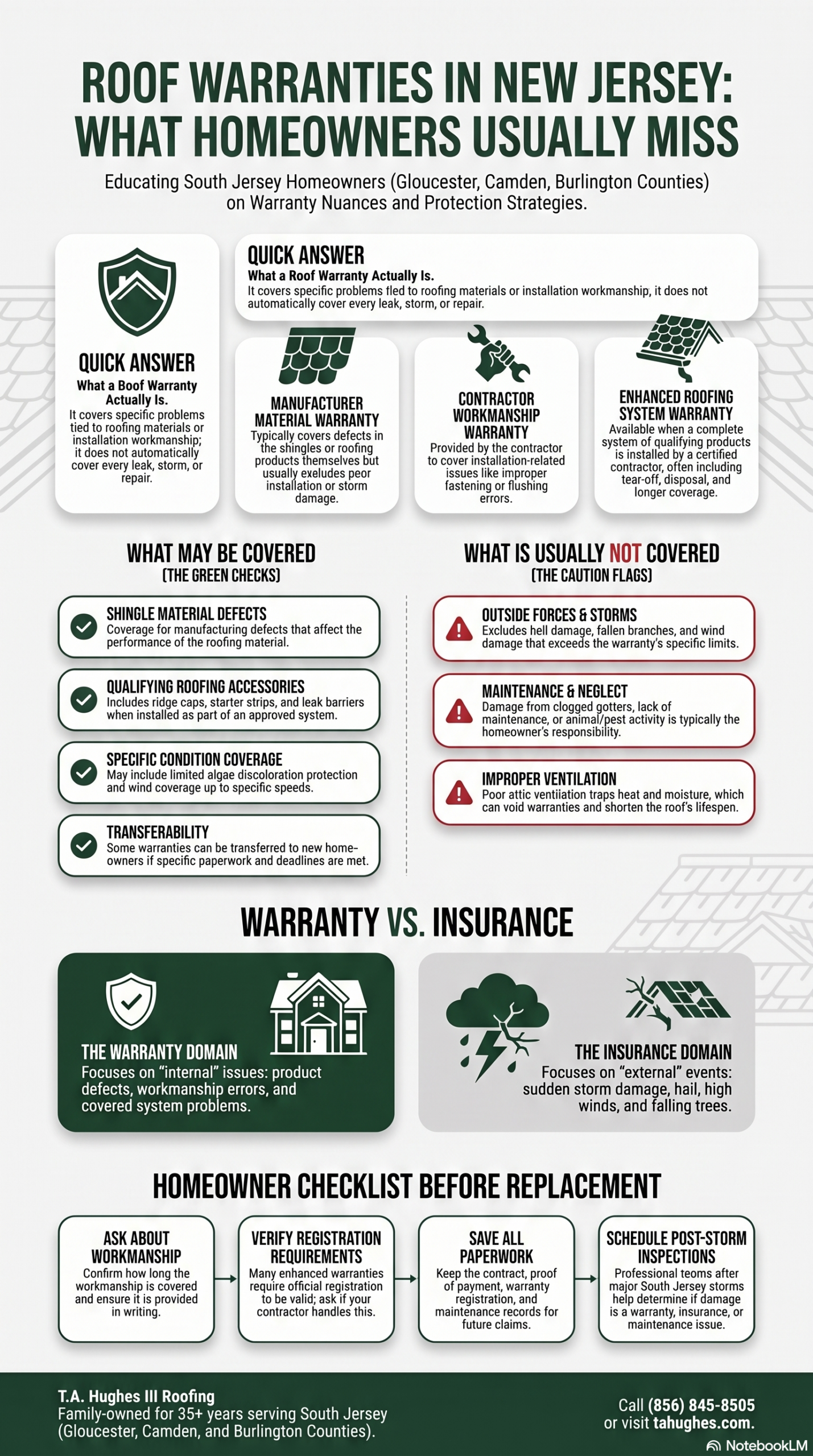
A roof warranty usually covers specific problems tied to either the roofing materials or the installation workmanship. A manufacturer warranty may cover defects in shingles or roofing products. A contractor workmanship warranty may cover certain installation-related problems. An enhanced roofing system warranty may provide broader protection when approved products are installed by a qualified contractor.
What many New Jersey homeowners miss is this: a roof warranty is not the same as homeowners insurance, and it does not automatically cover every leak, storm, or repair.
If your roof is damaged by wind, hail, falling branches, poor ventilation, clogged gutters, or lack of maintenance, the warranty may not apply. That is why it is important to understand the type of warranty you are getting before your roof replacement begins.
For homeowners in Gloucester County, Camden County, Burlington County, and surrounding South Jersey communities, T.A. Hughes III Roofing, Siding, Windows & Gutters can help explain your roof warranty options before work starts, so you know what is covered and what is not.
Contact T.A. Hughes III Roofing for a roof inspection or estimate.
Why Roof Warranties Matter for New Jersey Homes
Your roof protects your home from heavy rain, summer storms, winter ice, high winds, humidity, and sudden temperature changes. In South Jersey towns like Cherry Hill, Deptford, Mullica Hill, Haddonfield, Woodbury, Moorestown, and Mount Laurel, roofs deal with a wide range of weather throughout the year.
A roof warranty matters because a roof replacement is a major investment. Homeowners want to know:
- What happens if shingles fail too soon?
- Who is responsible if a leak appears after installation?
- Is storm damage covered?
- Does the warranty transfer if the home is sold?
- Does the warranty cover labor, materials, or both?
- What could void the warranty?
The problem is that many homeowners only hear the headline number, such as “lifetime warranty” or “50-year warranty,” without understanding the details. A roofing warranty can be valuable, but only if you understand the fine print.
The 3 Main Types of Roof Warranties
Most roof warranties fall into three broad categories.
1. Manufacturer Material Warranty
A manufacturer warranty typically covers defects in the roofing products themselves. For example, if shingles have a manufacturing defect that causes premature failure, the manufacturer warranty may apply.
This type of warranty is important, but it does not usually cover everything on your roof. It may not cover:
- Poor installation
- Storm damage
- Damage from trees or debris
- Improper ventilation
- Interior water damage
- Flashing issues unless specifically included
- Normal wear and aging
- Neglect or lack of maintenance
In simple terms, a manufacturer warranty protects against certain product defects, not every roofing problem.
2. Contractor Workmanship Warranty
A workmanship warranty comes from the roofing contractor. It may cover certain installation-related issues, such as problems caused by improper fastening, flashing errors, or other workmanship concerns.
This is one of the most important warranty details homeowners should ask about before hiring a roofer. Even great materials can fail early if they are not installed properly.
Before signing a roofing contract, ask:
- How long is the workmanship warranty?
- What exactly does it cover?
- Does it cover labor and materials?
- Are leaks covered if they are caused by installation?
- What maintenance is required to keep the warranty valid?
- Is the warranty in writing?
T.A. Hughes has served South Jersey homeowners for more than 35 years, and that matters when choosing a contractor. A warranty is only as helpful as the company standing behind it.
3. Enhanced Roofing System Warranty
An enhanced roofing system warranty may be available when a complete roofing system is installed using qualifying products from the same manufacturer and installed by a qualified or certified roofing contractor.
These warranties may offer stronger coverage than a basic product warranty. Depending on the manufacturer and warranty level, an enhanced warranty may include longer non-prorated coverage, tear-off coverage, disposal coverage, or workmanship coverage.
If you are considering a new roof, ask your contractor whether your roof system qualifies for enhanced warranty protection.
You may also want to read: Licensed vs. Unlicensed Roofers in NJ: Why It Matters.
The key is to review the actual warranty document, not just the sales brochure. Coverage can change based on the products installed, installation method, roof design, ventilation, warranty registration, and whether the home is owner-occupied.
What Roof Warranties Usually Do Not Cover
This is where homeowners often get surprised.
A roof warranty usually does not cover damage caused by outside forces, maintenance issues, or conditions unrelated to a product defect or covered workmanship problem.
Common exclusions may include:
- Hail damage
- Wind damage beyond warranty limits
- Fallen branches or tree damage
- Storm-related impact damage
- Ice dams caused by poor ventilation or insulation
- Clogged gutters
- Animal or pest damage
- Foot traffic damage
- Satellite dish or solar panel installation damage
- Improper repairs by another contractor
- Lack of roof maintenance
- Mold, mildew, or interior damage
- Structural movement or roof deck problems
- Poor attic ventilation
- Normal aging or color fading
This is why regular maintenance matters. If gutters are clogged, flashing is ignored, or attic ventilation is poor, a future warranty claim may be more difficult.
Helpful related resources:
- The Ultimate Roof Maintenance Checklist for NJ Homeowners
- Gutter Repairs and Cleaning
- The Real Cost of Neglecting Roof Maintenance in New Jersey
Roof Warranty vs. Homeowners Insurance
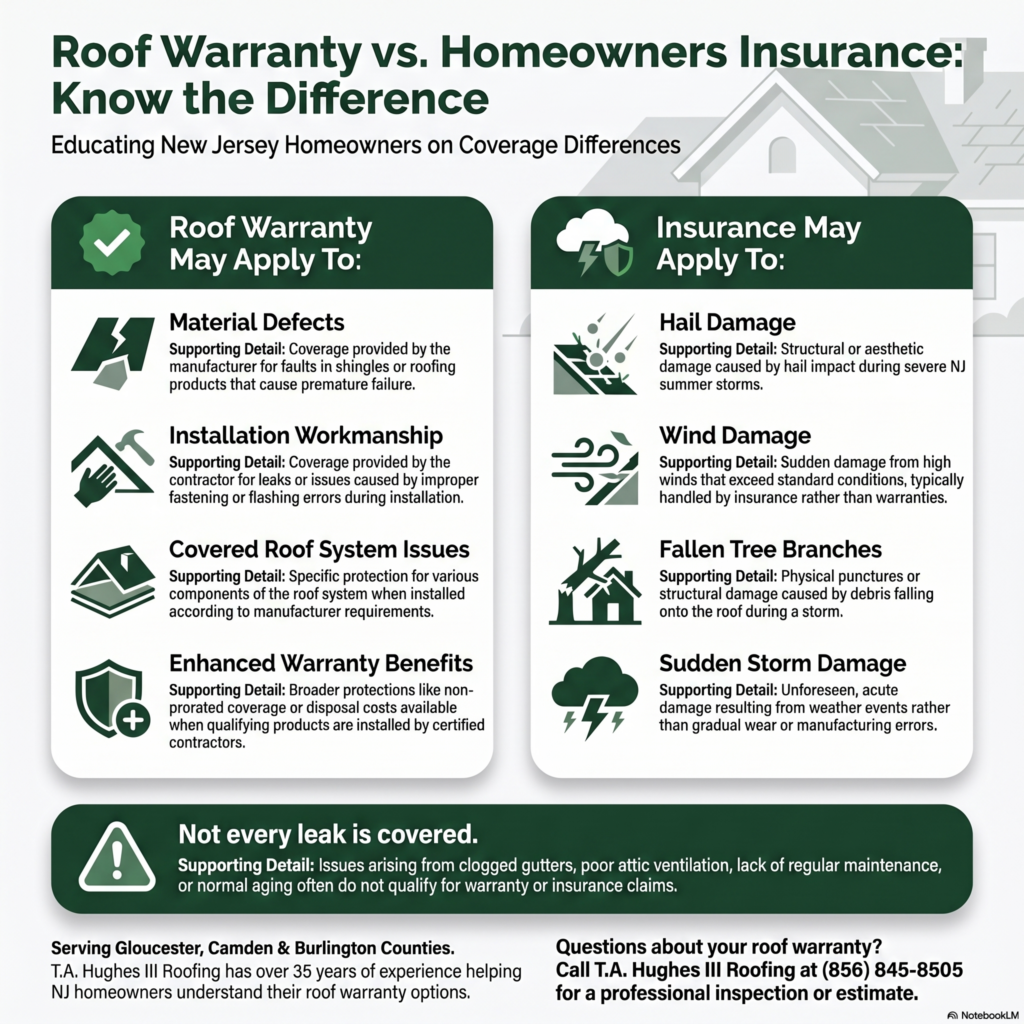
A roof warranty and homeowners insurance are not the same thing.
A roof warranty usually applies to product defects, installation-related issues, or specific covered conditions listed in the warranty.
Homeowners insurance may apply to sudden damage from events like storms, hail, wind, or falling trees, depending on your policy and the circumstances.
If your roof was damaged by a storm, start with documentation. Take photos, protect the interior from further damage if safe to do so, and schedule a professional roof inspection.
You may also find this helpful: How to File an Insurance Claim for Roof Damage in New Jersey.
What “Lifetime Roof Warranty” Really Means
The phrase “lifetime roof warranty” sounds simple, but homeowners should read it carefully.
In many roofing warranties, “lifetime” does not always mean the roof is covered forever in every situation. It may refer to the length of coverage for the original homeowner, and it may be subject to transfer rules, prorated coverage, exclusions, and eligibility requirements.
Ask these questions:
- Whose lifetime does the warranty refer to?
- Is the warranty prorated after a certain period?
- Does labor stay covered, or only materials?
- Are tear-off and disposal included?
- Is workmanship included?
- Can the warranty be transferred if the home is sold?
- Does the roof need to be registered?
- What maintenance is required?
This is one of the biggest things homeowners miss. The warranty term matters, but the coverage details matter more.
What Is a Workmanship Warranty?
A workmanship warranty covers certain problems related to how the roof was installed. This can be especially important because many roof leaks are not caused by defective shingles. They are often caused by installation details around flashing, valleys, vents, chimneys, skylights, or roof penetrations.
A workmanship warranty may apply if a covered installation mistake causes a problem. However, it usually does not cover damage caused by storms, neglect, unrelated repairs, or modifications made after the roof was installed.
Before hiring a roofer, ask for the workmanship warranty in writing. A verbal promise is not enough.
For more help comparing contractors, read: Roofing Contractor Near Me in Gloucester County: How to Compare Your Options.
What Can Void or Limit a Roof Warranty?
Many homeowners accidentally put their warranty at risk without realizing it.
Common warranty problems include:
Poor Attic Ventilation
Poor ventilation can trap heat and moisture in the attic. This can shorten roof life, contribute to mold or condensation, and affect shingle performance.
Improper Repairs
If an unqualified contractor repairs the roof incorrectly, it may affect warranty coverage.
Installing New Equipment on the Roof
Satellite dishes, solar panels, antennas, skylights, and other roof-mounted equipment can create penetrations. If they are not installed properly, they may lead to leaks that are not covered by the original roof warranty.
Lack of Maintenance
Ignoring missing shingles, clogged gutters, debris buildup, moss, algae, or flashing problems can lead to preventable damage.
Storm Damage
Storm damage is usually not treated the same as a product defect. If hail or high winds damage the roof, homeowners may need to contact their insurance company.
Failure to Register an Enhanced Warranty
Some enhanced warranties require registration. Make sure you receive written confirmation after the installation is complete.
What New Jersey Homeowners Usually Miss
Here are the most common roof warranty mistakes we see homeowners make.
They Assume Every Leak Is Covered
Not every leak is a warranty issue. A leak could be caused by flashing, gutters, ventilation, storm damage, chimney issues, skylights, siding, or roof penetrations.
If you notice a leak, schedule a professional inspection before assuming the cause.
Start here: Roof Inspection in New Jersey.
They Focus Only on the Length of the Warranty
A long warranty sounds impressive, but the terms matter. A shorter warranty with stronger labor, tear-off, and workmanship coverage may be more valuable than a long warranty with many limitations.
They Do Not Ask About Workmanship
The materials matter, but installation matters just as much. Ask who is installing the roof, what standards they follow, and what workmanship coverage is included.
They Forget About Ventilation
Ventilation can affect roof performance. A good roofing contractor should evaluate attic ventilation as part of the roof replacement conversation.
They Do Not Save Their Paperwork
Save your contract, warranty document, proof of payment, product information, warranty registration, inspection reports, and maintenance records. If you ever need to file a claim, documentation matters.
Roof Warranty Questions to Ask Before Replacing Your Roof
Before signing a roof replacement contract, ask your roofer these questions:
- What type of roof warranty is included?
- Is this a manufacturer warranty, workmanship warranty, or enhanced system warranty?
- Does the warranty cover labor?
- Does it cover tear-off and disposal if materials fail?
- Does it cover workmanship?
- How long is the non-prorated coverage period?
- What voids the warranty?
- Does the warranty need to be registered?
- Will I receive written warranty documentation?
- Can the warranty transfer if I sell my home?
- Are flashing, vents, ridge caps, starter strips, underlayment, and leak barriers included?
- Is storm damage covered by the warranty or by homeowners insurance?
A trustworthy contractor should be willing to walk you through these answers clearly.
When Should You Schedule a Roof Inspection?
Schedule a roof inspection if:
- You are buying or selling a home
- Your roof is older than 15 years
- You see missing, curling, or cracked shingles
- You notice granules in your gutters
- You have water stains on ceilings or walls
- Your roof leaked after heavy rain
- You had hail, high winds, or storm debris
- Your energy bills are rising unexpectedly
- You are unsure whether your roof is still under warranty
South Jersey weather can be tough on roofs, especially after summer thunderstorms and winter freeze-thaw cycles. A professional inspection can help determine whether you have a warranty issue, an insurance issue, a maintenance issue, or normal roof aging.
Related reading: What Does Hail Damage Look Like on a Roof?
Choosing the Right Roofing Contractor Matters
A roof warranty is important, but the contractor you choose matters just as much.
T.A. Hughes III Roofing, Siding, Windows & Gutters is a second-generation, family-owned South Jersey exterior contractor with more than 35 years of experience. The company serves homeowners throughout Gloucester County, Camden County, Burlington County, and nearby communities.
When you choose a local roofing contractor, you want someone who understands:
- South Jersey weather
- Local home styles
- Roof ventilation needs
- Storm damage patterns
- Proper flashing and drainage
- Manufacturer installation requirements
- Long-term maintenance expectations
Whether you need a full roof replacement, emergency repair, roof inspection, siding, windows, doors, gutters, or roof structure work, T.A. Hughes can help you understand your options before you make a decision.
Explore related services:
- Best Roofing Contractors in New Jersey
- Residential Roofing Contractors
- Commercial Roofing Contractors
- 24 Hour Emergency Roof Repair in NJ
- Roof Structure Contractor
- Siding Contractors New Jersey
- South Jersey Replacement Window and Door Contractor
Local Roofing Help in Gloucester, Camden, and Burlington Counties
T.A. Hughes serves homeowners throughout South Jersey, including:
- Gloucester County
- Deptford
- Mullica Hill
- West Deptford
- Washington Township
- Camden County
- Cherry Hill
- Haddonfield
- Voorhees
- Burlington County
- Moorestown
- Mount Laurel
- Marlton
- Medford
Roof Warranty FAQs
What does a roof warranty cover?
A roof warranty may cover roofing material defects, certain accessory products, and sometimes workmanship, depending on the warranty type. Coverage varies by manufacturer, contractor, installed products, and registration requirements.
Does a roof warranty cover leaks?
Sometimes. If the leak is caused by a covered product defect or covered workmanship issue, the warranty may apply. If the leak is caused by storm damage, clogged gutters, poor maintenance, unrelated flashing problems, or another outside factor, it may not be covered.
Does a roof warranty cover storm damage in New Jersey?
Usually, storm damage is handled through homeowners insurance, not a roof warranty. Hail, falling branches, and wind damage may be insurance matters depending on your policy.
What is a workmanship warranty on a roof?
A workmanship warranty covers certain installation-related problems. It is different from a manufacturer material warranty. Homeowners should always ask for workmanship coverage in writing.
Are roof warranties transferable when selling a home?
Some warranties may be transferable, but rules vary. There may be time limits, paperwork requirements, or registration steps. Always check the actual warranty document.
Can poor ventilation void a roof warranty?
Poor ventilation can limit or affect warranty coverage because trapped heat and moisture may damage the roof system. A professional roofer should evaluate attic ventilation during roof replacement.
Do I need to register my roof warranty?
Some basic manufacturer warranties may not require registration, but enhanced warranties often do. Ask your contractor for written confirmation that the warranty has been registered when required.
What paperwork should I keep after a roof replacement?
Keep your roofing contract, invoice, proof of payment, product details, warranty registration, inspection reports, photos, and maintenance records.
Is a lifetime roof warranty really lifetime?
“Lifetime” depends on the warranty language. It may apply to the original homeowner, have transfer limitations, or become prorated after a certain period. Always read the warranty terms.
Who should I call if I have a roof warranty question?
Start with the roofing contractor who installed the roof. If your roof was installed by T.A. Hughes or you need help understanding your roof condition, contact T.A. Hughes for guidance.
Final Takeaway: Read the Warranty Before You Need It
A roof warranty can provide valuable peace of mind, but only if you understand what is covered, what is excluded, and what responsibilities you have as the homeowner.
Before replacing your roof, ask about material coverage, workmanship coverage, warranty registration, transfer rules, ventilation requirements, and maintenance expectations.
If you are unsure whether your roof problem is a warranty issue, storm damage issue, or maintenance issue, the first step is a professional inspection.
T.A. Hughes III Roofing, Siding, Windows & Gutters has helped South Jersey homeowners protect and improve their homes for more than 35 years. If you have questions about roof warranties, roof replacement, storm damage, or roof inspections, contact the team today.
Call T.A. Hughes III Roofing at (856) 845-8505 or request a free estimate online.