

If your roof only leaks during heavy rain, it can feel confusing. On a normal rainy day, everything seems fine. Then a South Jersey thunderstorm rolls through, and suddenly there is a stain on the ceiling, dripping near a window, or water running down a wall.
The truth is that heavy rain often exposes roofing problems that lighter rain does not. A small flashing gap, clogged gutter, damaged roof valley, missing shingle, or ventilation issue may go unnoticed until wind-driven rain or fast-moving stormwater finds the weak spot.
For homeowners in Gloucester County, Camden County, Burlington County, and nearby South Jersey towns, roof leaks are especially common after summer storms, high winds, winter freeze-thaw cycles, and long periods of heavy rain. The key is to act quickly, protect your home from further damage, and schedule a professional roof inspection before the problem spreads.
If water is actively entering your home, visit 24 Hour Emergency Roof Repair in NJ or contact T.A. Hughes III Roofing, Siding, Windows & Gutters for help.
Quick Answer: Why Does a Roof Leak During Heavy Rain?
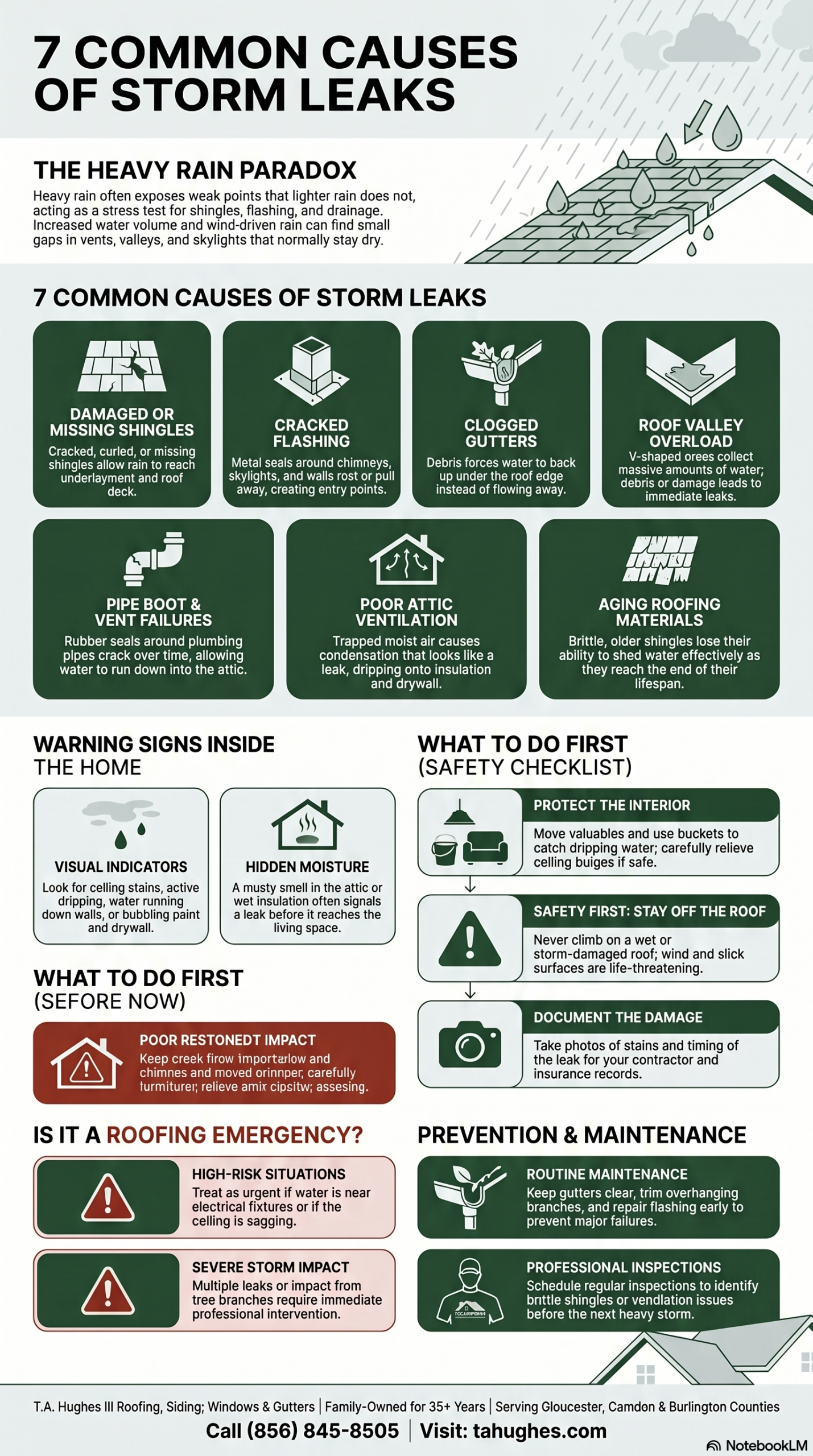
A roof may leak during heavy rain because stormwater is overwhelming a weak part of the roof system. Common causes include damaged shingles, cracked flashing, clogged gutters, overflowing roof valleys, poor attic ventilation, worn pipe boots, chimney leaks, skylight leaks, or roof penetrations that are no longer sealed properly.
Heavy rain does not always mean the roof has a large hole. In many cases, the leak starts with a small weakness that only shows up when water volume, wind, or drainage pressure increases.
The safest next step is to limit interior damage, avoid climbing on the roof during wet weather, and schedule a professional roof inspection in New Jersey.
Why Heavy Rain Finds Roof Problems Faster
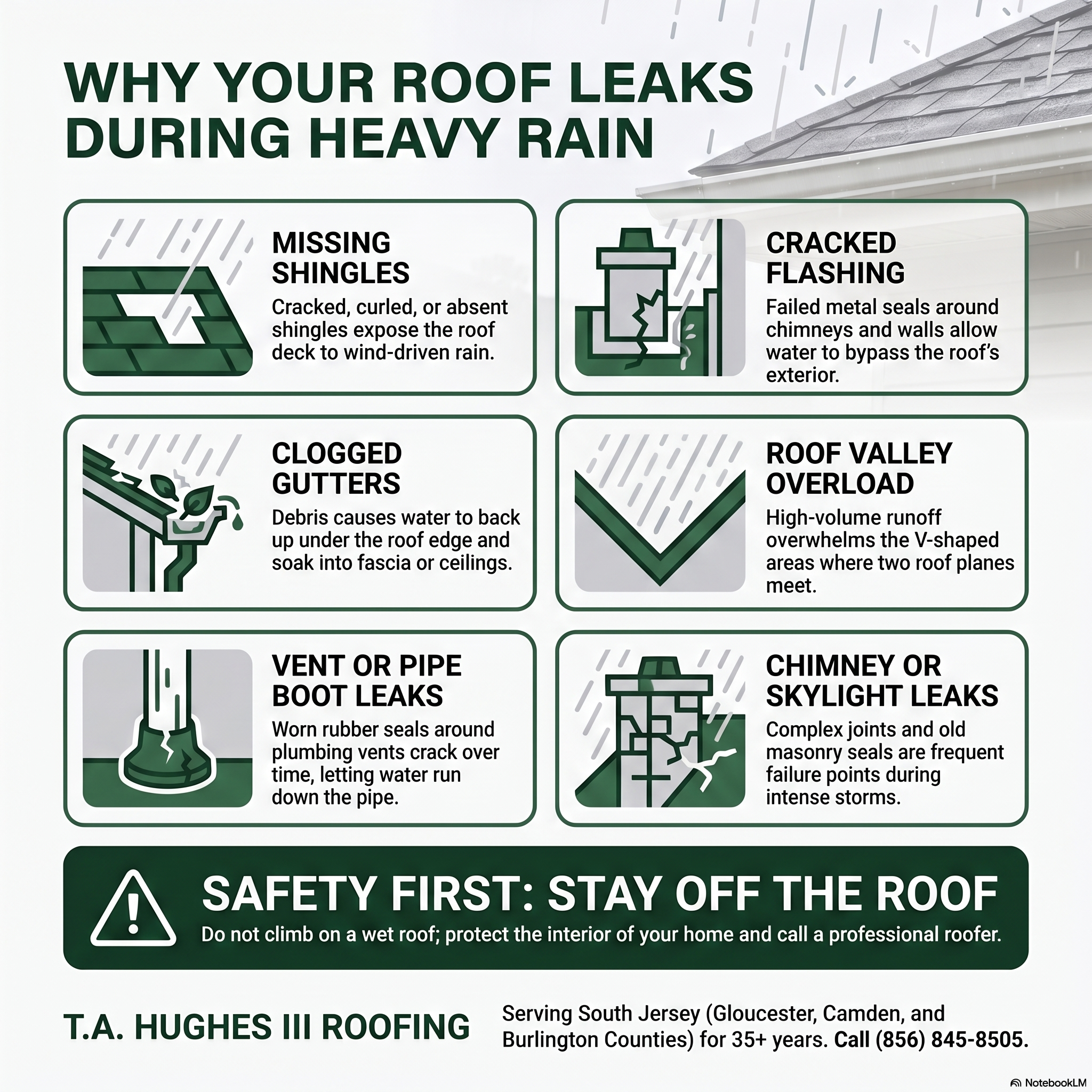
A roof is designed to shed water, not hold it. During a light rain, water may move down the shingles, into the gutters, and away from the home without much pressure. During a heavy South Jersey storm, water moves faster and can hit the roof from different angles.
Heavy rain can create problems because:
- More water flows into roof valleys at one time.
- Wind can push rain under loose shingles or flashing.
- Clogged gutters can force water backward toward the roof edge.
- Small cracks or gaps can become active leak points.
- Older roofing materials may no longer shed water as effectively.
- Flat or low-slope areas may drain too slowly.
In other words, heavy rain acts like a stress test for your roof. If there is a weak point, a strong storm may reveal it.
Common Reasons Roofs Leak During Heavy Rain
1. Damaged or Missing Shingles
Shingles are your roof’s first layer of protection. If shingles are cracked, curled, lifted, missing, or worn down, rain can reach the underlayment and roof deck below.
This is especially common after high winds or severe storms. Even one missing shingle can create a path for water, especially if the area is exposed to repeated rain.
Warning signs include:
- Shingles lying in the yard
- Bare patches on the roof
- Granules collecting in gutters
- Dark or uneven roof areas
- Ceiling stains after storms
If the leak appeared after hail or wind, read What Does Hail Damage Look Like on a Roof?.
2. Flashing Problems Around Chimneys, Walls, and Roof Edges
Flashing is the thin metal material used to help seal areas where the roof meets another surface, such as a chimney, wall, skylight, vent, or roof edge. These areas are common leak points because they interrupt the normal flow of water.
During heavy rain, water can push into small flashing gaps that would not leak during lighter rain. If flashing is rusted, loose, bent, poorly sealed, or installed incorrectly, water may enter the home.
Common flashing leak areas include:
- Chimneys
- Skylights
- Dormers
- Wall-to-roof intersections
- Pipe vents
- Roof edges
Flashing leaks can be tricky because the water may enter in one spot and show up inside several feet away.
3. Clogged or Overflowing Gutters
Gutters are supposed to move water away from the roofline and foundation. When gutters are clogged with leaves, sticks, seed pods, pine needles, or shingle granules, water can spill over the edge or back up under the roofline.
This can lead to leaks near fascia boards, soffits, exterior walls, and ceilings close to the edge of the home.
If gutters overflow every time it rains heavily, the issue may be:
- Clogged gutters
- Blocked downspouts
- Undersized gutters
- Not enough downspouts
- Poor gutter slope
- Roof valleys dumping too much water into one section
Helpful resources:
4. Roof Valley Leaks
Roof valleys are the V-shaped areas where two roof sections meet. These valleys collect water from two roof planes and send it down toward the gutters.
Because valleys handle so much water, they are one of the first places to leak during heavy rain. A roof valley may leak if shingles are worn, flashing is damaged, debris is blocking water flow, or the valley was not installed properly.
Signs of a roof valley issue include:
- Leaks that happen only during heavy rain
- Water stains below a valley area
- Debris collecting in the valley
- Missing or cracked shingles near the valley
- Overflowing gutters directly below the valley
5. Pipe Boot and Vent Leaks
Plumbing vent pipes stick up through the roof. Around each pipe is a boot or flashing piece that helps keep water out. Over time, rubber pipe boots can crack, split, or pull away from the pipe.
During heavy rain, water can run down the pipe and enter the attic or ceiling below.
This is a common leak source because the roof surface may look mostly fine from the ground, but the seal around the pipe has failed.
6. Chimney Leaks
Not every “roof leak” starts with the shingles. Chimneys can leak because of cracked masonry, damaged chimney crowns, missing caps, failing flashing, or worn sealant.
A chimney leak may show up as:
- Water stains near the fireplace
- Damp brick or mortar
- Musty smells
- Ceiling stains near the chimney
- Dripping during wind-driven rain
Because chimneys involve both roofing and masonry details, a professional inspection is the best way to determine the source.
7. Skylight Leaks
Skylights can brighten a home, but they are also common leak areas if the flashing, seal, or surrounding shingles fail. During heavy rain, water can collect around the skylight and enter through small openings.
A skylight may leak because of:
- Old or cracked seals
- Improper flashing
- Condensation mistaken for a leak
- Damaged shingles around the skylight
- Debris blocking drainage around the frame
If water appears around a skylight only during storms, have the surrounding roof and flashing checked.
8. Poor Attic Ventilation and Condensation
Sometimes what looks like a roof leak is actually condensation. Poor attic ventilation can trap warm, moist air inside the attic. When that moisture condenses, it can drip onto insulation, ceiling drywall, or framing.
This can be worse during temperature swings or after storms when humidity is high.
Signs the issue may involve ventilation include:
- Musty attic smell
- Wet insulation without an obvious roof opening
- Moisture around nails or roof decking
- Mold-like staining in the attic
- High indoor humidity
A professional roofer can help determine whether the problem is a leak, condensation, ventilation issue, or a combination of factors.
9. Low-Slope or Flat Roof Drainage Problems
Flat and low-slope roofs need proper drainage. If water sits too long, it can find weak seams, cracks, or worn areas.
This is especially important for commercial buildings, additions, porches, garages, and some older South Jersey homes.
Warning signs include:
- Standing water after rain
- Soft or bubbling roof areas
- Cracks in roof coating
- Leaks after prolonged storms
- Drainage around scuppers or internal drains backing up
For business owners and property managers, visit Commercial Roofing Contractors.
10. Old Roof Materials Near the End of Their Lifespan
As roofing materials age, they become less effective at shedding water. Shingles may lose granules, become brittle, curl at the edges, or crack. Sealants and flashing can also wear down over time.
If your roof leaks during heavy rain and is already older, repairs may help temporarily, but replacement may eventually be the better long-term solution.
Helpful related article: The Real Cost of Neglecting Roof Maintenance in New Jersey.
What to Do If Your Roof Leaks During Heavy Rain
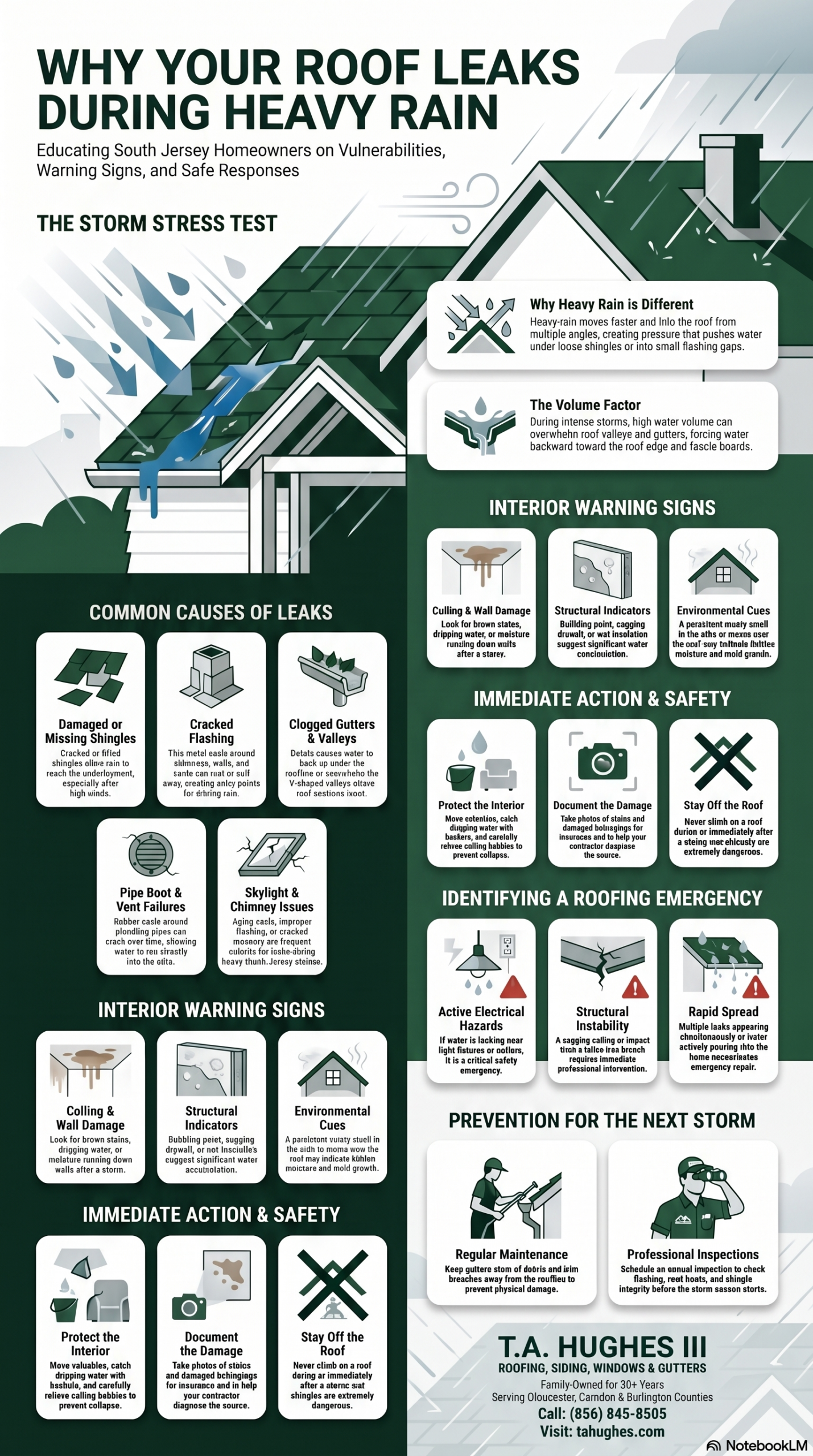
If water is entering your home during a storm, stay calm and focus on limiting damage safely.
Step 1: Protect the Interior
Move furniture, electronics, rugs, and valuables away from the leak. Use buckets, towels, or containers to catch dripping water.
Step 2: Relieve Ceiling Bulges Carefully
If water is pooling behind ceiling paint or drywall, it may form a bubble. A controlled release into a bucket can reduce the risk of a larger ceiling collapse, but only do this if you can do it safely and away from electrical fixtures.
Step 3: Do Not Climb on the Roof During a Storm
A wet roof is dangerous. Wind, rain, and slick shingles can lead to serious injury. Do not climb onto the roof during active rain or high winds.
Step 4: Take Photos and Notes
Document the leak location, ceiling stains, damaged belongings, and the storm timing. Photos can help your contractor diagnose the issue and may be useful if an insurance claim is needed.
Step 5: Schedule a Roof Inspection
Once conditions are safe, schedule a professional inspection. A roofer can check the roof surface, attic, flashing, vents, gutters, and drainage path.
Start here: Roof Inspection in New Jersey.
Is a Heavy Rain Roof Leak an Emergency?
A roof leak may be an emergency if water is actively entering the home, spreading quickly, affecting electrical areas, damaging ceilings, or causing the roof or drywall to sag.
Call for emergency roof repair if you notice:
- Active dripping during a storm
- Water near electrical fixtures
- Ceiling sagging or bubbling
- Multiple leaks at once
- Water running down walls
- Storm damage with missing shingles
- A branch or debris impact on the roof
For urgent help, visit 24 Hour Emergency Roof Repair in NJ.
Will Homeowners Insurance Cover a Roof Leak from Heavy Rain?
Homeowners insurance may cover sudden storm-related damage, but it usually depends on the cause of the leak, the condition of the roof, and the terms of your policy.
For example, if a storm damages shingles and water enters the home, insurance may apply. If the leak happened because of old materials, clogged gutters, poor maintenance, or long-term wear, coverage may be limited or denied.
The best first step is to document the damage and schedule a professional roof inspection. The inspection can help determine whether the issue appears storm-related, maintenance-related, or age-related.
Related guide: How to File an Insurance Claim for Roof Damage in New Jersey.
How to Prevent Roof Leaks During Heavy Rain
You cannot stop South Jersey storms, but you can reduce your risk of roof leaks with regular maintenance and timely repairs.
Homeowners should:
- Schedule roof inspections after major storms
- Keep gutters and downspouts clear
- Trim branches away from the roof
- Watch for missing or lifted shingles
- Check attic areas for stains or moisture
- Repair flashing issues early
- Make sure roof valleys are clear
- Address ventilation concerns
- Replace aging roof materials before leaks become frequent
For a broader maintenance plan, read The Ultimate Roof Maintenance Checklist for NJ Homeowners.
South Jersey Homes Need Local Roofing Experience
Roof leaks are not always simple. Water can travel along rafters, insulation, pipes, and framing before it appears inside your home. That means the stain you see on the ceiling may not be directly below the actual roof problem.
T.A. Hughes III Roofing, Siding, Windows & Gutters has served South Jersey homeowners for more than 35 years. As a second-generation, family-owned exterior contractor, the team understands the rooflines, storm patterns, gutters, siding, and drainage issues common throughout Gloucester County, Camden County, and Burlington County.
Whether you need emergency roof repair, a professional inspection, gutter service, roof maintenance, or a full roof replacement, T.A. Hughes can help you understand the problem and choose the right next step.
Explore local roofing services:
- Roofing Contractors in Gloucester County
- Roofing Contractors in Camden County
- Roofing Contractors in Burlington County
- Roofing Contractor in Cherry Hill
- Roofing Contractors in Deptford
- Roofing Contractors in Mullica Hill
- Roofing Contractors in Mount Laurel
Roof Leak FAQs
Why does my roof only leak during heavy rain?
Your roof may only leak during heavy rain because the added water volume or wind pressure exposes a weak spot. Common causes include damaged shingles, flashing gaps, clogged gutters, roof valley problems, pipe boot leaks, chimney leaks, skylight issues, or poor drainage.
Can clogged gutters cause a roof leak?
Yes. Clogged gutters can cause water to overflow or back up near the roof edge. That water may soak fascia, soffits, siding, or roof edges and eventually enter the home.
Is a roof leak always directly above the ceiling stain?
No. Water can travel along rafters, insulation, pipes, and framing before it appears inside. The visible ceiling stain may be several feet away from the actual leak source.
Should I climb on my roof to find the leak?
No. Do not climb on a wet or storm-damaged roof. It is safer to document the interior leak and call a professional roofer once conditions are safe.
Does homeowners insurance cover roof leaks from heavy rain?
It depends on the cause of the leak and your policy. Sudden storm damage may be covered, while leaks from age, poor maintenance, clogged gutters, or long-term wear may not be covered.
How fast should I fix a roof leak?
As soon as possible. Even a small roof leak can lead to insulation damage, ceiling stains, mold concerns, wood rot, and more expensive repairs if ignored.
Who should I call for roof leak repair in South Jersey?
Homeowners in Gloucester County, Camden County, Burlington County, and surrounding South Jersey communities can contact T.A. Hughes III Roofing, Siding, Windows & Gutters for roof leak inspections and repair options.
Final Takeaway: Heavy Rain Leaks Are a Warning Sign
If your roof leaks during heavy rain, do not wait for the next storm to see if it happens again. A small leak can point to a larger issue with shingles, flashing, gutters, roof valleys, ventilation, or drainage.
The safest approach is to protect the inside of your home, avoid roof climbing, document the problem, and schedule a professional roof inspection.
Call T.A. Hughes III Roofing, Siding, Windows & Gutters at (856) 845-8505 or request a roof inspection online.
Contact T.A. Hughes III Roofing
Disclaimer: This article is for general informational purposes only and does not replace a professional roof inspection. Roof leak causes, insurance coverage, repair options, and warranty coverage vary by home, roof condition, storm event, and policy terms.