
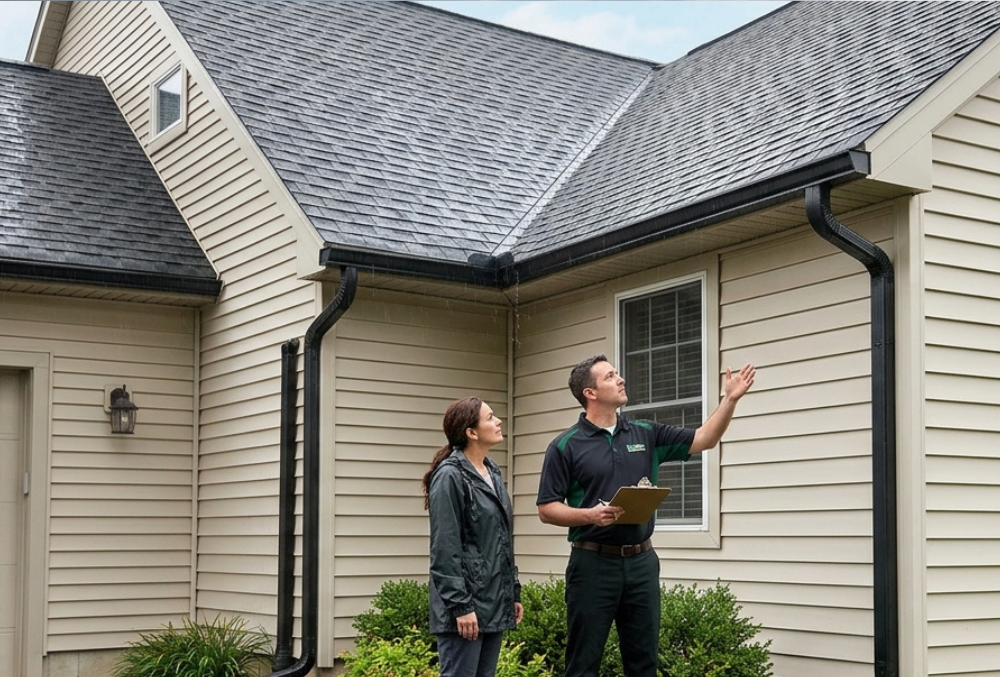
Quick Answer: How Do You Know If Your Gutters Are Big Enough?
Your gutters may not be big enough if they overflow during heavy rain even when they are clean, especially near roof valleys, corners, long gutter runs, or downspouts. A properly sized gutter system depends on the amount of roof area draining into each gutter section, the steepness of the roof, local rainfall intensity, the gutter size, and the number and size of downspouts.
For many South Jersey homes, the issue is not just the gutter itself. The real problem is often a combination of undersized gutters, too few downspouts, clogged outlets, poor gutter slope, or roof sections that send too much water into one small area.
If your gutters spill over during storms in Gloucester County, Camden County, or Burlington County, use the T.A. Hughes Gutter Sizing Calculator as a starting point. Then schedule a professional inspection if you see water pooling near the foundation, staining on siding, fascia damage, or recurring overflow.
Contact T.A. Hughes III Roofing, Siding, Windows & Gutters for help with gutter sizing, repair, cleaning, or replacement.
Why Gutter Size Matters During New Jersey Storms
South Jersey storms can drop a lot of water in a short amount of time. When that water runs down your roof, your gutter system has to catch it, move it, and discharge it safely away from your home.
When gutters are too small or the downspouts cannot keep up, water may spill over the front edge of the gutter. That overflow can look harmless at first, but repeated drainage problems can lead to bigger issues around the home.
Undersized or overloaded gutters may contribute to:
- Soil erosion around the foundation
- Basement or crawl space dampness
- Water stains on siding
- Fascia and soffit rot
- Damaged landscaping
- Mold and mildew concerns
- Ice problems in winter
- Roof edge deterioration
- Walkway settling near discharge areas
The goal of gutter sizing is simple: your gutters and downspouts should be able to handle the amount of water your roof sends to them during typical heavy storms.
For a deeper look at drainage problems, read: How Water Actually Moves Through a Roof and Into a Home.
What a Gutter Size Calculator Actually Does
A gutter size calculator helps estimate whether your current gutter system is large enough for the roof area it serves.
It usually looks at several factors:
- Roof drainage area
This is the amount of roof surface that drains into one gutter section. - Roof pitch
Steeper roofs can send water into gutters faster, especially during wind-driven rain. - Gutter run length
Long gutter runs may need more than one downspout to drain properly. - Rainfall intensity
Heavier local rainfall requires more drainage capacity. - Downspout size and count
Downspouts are often the bottleneck. A gutter may be large enough, but if the outlet or downspout is too small, water can still overflow. - Valleys and roof layout
Roof valleys can concentrate water into one spot. These areas often need special attention.
A calculator is a useful screening tool, but it cannot see every detail of your home. It cannot inspect gutter slope, clogged elbows, loose hangers, fascia condition, underground drains, or roofline design. That is where a professional gutter inspection helps.
Signs Your Gutters May Be Too Small
Your gutters may be undersized or overloaded if you notice these warning signs:
1. Water Overflows Even When Gutters Are Clean
If leaves and debris are not the issue, overflow may be caused by poor sizing, poor slope, or not enough downspouts.
2. Water Spills Over at Roof Valleys
Valleys collect water from two roof planes and send it into one location. If the gutter below that valley is too small, water can shoot over the edge during heavy rain.
3. Downspouts Sound Like They Are Struggling
If water backs up at the outlet or rushes over the gutter near the downspout, the downspout may be too small, clogged, or poorly positioned.
4. Soil Is Washing Away Near the Foundation
Overflowing gutters can dump water directly along the foundation. Over time, that can wash away soil and create drainage problems.
5. You See Stains on Siding or Brick
Streaks, splash marks, or dirty vertical stains may show where water is escaping the gutter system.
6. Fascia or Soffit Boards Are Soft, Peeling, or Rotting
When gutters overflow repeatedly, water can soak into the wood behind the gutter.
7. Your Basement Feels Damp After Heavy Rain
Gutters should move water away from the home. If water is spilling near the foundation, moisture may find its way inside.
Related resource: Poor Drainage Around the Roofline and Foundation Problems.
Gutter Size vs. Downspout Size: Which Matters More?
Both matter, but many homeowners focus only on the gutter.
A larger gutter can hold and move more water, but the water still needs a place to go. If there are too few downspouts, undersized downspouts, clogged elbows, or blocked underground drains, the system may overflow even if the gutter itself is large.
Think of it like a highway. A wider road helps traffic move, but if every car has to exit through one tiny ramp, traffic still backs up.
For gutters, the “exit ramp” is the downspout.
A properly designed gutter system should consider:
- Gutter width
- Gutter shape
- Gutter slope
- Outlet size
- Downspout size
- Downspout location
- Number of downspouts
- Distance water is discharged from the home
- Whether underground drains are clogged or crushed
If your home has long rooflines or several roof planes feeding into one area, adding another downspout may help more than simply replacing the gutter with a larger size.
Common Residential Gutter Sizes
Many homes use either 5-inch or 6-inch gutters, especially in K-style profiles. The right choice depends on the roof design and drainage load.
5-Inch Gutters
A 5-inch gutter may work for many standard homes with simpler rooflines, shorter gutter runs, and properly placed downspouts.
6-Inch Gutters
A 6-inch gutter may be a better fit for homes with:
- Large roof areas
- Steep roof slopes
- Long gutter runs
- Heavy tree coverage
- Multiple roof valleys
- Repeated overflow during storms
- Large amounts of water feeding into one gutter section
The best option depends on the home. Bigger is not always automatically better, but undersized gutters can create expensive problems over time.
For help with gutter repair or replacement, visit: Gutters, Repairs, and Cleaning in South Jersey.
How to Use a Gutter Size Calculator
Before using a gutter sizing calculator, gather a few basic details.
Step 1: Identify the Roof Area Draining to One Gutter
Do not calculate the entire roof at once unless all of it drains to the same gutter section. Most homes have several drainage zones.
Look at:
- The roof plane above the gutter
- Valleys that feed into the gutter
- Dormers or additions
- Porches or garage roof sections
- Where water naturally flows during rain
Step 2: Measure the Gutter Run
Measure the length of the gutter section from one end to the other. Long runs may need more than one downspout.
Step 3: Note the Roof Pitch
A steep roof can move water faster than a low-slope roof. You do not need to be a roofing expert, but a basic pitch estimate can improve the calculator result.
Step 4: Count the Downspouts
Count how many downspouts serve that gutter section. Also note whether they are small rectangular downspouts, larger rectangular downspouts, or round downspouts.
Step 5: Look for Problem Areas
Make note of any areas where water already overflows. Pay attention to corners, valleys, elbows, and downspout outlets.
Step 6: Run the Calculator
Use the Gutter Sizing Calculator to get a practical starting point.
Step 7: Confirm With a Professional Inspection
A calculator can help you understand the issue, but a contractor can inspect gutter pitch, fascia condition, roof drainage patterns, downspout placement, and whether your system needs repair, cleaning, guards, or replacement.
What If Your Gutters Are the Right Size But Still Overflow?
If your gutters are properly sized but still overflow, the issue may be something else.
Common causes include:
Clogged Gutters
Leaves, sticks, pine needles, seed pods, shingle granules, and roof debris can block water flow.
Clogged Downspouts
Downspout elbows are common clog points. A gutter may look clean from the ground while the downspout is still blocked.
Poor Gutter Slope
Gutters need the right pitch to move water toward the downspouts. If they sag or slope the wrong way, water may pool or spill over.
Loose or Damaged Hangers
Gutters can pull away from the fascia over time. This changes the angle and reduces performance.
Roof Valley Overload
A roof valley may send too much water into one small section. A diverter, larger gutter, or better downspout placement may be needed.
Underground Drain Problems
If the downspout connects to an underground drain that is clogged or crushed, water can back up.
Gutter Guards That Are Not Performing Well
Some gutter protection systems help reduce debris, but they do not solve every drainage issue. If the guard sheds water too fast or clogs at the surface, overflow may continue.
Related reading: Are Gutter Guards Worth It in NJ? Pros, Cons & Local Recommendations.
Do Gutter Guards Change Gutter Sizing?
Gutter guards can help reduce leaf and debris buildup, but they do not change the basic drainage needs of your roof.
If your gutters are already undersized, adding gutter guards may not fix overflow during a heavy storm. A gutter guard can help keep debris out, but the system still needs enough capacity to handle the water coming off the roof.
Gutter guards may be helpful for South Jersey homes with:
- Mature trees
- Frequent leaf buildup
- Pine needles
- Seed pods
- Clogged downspouts
- Repeated seasonal gutter cleaning needs
T.A. Hughes offers Leaf Relief gutter protection options for homeowners who want to reduce clogs and improve gutter performance.
Why South Jersey Homes Need Extra Attention
Homes in Gloucester County, Camden County, and Burlington County can face a mix of weather challenges throughout the year.
South Jersey gutter systems deal with:
- Heavy summer thunderstorms
- Wind-driven rain
- Tropical storm remnants
- Fall leaves
- Winter snow and ice
- Freeze-thaw cycles
- Spring pollen, sticks, and debris
- Older home rooflines with additions or complex drainage paths
A gutter system that worked years ago may no longer perform well if the roof was replaced, an addition was built, trees grew larger, drainage patterns changed, or downspouts became clogged.
That is why gutter sizing should be part of a larger roof and drainage conversation, not just a quick measurement.
Gutter Sizing Checklist for NJ Homeowners
Use this checklist before replacing your gutters:
- Do gutters overflow when clean?
- Does water spill near roof valleys?
- Are there enough downspouts?
- Are downspouts large enough?
- Is water draining at least several feet away from the foundation?
- Are gutters sagging or pulling away?
- Are fascia boards soft or damaged?
- Are there stains on siding?
- Is soil washing away near the foundation?
- Are underground drains clear?
- Are gutter guards helping or making overflow worse?
- Has the roofline changed because of an addition or renovation?
- Has a professional inspected the full drainage path?
If you answered yes to several of these questions, your gutters may need cleaning, repair, adjustment, larger downspouts, or replacement.
For seasonal maintenance help, read: The Ultimate Roof Maintenance Checklist for NJ Homeowners.
When to Call a Professional
Call a professional gutter contractor if:
- Water overflows during every heavy rain
- You see foundation pooling
- Gutters are sagging or separating
- Downspouts are loose or disconnected
- Fascia or soffit boards look damaged
- You have recurring basement moisture
- Your gutters are too high or unsafe to inspect
- You are unsure whether the problem is size, slope, clogging, or roof design
A professional inspection can help determine whether your gutters need a simple cleaning, a downspout adjustment, larger gutters, gutter guards, or a full replacement.
T.A. Hughes III Roofing, Siding, Windows & Gutters has helped South Jersey homeowners protect their homes for more than 35 years. As a local, family-owned exterior contractor, the team understands how rooflines, gutters, siding, windows, and drainage work together to protect your home.
Schedule a service visit here: Contact T.A. Hughes III Roofing.
Related Services and Resources
Explore these related T.A. Hughes resources:
- Gutter Sizing Calculator
- Gutters, Repairs, and Cleaning in South Jersey
- Leaf Relief Gutter Protection
- Are Gutter Guards Worth It in NJ?
- Poor Drainage Around the Roofline and Foundation Problems
- How Water Actually Moves Through a Roof and Into a Home
- Roof Inspection in New Jersey
- 24 Hour Emergency Roof Repair in NJ
Gutter Size Calculator FAQs
What size gutters do I need for my house?
The right gutter size depends on your roof area, roof pitch, gutter run length, rainfall intensity, and downspout capacity. Many homes use 5-inch or 6-inch gutters, but the best choice depends on how much water each gutter section must handle.
Are 6-inch gutters better than 5-inch gutters?
Not always, but 6-inch gutters may be better for larger homes, steep roofs, long gutter runs, heavy rainfall areas, or roof valleys that send a lot of water into one section. A professional can inspect your roofline and recommend the right size.
How do I know if my gutters are too small?
Signs include water spilling over during heavy rain, overflow at roof valleys, water pooling near the foundation, siding stains, soil erosion, fascia damage, and damp basement conditions.
Can clogged gutters look like undersized gutters?
Yes. A clogged gutter or downspout can overflow even if the gutter is the correct size. Clean the system first or have it inspected before assuming the gutters need to be replaced.
Do downspouts affect gutter sizing?
Yes. Downspouts are a major part of gutter performance. Too few downspouts, small downspouts, clogged elbows, or poorly placed outlets can cause overflow.
Can gutter guards fix overflowing gutters?
Gutter guards may reduce clogs, but they do not fix an undersized gutter system. If the gutter or downspouts cannot handle the water volume, overflow may continue.
Why do gutters overflow only in one spot?
One spot may overflow because of a roof valley, low gutter slope, sagging section, clogged outlet, blocked downspout, or too much roof area draining to that location.
Should I replace gutters when I replace my roof?
It depends on the condition and size of the gutters. If gutters are damaged, undersized, poorly pitched, or pulling away from the fascia, roof replacement is a good time to discuss gutter improvements.
Who installs gutters in South Jersey?
T.A. Hughes III Roofing, Siding, Windows & Gutters installs and services gutter systems for homeowners throughout Gloucester County, Camden County, Burlington County, and surrounding South Jersey communities.
Final Takeaway: Gutters Need to Match the Roof, Not Just the House
A gutter system should be sized for the roof area, stormwater load, downspouts, and drainage path. If your gutters overflow during New Jersey storms, the problem may be gutter size, downspout capacity, clogs, slope, or roof design.
Start with the T.A. Hughes Gutter Sizing Calculator to better understand your home’s drainage needs. Then schedule a professional inspection if you notice overflow, pooling, or signs of water damage.
Call T.A. Hughes III Roofing, Siding, Windows & Gutters at (856) 845-8505 or request an estimate online.