
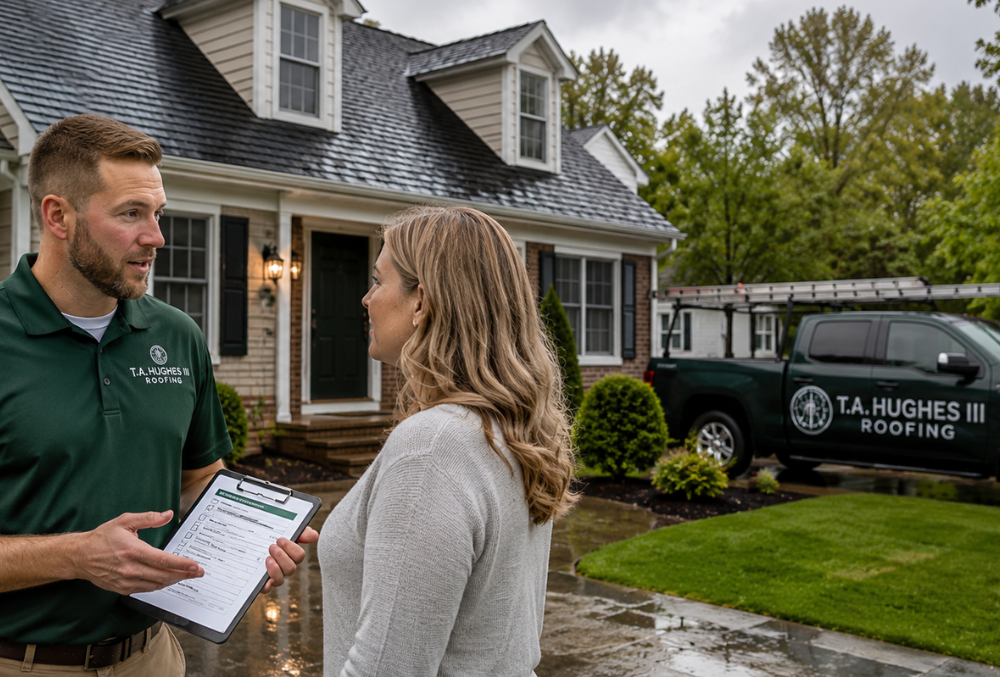
After a summer storm in New Jersey, roof damage can happen fast. Heavy rain, wind, hail, falling branches, and clogged gutters can all create leaks or expose weak areas of the roof. For many homeowners, the first question is simple: how much will emergency roof repair cost?
The honest answer is that emergency roof repair cost in NJ depends on the type of damage, how urgent the repair is, the roof material, the roof height and pitch, whether interior water damage is involved, and whether the repair is temporary or permanent.
Some storm-related roof repairs are small and localized. Others require leak tracing, emergency tarping, flashing repairs, shingle replacement, decking repair, or a larger roof replacement conversation. The goal is to stop active water intrusion, prevent additional damage, and identify the real cause before the next storm hits.
If water is actively entering your home, start here: 24 Hour Emergency Roof Repair in NJ.
Quick Answer: How Much Does Emergency Roof Repair Cost in NJ?
Emergency roof repair in New Jersey can range from a few hundred dollars for a small, localized repair to several thousand dollars when storm damage affects shingles, flashing, decking, roof valleys, or multiple leak points. Emergency service, after-hours calls, steep roofs, two-story access, storm demand, and hidden water damage can increase the final cost.
A temporary emergency repair, such as tarping or sealing an active leak, may cost less than a permanent repair. However, temporary repairs are usually meant to protect the home until a full inspection and proper repair can be completed.
The best way to get accurate pricing is to schedule a professional inspection so the contractor can identify the source of the leak, document the damage, and explain repair options clearly.
Emergency Roof Repair Cost Ranges Homeowners Should Understand
Every home is different, but these general ranges can help South Jersey homeowners understand what may affect the price after a storm.
| Repair Type | What It May Include | Typical Cost Level |
|---|---|---|
| Minor Emergency Repair | Small shingle repair, exposed nail sealing, minor pipe boot issue, small leak point | Lower cost |
| Moderate Storm Repair | Flashing repair, roof valley issue, several missing shingles, leak tracing, limited water entry | Mid-range cost |
| Major Emergency Repair | Larger storm damage, decking repair, multiple leak points, branch impact, structural concerns | Higher cost |
| Temporary Tarping | Emergency protection to reduce active water entry until permanent repairs are made | Varies by roof size, height, and access |
| Full Replacement Discussion | Needed when storm damage, age, leaks, or widespread deterioration make repair less practical | Project-specific estimate required |
These are not fixed prices. They are practical categories to help you understand why one roof repair may be simple while another may require a much larger scope of work.
What Affects Emergency Roof Repair Cost?
1. The Type of Storm Damage
Summer storms can damage roofs in several ways. Wind may lift or remove shingles. Hail may bruise shingles or knock off granules. Falling branches can puncture the roof. Heavy rain can expose weak flashing, roof valleys, skylights, or pipe boots.
The more severe the damage, the more time and materials the repair may require.
Related guide: What Does Hail Damage Look Like on a Roof?
2. Whether the Repair Is Temporary or Permanent
An emergency repair may involve stopping active water entry first. This could include tarping, sealing a leak point, or securing damaged materials until permanent repairs can be scheduled.
A temporary repair is not the same as a full repair. If a tarp or temporary seal is used, the roof should still be inspected and repaired properly once conditions are safe.
3. Roof Height, Pitch, and Accessibility
A low, easy-to-access roof is usually simpler to repair than a steep, two-story, or complex roof. Steeper roofs may require additional safety equipment, more labor time, and extra care.
Access also matters. Landscaping, tight driveways, additions, porches, solar panels, skylights, or multiple roof levels can make the job more complicated.
4. The Source of the Leak
Some leaks are easy to find. Others are not. Water can enter through one area of the roof and travel along rafters, insulation, or framing before showing up inside the home.
A ceiling stain may not be directly below the roof problem. That is why leak tracing and attic inspection may be part of the cost.
Helpful article: Why Your Roof Leaks During Heavy Rain in South Jersey
5. Damage to Decking, Fascia, or Interior Areas
If water has been entering the home for a while, the problem may go beyond shingles. Wet roof decking, rotted fascia, damaged soffits, soaked insulation, and stained drywall can all increase the scope of work.
Fast action matters. A small leak can become a larger repair if the damaged area stays wet through multiple storms.
6. Roofing Material
Asphalt shingle repairs are usually more common and straightforward than repairs involving slate, tile, metal, flat roofing, or specialty materials. Matching older shingles can also affect repair planning.
For homeowners comparing materials, read Top 5 Roofing Materials for NJ Homes and How to Choose the Right One.
7. Emergency Timing and Storm Demand
After a major South Jersey storm, many homeowners may need help at the same time. Emergency calls, after-hours service, weekend response, and storm-demand scheduling can affect cost and availability.
That does not mean you should wait if water is actively entering your home. It means you should call quickly, document the issue, and ask for clear next steps.
What Should You Do Right After Storm Damage?
If you suspect roof damage after a summer storm, take these steps:
Step 1: Protect the Inside of Your Home
Move furniture, electronics, rugs, and valuables away from the leak. Use buckets, towels, or containers to catch dripping water.
Step 2: Stay Off the Roof
Do not climb on a wet or storm-damaged roof. Wet shingles, wind, lightning, and hidden damage can make the roof unsafe.
Step 3: Take Photos
Document ceiling stains, dripping water, damaged shingles visible from the ground, fallen branches, hail, and any interior damage.
Step 4: Call a Professional Roofer
A professional can inspect the roof, identify the source of the problem, and explain whether emergency repair, temporary protection, or replacement should be considered.
Start here: Roof Inspection in New Jersey
Step 5: Contact Your Insurance Company if Storm Damage Is Suspected
If the damage appears sudden and storm-related, your homeowners insurance policy may be involved. A roof inspection can help document the condition of the roof before you speak with your insurance company.
Related resource: How to File an Insurance Claim for Roof Damage in New Jersey
Will Insurance Cover Emergency Roof Repair After a Summer Storm?
Homeowners insurance may cover roof damage if the problem was caused by a sudden covered event, such as wind, hail, or a falling tree branch. However, coverage depends on your policy, deductible, roof condition, maintenance history, and the cause of the damage.
Insurance may be less likely to cover damage caused by old roofing materials, poor maintenance, clogged gutters, long-term leaks, or normal wear and tear.
Before assuming what is covered, document the damage, read your policy, and schedule a professional roof inspection. The inspection can help separate storm damage from age-related or maintenance-related issues.
Emergency Repair vs. Roof Replacement: Which Makes More Sense?
Not every storm-damaged roof needs replacement. If the roof is newer and the damage is isolated, a repair may be the right choice.
However, replacement may be worth discussing if:
- The roof is near the end of its expected lifespan.
- Leaks are recurring after multiple repairs.
- Storm damage affects several roof slopes.
- Shingles are brittle, curling, or losing granules.
- There is decking damage or widespread water intrusion.
- Repair costs are becoming less practical.
If replacement may be needed, review The Best Time of Year to Replace Your Roof in New Jersey.
How to Avoid Overpaying for Emergency Roof Repair
After a storm, homeowners can feel pressured to make a fast decision. Urgency is real when water is entering the home, but you should still expect clear communication.
Before approving work, ask:
- What caused the leak?
- Is this a temporary repair or permanent repair?
- What materials will be used?
- Will photos be provided?
- Is decking damage visible or suspected?
- Does this repair affect any roof warranty?
- Could this damage be part of an insurance claim?
- What happens if more damage is found?
You should be cautious of contractors who show up after storms using high-pressure tactics, vague pricing, or scare-based sales language.
Helpful guide: How to Spot a Roofing Scam: Red Flags for NJ Homeowners
Common Emergency Roof Repair Scenarios After NJ Summer Storms
Missing Shingles After High Winds
Wind can lift or remove shingles, especially on older roofs or exposed roof edges. A small missing section can quickly become a leak if rain reaches the underlayment or decking.
Active Leak Around a Chimney or Skylight
Flashing around chimneys and skylights is a common leak source during wind-driven rain. These repairs may require careful inspection because water can travel before it appears inside.
Water Backing Up From Clogged Gutters
Gutters filled with leaves, sticks, or shingle granules may overflow and push water toward the roof edge, fascia, soffits, or siding.
Related service: Gutter Repairs and Cleaning
Branch Impact or Puncture Damage
A falling limb can puncture shingles, damage decking, or create an opening that needs immediate protection.
Flat Roof Ponding or Drainage Problems
Commercial buildings, additions, garages, and low-slope roof sections may leak when water cannot drain properly after heavy rain.
Commercial resource: Commercial Roofing Contractors
Why South Jersey Homeowners Call T.A. Hughes
T.A. Hughes III Roofing, Siding, Windows & Gutters is a second-generation, family-owned South Jersey exterior contractor with more than 45 years of experience. The team serves homeowners throughout Gloucester County, Camden County, Burlington County, and nearby communities.
When storm damage happens, local experience matters. South Jersey homes deal with summer thunderstorms, high winds, heavy rain, winter freeze-thaw cycles, mature trees, older rooflines, and gutter drainage problems. T.A. Hughes understands how roofing, siding, gutters, windows, ventilation, and drainage all work together to protect the home.
Explore local service pages:
- Roofing Contractors in Gloucester County
- Roofing Contractors in Camden County
- Roofing Contractors in Burlington County
- Roofing Contractors in Deptford
- Roofing Contractor in Cherry Hill
- Roofing Contractors in Mount Laurel
Emergency Roof Repair Cost FAQs
How much does emergency roof repair cost in NJ?
Emergency roof repair cost in NJ depends on the type of damage, roof access, materials, timing, and whether the repair is temporary or permanent. Small repairs may cost much less than repairs involving decking damage, multiple leaks, storm impact, or structural concerns.
Does emergency roof repair cost more after hours?
It can. Emergency calls, after-hours work, weekend service, and storm-demand scheduling may increase cost because of urgency, labor availability, and safety requirements.
Is tarping a roof a permanent repair?
No. Tarping is usually temporary protection to reduce water entry until a permanent repair can be completed.
Will insurance pay for emergency roof repair?
Insurance may apply if the roof damage was caused by a sudden covered event, such as wind, hail, or a falling branch. Damage from age, poor maintenance, clogged gutters, or long-term leaks may not be covered.
Should I repair or replace my storm-damaged roof?
It depends on the roof age, damage severity, number of leak points, shingle condition, decking condition, and repair history. A professional inspection can help determine whether repair or replacement makes more sense.
What should I do before the roofer arrives?
Protect the interior, move valuables, catch dripping water, take photos, avoid climbing on the roof, and write down when the leak started.
Who provides emergency roof repair in South Jersey?
T.A. Hughes III Roofing, Siding, Windows & Gutters provides roofing services for homeowners throughout South Jersey, including Gloucester County, Camden County, Burlington County, and nearby communities.
Final Takeaway: Do Not Wait on Storm-Related Roof Damage
Emergency roof repair cost in NJ depends on the situation, but waiting usually makes water damage more expensive. A small leak after a summer storm can lead to damaged insulation, stained ceilings, rotted decking, mold concerns, and bigger repairs if ignored.
If your roof is leaking, missing shingles, damaged by wind or hail, or showing signs of storm impact, schedule an inspection as soon as it is safe.
Call T.A. Hughes III Roofing, Siding, Windows & Gutters at (856) 845-8505 or request emergency roof repair help online.
Contact T.A. Hughes III Roofing
Disclaimer: This article is for general informational purposes only. Roof repair costs, emergency service availability, insurance coverage, warranty coverage, and repair recommendations vary by home, roof condition, storm event, materials, access, and policy terms. A professional inspection is recommended before making repair or replacement decisions.