
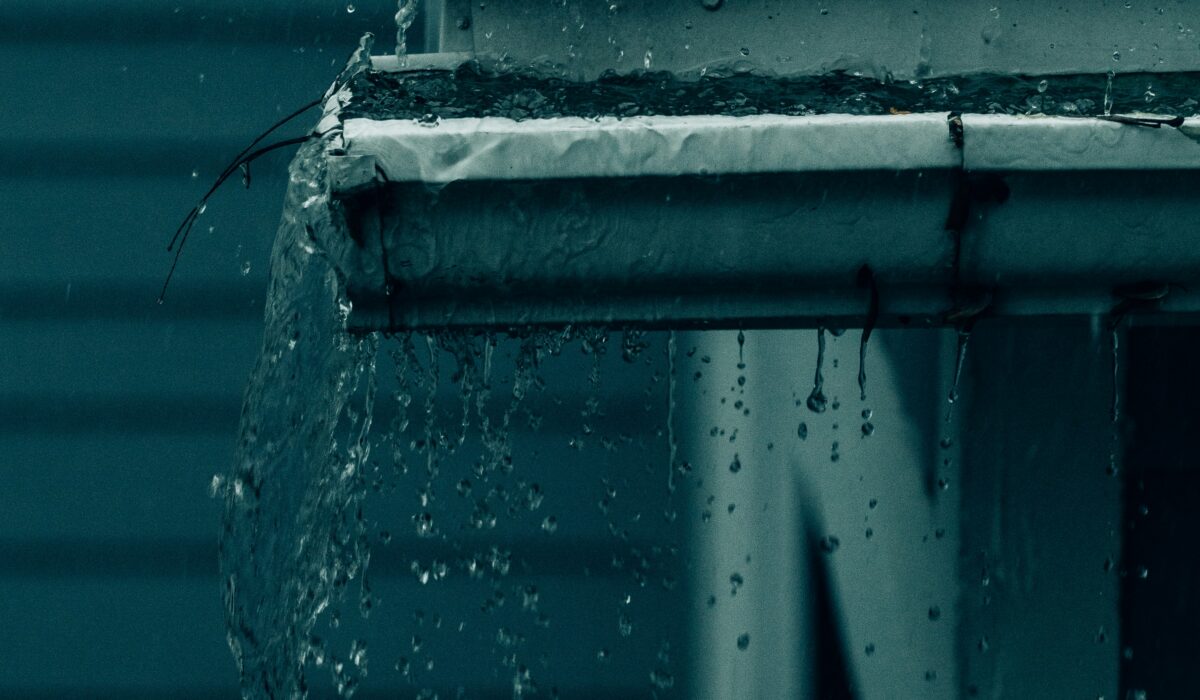
Water follows the path of least resistance, so when your South Jersey home has a roofing issue, it may end up where you want it least. Imagine rain hitting the roof, running over the shingles, down the valley, to the gutters. A crack or clog in the gutter will redirect it, often to the soil around your home, where it may cause foundation damage over time. This is one of many reasons why homeowners should regularly inspect their entire roofing system, from the shingles to the gutters and downspouts, to catch problems before they begin.
Key Takeaways
- Water follows the path of least resistance. A roofing problem can allow water to travel through the roof system, walls, insulation, and other parts of the home before the damage becomes visible.
- Gutters and downspouts are part of your roof’s water-management system. They collect roof runoff and direct it away from the home’s foundation.
- Clogged or damaged gutters can concentrate water around the foundation. Persistent runoff can saturate the surrounding soil and increase the potential for moisture to enter through existing vulnerabilities.
- Foundation moisture can have multiple causes. Roof runoff may contribute to water problems, but foundation cracks and other issues can also result from age, existing deficiencies, or other drainage conditions.
- Regular inspections can help identify problems early. Check the roof, gutters, downspouts, and areas around the foundation—especially after severe weather or when you notice recurring leaks, overflow, pooling water, or persistent moisture.
How a Roof Is Supposed to Move Water
Roofing is constructed to effectively move water away from your home. Precipitation lands on the surface of the roof and is shed downward over the shingles. However, the shingles are only the beginning. Beneath the shingles is the underlayment, a waterproof moisture barrier, a plywood deck, and drip edges, installed at the edge of your roof. Houses with attics will have ventilation materials beneath the roof deck. Should water infiltrate the shingles, it is typically stopped by the materials underneath—unless they are also damaged.
Flashing and Vulnerable Roof Transitions
There are several components of a roof that may increase the risk of a leak if not properly sealed with flashing:
- Roof-to-wall intersections
- Chimneys
- Skylights
- Penetrations, such as vents and air ducts
Important of Gutters and Downspouts
At the edge of the roof is the gutter system, integral to water management. As water reaches the roof edge, it collects in the gutter, rather than becoming a concentrated runoff that pours directly down the side of the structure, pooling along the foundation.
Downspouts, where the water is funneled, have the final task of the entire roofing system: sending the water away from your home. For that reason, downspouts are often positioned to funnel water elsewhere, often to lower areas in the yard where the water can safely soak into the earth, such as flower beds or a driveway.
What Happens When Water Gets Through the Roof
It does not take much for water to find a gap. Problems like failed flashing, damaged or missing shingles, deteriorated roofing components, aging materials, and storm damage become open doors. Once beneath the roofing materials, water can travel along the roof deck, leading to a slow trickle along the frame. It may also soak into the insulation.
Commonly, homeowners in South Jersey report seeing brown stains on their ceilings and walls but can’t find the leak. The fact that water travels means that the damage may be, for example, uplifted flashing by the chimney, but the resulting damage may show up on the opposite end of the house.
Brown stains appearing on your ceiling? Check out “How Water Moves Through a Roof” to learn more.
How Roof Water Becomes an Exterior Drainage Problem
While punctures or missing shingles often lead to roof leaks within the house, the cause of foundational water damage is often something else. Even when your roofing surface is functioning properly, large amounts of water concentrated along the roof edge may lead to drainage issues.
Clogged or damaged gutters, poorly positioned downspouts, and inadequate drainage compound. As soon as water spills over the drip edge, it has to be transported quickly. If it backs up even a bit, there is a risk of it running down the edifice of the house or overflowing over the side of the gutter.
Concentrated runoff can saturate the soil around a home. This isn’t the same as ordinary rainfall that falls steadily. Runoff that drills into the earth may not soak in right away and pool along the foundation. Like a roof leak, water will find its way into any vulnerabilities along the foundation, worsening them gradually.
How Excess Water Around the Foundation Can Cause Problems
Persistent moisture is the bane of any South Jersey home. When the ground stays saturated, the likelihood of water finding pathways into the below-grade space increases.
Potential pathways for water infiltration include:
- Foundation cracks
- Joints
- Basement and crawlspace openings
- Poorly sealed penetrations
- Existing waterproofing deficiencies
Runoff is often not the cause of foundation cracks—that may happen with age. However, the foundation is not designed to withstand excessive amounts of moisture. When that water pressure is applied, it can begin to break down the foundation’s materials, resulting in structural cracking.
South Jersey Weather Puts This System Under Stress
Although South Jersey doesn’t receive many hurricanes or tornadoes like other parts of the country, severe storms are common, especially along the coastline. It is not uncommon for the state to receive:
- Heavy summer thunderstorms with strong wind and rain
- Periods of intense rainfall and humidity
- Freeze-thaw cycles
- Winter precipitation
- Wind-driven rain
Aging exterior systems simply can’t hold up against repeated storms and ongoing humidity. That is why it is important to have routine roof inspections, at least twice a year, to uncover any damage from winter or summer that may impact how your roof and drainage systems work.
Explore local service pages:
- Roofing Contractors in Gloucester County
- Roofing Contractors in Camden County
- Roofing Contractors in Burlington County
- Roofing Contractors in Deptford
- Roofing Contractor in Cherry Hill
- Roofing Contractors in Mount Laurel
Signs Your Home May Have a Water-Management Problem
Now that you know what could happen to your home in South Jersey if the roof and gutter systems aren’t working properly, let’s discuss the signs of a water management problem. Whenever you conduct a visual inspection of your home, keep an eye out for the following:
Roof-Level Signs
- Missing or damaged shingles
- Damaged flashing
- Recurring leaks
- Water stains
- Deteriorated roofing components
Gutter-Level Signs
- Gutters overflowing during rain
- Water pouring over the sides
- Sagging gutters
- Clogged downspouts
- Water collecting near the house
Foundation-Level Signs
- Persistent dampness
- Water intrusion
- Efflorescence – salt coming to the surface of the foundation (or around it) as a water powder or crust
- Basement or crawlspace moisture
- Soil that remains saturated near the foundation
How to Reduce the Risk of Water Damage
The risk of water damage depends largely on where in South Jersey you are located and how much moisture your property receives throughout the year. Beyond that, there are measures homeowners can do to minimize the risk of water intrusion.
The first step is to keep your roof in good condition. Call in a South Jersey roofing contractor for periodic inspections, particularly after severe storms or strong wind. Any visible damage you notice should be addressed as soon as possible. It doesn’t take long for water to infiltrate gaps and tears.
Next, keep your gutters and downspouts functional. At least twice a year—or more often if there are trees around your home—clean out your gutters. You may also consider have leaf guards installed to prevent any clogs. Whenever it rains, watch out for an overflow and see where the downspouts are discharging water. If anything begins to run towards the foundation, you may need to alter the course of the gutters or the angle of the downspout.
Never ignore persistent moisture around a foundation.
When Should You Have the Roof and Drainage System Inspected?
Inspections can help homeowners keep their roof and gutter system in the best condition. As such, if you notice any of the following issues, consider scheduling an inspection:
- Recurring roof leaks
- Visible roof damage
- Gutters that repeatedly overflow
- Water pooling near the foundation
- Interior moisture appearing after rain
- An older roof
- Recent severe weather
Similarly, if you are uncertain about an issue with your roof or can’t determine whether you have a problem, an inspection can help you answer your questions. If you determine that you need to have your roof or gutter system inspection, T.A. Hughes III offers inspections with no obligation. Our team checks shingles, flashing, decking, ventilation, and looks for moisture or aging.
Frequently Asked Questions
Understanding how water moves around your home can help you recognize potential drainage issues before they lead to larger problems.
Can roof runoff cause foundation problems?
Yes. When large amounts of roof runoff collect near a home’s foundation, the surrounding soil can become saturated and increase the potential for moisture-related issues around the structure.
How do gutters help protect a home’s foundation?
Gutters collect water from the roof and direct it toward downspouts, helping prevent excessive water from accumulating around the foundation.
Where should roof runoff go after it leaves the downspout?
Ideally, water should be directed away from the home’s foundation toward a suitable drainage area. The best solution depends on the property’s grading and drainage design.
Can a roof leak cause water to reach the foundation?
In some situations, water entering through a damaged roofing system can travel through other parts of the home before becoming visible. Roof leaks and drainage issues can also occur simultaneously.
How can I tell whether water around my foundation is coming from the roof or another drainage problem?
Observing your home during and after rainfall can provide clues. Overflowing gutters, damaged downspouts, pooling water, and recurring moisture issues may all indicate where the problem originates.
Final Thoughts: Roof, Gutters, and Foundation—Keep Them Safe
The condition of your roof and gutters plays a role in the strength of your foundation. If you’re seeing recurring roof leaks, gutter overflow, or unexplained moisture around your home, a professional inspection can help identify where the water is coming from. T.A. Hughes III Roofing has served South Jersey homeowners for over 45 years with no-pressure inspections and clear recommendations.