

One misconception homeowners have about gutters is that clogging and overflowing are the biggest problems. In New Jersey, where seasons shift throughout the year and precipitation falls consistently, freezing gutters creates a different set of problems. When water remains in the gutters after it rains or snow melts, that lingering moisture becomes risky. Can gutters freeze in New Jersey? Yes. Now, you need to know the consequences and how to prevent it. Let’s dive in.
Key Takeaways
- Gutters can freeze when water remains inside them as temperatures drop below freezing, particularly when debris or blockages prevent proper drainage.
- Clogged gutters, poor gutter pitch, blocked downspouts, repeated freeze-thaw cycles, and excessive water from the roof can all contribute to frozen gutters.
- Repeated ice accumulation can add weight to gutters and fasteners, potentially causing gutters to pull away from the roof and damaging the fascia.
- Homeowners can help prevent frozen gutters by clearing leaves and debris, keeping downspouts open, checking for proper drainage, and addressing sagging or loose gutters before winter.
- Recurring ice buildup, poor drainage, or visible changes to the gutter system may indicate an underlying problem that should be evaluated by a professional.
Can Gutters Actually Freeze?
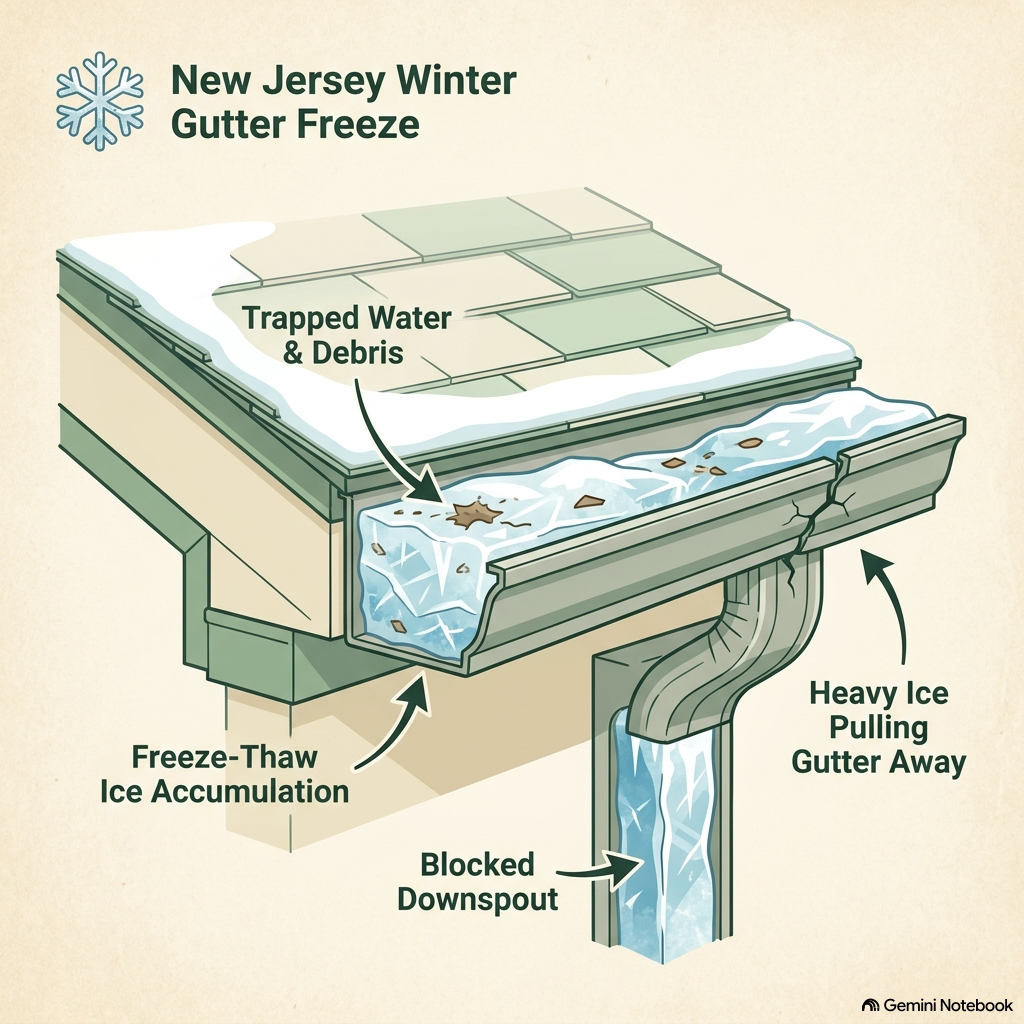
Yes, gutters can freeze. If there is water sitting in the gutters when the temperature drops below freezing, ice may begin to form. However, ice doesn’t form all at once. It may start at the bottom of the gutter, around the edges, or inside the downspout. If there are any existing blockages or wet debris, that aids in ice formation.
What Causes Gutters to Freeze in New Jersey?
There are five potential causes of frozen gutters:
1. Clogged or Debris-Filled Gutters
As mentioned previously, if there is debris trapped inside the gutters, it can accelerate ice formation due to retained moisture. Further, leaves, twigs, and other debris can stop water from draining. Any trapped water can freeze as temperatures drop.
2. Poor Gutter Pitch
A proper slope is required for the water in gutters to flow toward the downspout. Any section that holds water for too long becomes a vulnerability, especially when the temperature drops.
3. Blocked Downspouts
Even if you routinely clean out the gutters, you may miss a blockage in the downspout. If water cannot flow down and away from the house, it will back up into the gutters, where it may sit. Once there, it can freeze.
4. Repeated Freeze-Thaw Cycles
New Jersey winters tend to fluctuate between freezing and above-freezing temperatures from week to week. Snow falls one day, then is gone the next. This can be good for you but bad for the gutter system, particularly when the daytime temperatures drop back to freezing overnight. Repeated cycles may gradually build ice in gutters that doesn’t get a chance to fully melt.
If freezing and thawing are paired with poor gutter pitch or a clog, it may lead to more and more water backing up, freezing, melting, and freezing again, which can cause damage to your gutters over time.
5. Excess Water From the Roof
Heavy precipitation can dump excessive amounts of rain onto a roof. If the gutter system is damaged or blocked, the water may remain much longer than it should. Any retained water can freeze as the temperature drops.
What Happens When Water Freezes Inside a Gutter?
A frozen gutter doesn’t automatically lead to damage. It must happen repeatedly—and often. When ice accumulates over time, it adds weight to the gutter. Gutters aren’t meant to be load-bearing, and so when there is heavy ice damming up the water, additional stress is placed on the gutters and fasteners. This can cause the gutters to pull away from the roof, which may damage the fascia, creating gaps that water can seep into.
Ice can also restrict the path that water must travel. When this happens, the water has nowhere to go but backward. In such an event, the water may soak into the fascia, causing water damage along the roof deck and frame.
How Can New Jersey Homeowners Prevent Frozen Gutters?
If you’re worried about freezing gutters in the winter, there are several steps you can take to prevent it from happening.
Before winter, it is important to remove leaves from the gutters. Installing gutter guards can simplify this step. Make sure the downspouts are clear and that water can properly flow through the system. During this time, you should also look for sagging, loose fasteners, and poor pitch.
Lastly, make sure water discharges away from the foundation. Water that pools near the foundation may cause cracks, leading to moisture in the basement.
In the winter, visually inspect your gutters after heavy snow. Look for changes in gutter position as the snow and ice thaw. If you notice recurring ice buildup, consider scheduling an inspection.
Frequently Asked Questions
Can gutters freeze in New Jersey?
Yes. Gutters can freeze when water remains inside them as temperatures fall below freezing. Ice may form along the bottom or edges of the gutter or inside the downspout, particularly when debris or blockages prevent proper drainage.
Why do my gutters keep freezing?
Recurring frozen gutters can be caused by trapped debris, poor gutter pitch, blocked downspouts, repeated freeze-thaw cycles, or excessive water entering the gutter system from the roof.
Can frozen gutters damage my house?
Repeated ice accumulation can add weight to gutters and their fasteners, potentially causing gutters to pull away from the roof. This may damage the fascia and create openings where water can enter. Blocked drainage can also cause water to back up toward the roof.
How can I prevent my gutters from freezing?
Before winter, clear leaves and debris from your gutters, make sure downspouts are open, and check for sagging, loose fasteners, and poor pitch. You should also make sure water is properly discharged away from the foundation.
When should I have my frozen gutters inspected?
Consider scheduling an inspection if you notice recurring ice buildup, water that isn’t flowing properly, sagging gutters, loose fasteners, or changes in the position of your gutters as snow and ice thaw.
Final Thoughts: Don’t Let Winter Drainage Problems Snowball
In New Jersey, frozen gutters are not a strange occurrence, but most of the time, the issue resolves itself as temperatures warm. However, if you notice that the condition of your gutters is suffering or that water isn’t flowing, it may be time to schedule an inspection. There are several underlying issues that may cause frozen gutters, including standing water, poor pitch, a blocked downspout, or other damages.
A gutter inspection can help diagnose the issue, so you can decide the next course of action. T.A. Hughes III Roofing, Siding, and Windows can help. We’ve been serving South Jersey for over 45 years and have helped hundreds of homeowners get their gutters working properly.