
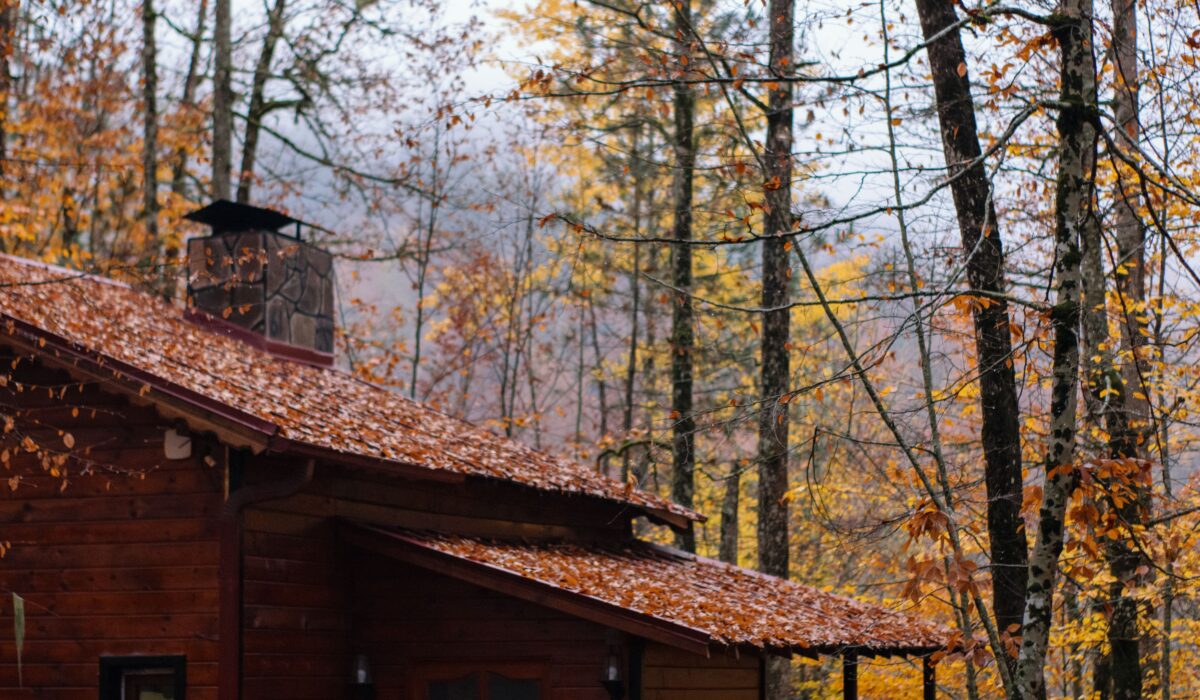
South Jersey is blessed with four distinct seasons, and the change from summer to autumn is a favorite among many. However, despite the beauty of autumn leaves, they can also create a problem for home exteriors. As leaves fall, they may accumulate on the roof, in valleys, and in gutters, clogging your roof’s drainage system. When that happens, the water will need to go elsewhere, usually down the side of your home or pour over the edges of the gutter, causing a mess and potential damage.
Key Takeaways
- Increased leaf fall can lead to clogged gutters.During fall, leaves may accumulate more quickly along the roof, particularly around valleys and gutters, leading to backed up downspouts.
- There are several signs indicating clogged drainage: Slowly draining downspouts, visible accumulation of leaves and other debris, sagging gutters, and leaking seams.
- Roofers recommend cleaning your gutters at least twice a year. However, that might change if your house is surrounded by tree cover.
As a South Jersey homeowner, it is important to know how fall leaves can affect your roof, as well as what to do about it. Let’s get started.
Why Fall Leaves Can Become a Roofing Problem in South Jersey
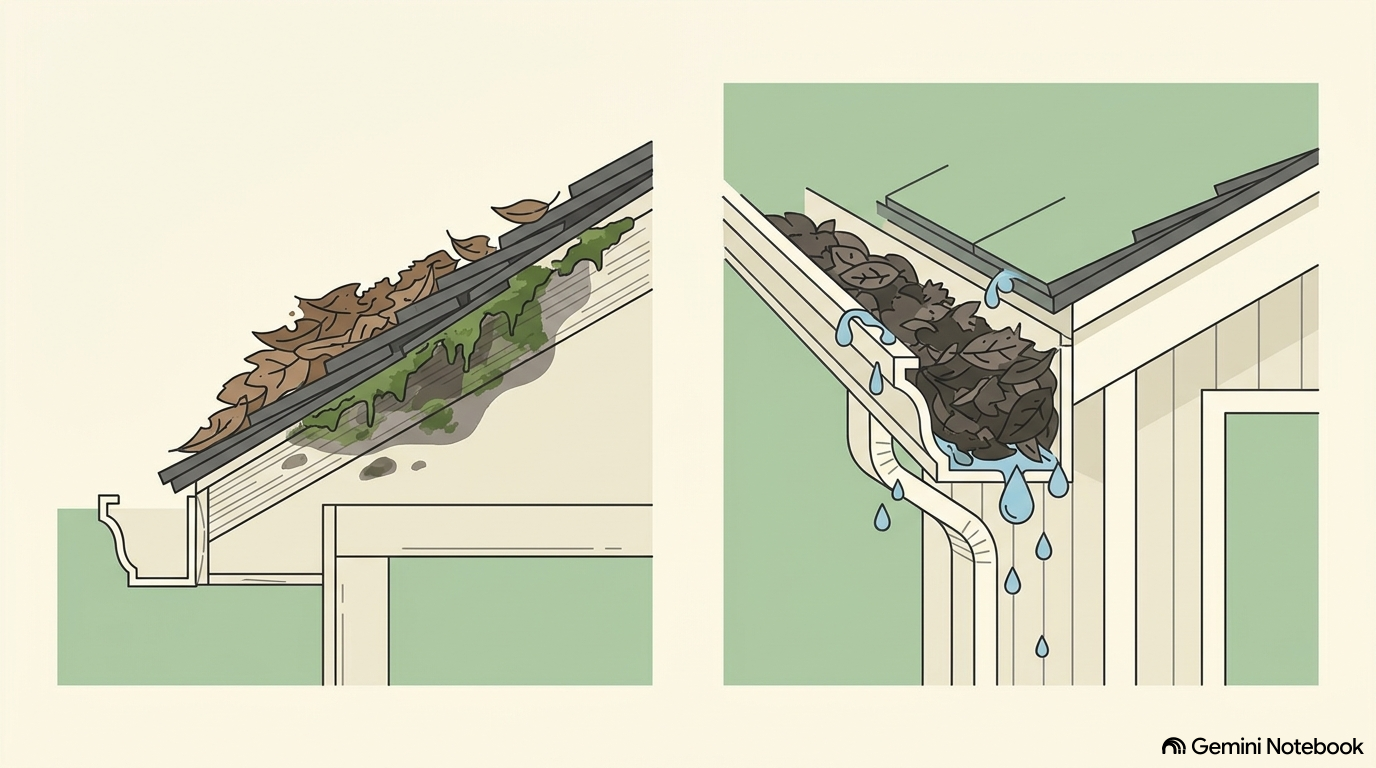
In general, leaves do not cause damage after landing on a roof. The problem starts when the leaves begin to accumulate and retain moisture, which can happen when leaves pile up and do not move.
A buildup of organic debris can:
- Hold moisture against roofing materials, accelerating deterioration
- Encourage algae and moss growth
- Collect around roof penetrations and valleys
- Obscure existing roof damage, such as missing shingles or lifted flashing
Houses surrounded by older trees tend to experience more buildup and moss growth due to the increased amount of retained moisture. While roofing materials are designed to shed precipitation as it falls, they can also take time to dry when conditions are humid.
What Happens When Leaves Collect in Your Gutters and Valleys?
Your roof is designed to funnel water toward the drainage system, which then transports the water away from the foundation of your home. When there are obstacles along the path of the water, however, the gutter system cannot do its job effectively.
As leaves and other debris accumulate on your roof, you may see the following signs:
- Slower than usual drainage
- Standing water on low-slope areas of the roof
- Overflow from the gutters during rainfall
- Sagging or bent gutters
- Water spilling down the side of the house
Furthermore, the wet leaves are heavy, putting an additional weight upon your roof. The unnecessary weight can add stress, particularly to gutters, leading to sunken areas.
How Leaves Clog Downspouts
Leaves fall onto the roof, landing along valleys and in gutters. When it rains, those leaves are pushed to the gutter and then into the downspout. If the downspout is blocked by other debris—such as branches or damage—the leaves may pile up. Over time, as the congestion worsens, the leaves can compact, forming a tight mass that blocks water from going down the downspout.
Homeowners may notice water remaining in the gutters after rainfall, little to no water coming out of the downspout, and water leaking from gutter seams. Keep in mind that the visible portion of the gutter may look clear. Clogs can form anywhere within the drainage system, including gutter joints and at the bottom of the downspout.
When Does the Water Go When Leaves Block the Drainage System?
Heed these words of wisdom: Water will always follow the path of least resistance. In other words, if water cannot follow the easiest intended route, it will find another. If the valleys are blocked with debris and decaying leaves, it will go around, possibly finding areas where the roof is damaged or flashing is lifted.
Blocked gutters and downspouts may lead to water spilling over, closer to the home’s exterior. Depending on the grading and soil drainage, your home may end up with saturated soil around the foundation, basement and crawlspace moisture, erosion, and more.
This is why it is essential for homeowners to maintain their gutter system.
New Jersey Homes Can Be Vulnerable to Fall Leaf Buildup
Many South Jersey properties were built during the 1900s and early 2000s, meaning that many have mature trees or are backed up against wooded areas. For homes with a large amount of shade and trees, leaf drop happens over an extended period of time—sometimes throughout the entire year. Again, leaves are not the problem, but they can quickly compact in gutters and downspouts when wet for a long duration.
Additionally, South Jersey is no stranger to strong winds, storms, and rain. These weather patterns can dump branches, twigs, and other organic material onto the roof and send it to the gutters, where it combines with wet leaves.
Homeowners that have tree cover should consider cleaning out their gutters more than twice a year to ensure that the leaves aren’t piling up the downspouts.
Signs Your Roof and Gutters Are Being Affected by Leaves
When leaves start to have an effect on your roof, there will be noticeable signs. Here is a useful checklist to help with your visual inspection:
- A thick accumulation of leaves across the roof
- Debris collecting in the valleys
- Moss or algae growth
- Visible moisture retention
- Overflowing gutters
- Standing water on low-slope areas
- Sagging gutter sections
- Visible leaks from gutter seams
- Water spilling over the side during rain
- Little to no water exiting the downspout during rainfall
- Water pooling near the home
- Saturated soil
- Erosion near the downspout
- Repeated basement and crawlspace moisture
Make a list of the issues that you detect during a visual inspection. When you speak with a qualified roof inspector, let them know what you found. They will be able to tell you which repairs or replacements need to be done.
How Often Should You Clean Your Gutters in the Fall?
While most roofers will recommend that you clean your gutters at least twice per year, the reality is that your home made need more cleanings. There is no universal answer that works for every property. For instance, if your home is surrounded by mature trees, your gutters may require more frequent attention.
Consider checking your gutters:
- Before autumn or whenever leaves fall heavily
- During peak leaf season
- After a major storm
- When most leaves have fallen
Again, if you notice that your gutters are not functioning properly, check for congestion—even if the gutters look pristine.
Frequently Asked Questions
Is the question you need answered not here? Give us a call or send us a message.
Can leaves damage my roof?
Yes, but it takes time. Leaves falling on your won’t cause damage unless they accumulate and retain moisture, which can accelerate the deterioration of your roofing materials or clog gutters.
How often should I clean my gutters during fall?
There is no exact number, but before and after the season is recommended. Consider how many trees you have around your home, as well as the condition of your gutters.
Can leaves clog a downspout?
Yes, leaves can clog a downspout.
Can clogged gutters cause foundation problems?
Yes, they can. When the gutter system is unable to flow freely, water may overflow and saturate the ground close to the foundation. Retained moisture can cause the foundation to crack.
Do gutter guards eliminate the need for gutter cleaning?
For the most part, but you should continue to perform routine checks and cleaning throughout the year.
Final Thoughts: Keep Fall Leaves From Becoming a Bigger Problem
Falling leaves are a natural occurrence, but letting leaves pile up on your roof isn’t. Your drainage system needs to allow water to flow freely. While a bit of seasonal maintenance can keep your gutters and downspouts functional, there may instances when clogs and damage are bit harder to reach. If you see persistent overflow, pooling, roof debris, or saturated soil around your home, consider calling a professional roof inspector to identify the underlying issue.
T.A. Hughes has over 45 years of experience serving South Jersey homeowners and businesses. Trust us to patch your roof up right.