

Fog or droplets inside a window may seem normal, but there is a difference between condensation on the outside and within. If you see condensation on the room-facing surface of the glass, it is not the same as moisture trapped between panes. The latter may point to a problem with the window’s insulated glass unit (IGU). With New Jersey’s weather constantly swinging between hot, cold, and a humid in-between, trapped moisture between the panes is often all the more noticeable.
Let’s discuss why there is condensation between your window panes and what can be done about it.
Key Takeaways
- Condensation between window panes is different from surface condensation. If moisture cannot be wiped away, it may be trapped inside the insulated glass unit, which can indicate a failed seal.
- Window seals can deteriorate for several reasons. Age, UV exposure, temperature changes, moisture, physical damage, poor installation, and manufacturing defects can all contribute to seal failure.
- Foggy windows do not automatically need to be replaced. Depending on the window’s design and condition, repairing the seal or insulated glass unit may be possible.
- Persistent fogging or other window problems are worth having evaluated. Drafts, damaged glass, deteriorating frames, water infiltration, or multiple affected windows may indicate that replacement is a better long-term solution.
What Does It Mean When Condensation Is Between Window Panes?
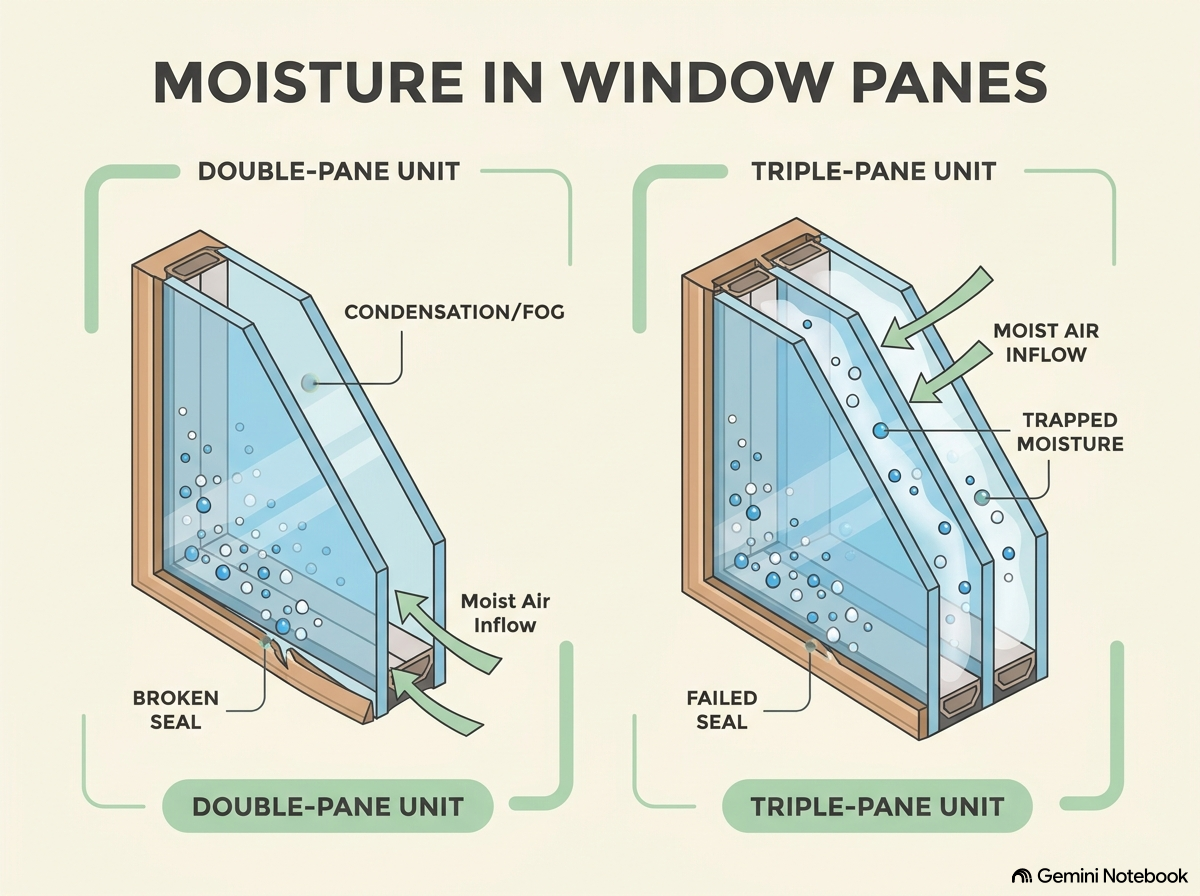
Most modern windows are either double-pane or triple-pane to assist with managing both temperature and sound. Single-pane windows are considered outdated.
A double-pane window has two glass layers that are separated by insulating gases. A two-pane design reduces drafts while being cost-efficient.
Triple-pane windows have one more layer of glass and insulating gas. Compared to double-pane windows, this setup reduces noise and provides a strong barrier against the outdoors.
As such, if there is gas between your window panes, it means that a seal has been compromised. You can determine if the moisture is trapped by wiping at the glass. If you can remove the moisture with your hand, it’s surface condensation. Moisture that remains is trapped.
Why Does Condensation Form Between Window Panes?
Now let’s talk about the four possible causes of condensation that’s trapped between window panes:
1. Failed Window Seal
Each insulated unit of gas has a strong perimeter seal. While these seals are designed to stay in place, they can deteriorate over time. This may happen for various reasons, including excessive UV exposure, poor installation, manufacturing defects, moisture, and age. When the seal fails, gas may escape while also letting in moisture and outside air. In turn, condensation gets trapped inside the window.
2. Age and Normal Window Deterioration
As mentioned above, window seals do not last forever. The older the window gets, the more susceptible it becomes to seal failure. This does not mean that older windows automatically need to be replaced, as maintenance and quality can also impact how long a seal lasts.
3. Temperature Changes and Seasonal Conditions
As a seal breaks down, it may worsen as the temperature fluctuates. This is especially true in New Jersey, where a day may be hot and humid before a cool night of rain. These seasonal transitions can accelerate seal deterioration, allowing more outside air to infiltrate the interior of your window.
4. Damage to the Window or Glass
Physical damage to the window or the glass can also allow moisture to become trapped between panes. Impact damage, deteriorated caulking, poor installation, cracks, or defects can open tiny gaps. It doesn’t take much for water or moisture-rich air to get inside.
Is Condensation Between Window Panes a Serious Problem?
Condensation is not an immediate emergency, not like a shattered window. It is, however, a sign that something within the window is not functioning properly or that it’s damaged. This can have consequences for the window and the comfort of your home.
You may notice:
- Less energy efficiency
- Reduced insulating performance
- Persistent fogging affecting visibility
- Accelerated deterioration of the affected window over time
If you believe that something is wrong with the seal of your window, consider having an inspection.
Can You Fix Condensation Between Window Panes?
The short answer is yes. However, there are some considerations to keep in mind. To make the most informed decision, consider calling a window contractor to inspect your windows.
Next, consider one of these two options:
1. Repairing the Existing Window
Depending on the cause of the condensation getting trapped, your window may be repairable. Seals can be fixed, and the insulated glass can be restored. This depends on the window’s design and condition. An inspection will tell you if this route is feasible.
2. When Window Replacement Makes More Sense
A window replacement may be necessary if the window is older, there are multiple failed seals, and the frame is damaged. If it’s found that the window will continue to be inefficient even after the repair, you may want to buy a new one.
Signs Your Window May Need More Than a Simple Glass Repair
Here are several signs that your window may need to be replaced:
- Consistent condensation or or fogging between panes
- Cracked, damaged glass
- Drafty window
- Visible frame deterioration
- Difficulty opening and closing the window
- Water infiltration and water-related damage
- Multiple windows showing similar problems
- Noticeable temperature differences near the window
An evaluation from a window professional can determine if your windows are candidates for replacement. Remember, you may not need to replace your windows, particularly when the issue is isolated to a section of the seal or frame.
Frequently Asked Questions
Here are five FAQs window contractors in South Jersey are often asked:
Is condensation between window panes a sign of a broken seal?
It can be. A broken seal may allow moisture-rich air from the outside to find its way between panes of glass while simultaneously releasing the insulating gases.
Can condensation between window panes be repaired?
Yes, it can be. A seal can deteriorate over time. Depending on the extent of the damage, a window contractor may be able to replace a portion of the broken seal rather than the entire window.
Do foggy windows need to be replaced?
Not necessarily. Foggy windows should be evaluated first, as condensation may point to damage, improper installation, or deterioration, which can sometimes be repaired.
Is condensation between window panes a serious problem?
It can be. Moisture between the panes is often due to a problem with the seal. As the insulating gases leave, you may notice decreased energy efficiency, drafts, and noise.
How long do double-pane windows last in New Jersey?
Typically, double-pane windows last between 20 and 30 years. Quality installations may last as long as 35 years. Maintenance and installation are crucial to longevity in New Jersey.
Final Thoughts: Don’t Overlook Foggy, Cloudy Window Panes
Condensation on your windows does not always indicate damage. However, when you start trying to wipe away moisture but to no avail, that is when you may want to schedule a window inspection. Condensation trapped between double- or triple-layer panes often means that something is wrong with the seals within or around the window. A professional evaluation can pinpoint the issue and let you know whether you need window repairs or a replacement.
T.A. Hughes III has over 45 years of experience in residential and commercial roofing, as well as siding, doors, and windows in South Jersey.