Have you recently looked up at your roof and seen streaks of color that shouldn’t be on your shingles? Roof discoloration is a common occurrence in South Jersey, particularly in places with higher humidity or shade. As a South Jersey homeowner, understanding how roof discoloration may impact your roof and your home’s resale value is important. Let’s discuss what causes roof discoloration, how to tackle it, and when you should worry about it.
Key Takeaways
- Roof discoloration has several possible causes. Algae, moss, environmental contaminants, UV exposure, improper ventilation, and natural aging can all change the appearance of your shingles.
- Discoloration doesn’t always mean your roof is failing. Some changes are primarily cosmetic, while others may point to moisture, ventilation, or deteriorating roofing materials.
- Regular maintenance can help protect your roof’s appearance and condition. Cleaning, inspections, gutter maintenance, and addressing minor problems early can help prevent more extensive deterioration.
- Persistent or unusual discoloration is worth investigating. A professional roof inspection can help determine what’s causing the change and whether repairs or maintenance are needed.
What Is Roof Discoloration?
Generally, a roof discoloration is any change in the color or appearance of your roof. It may occur due to natural aging, environmental contaminants, and weathering. Some causes of roof discoloration can be treated quickly, while others may hint at a more widespread and serious issue. Regular maintenance can help prevent most of the common causes.
5 Common Causes and Solutions for Roof Discoloration
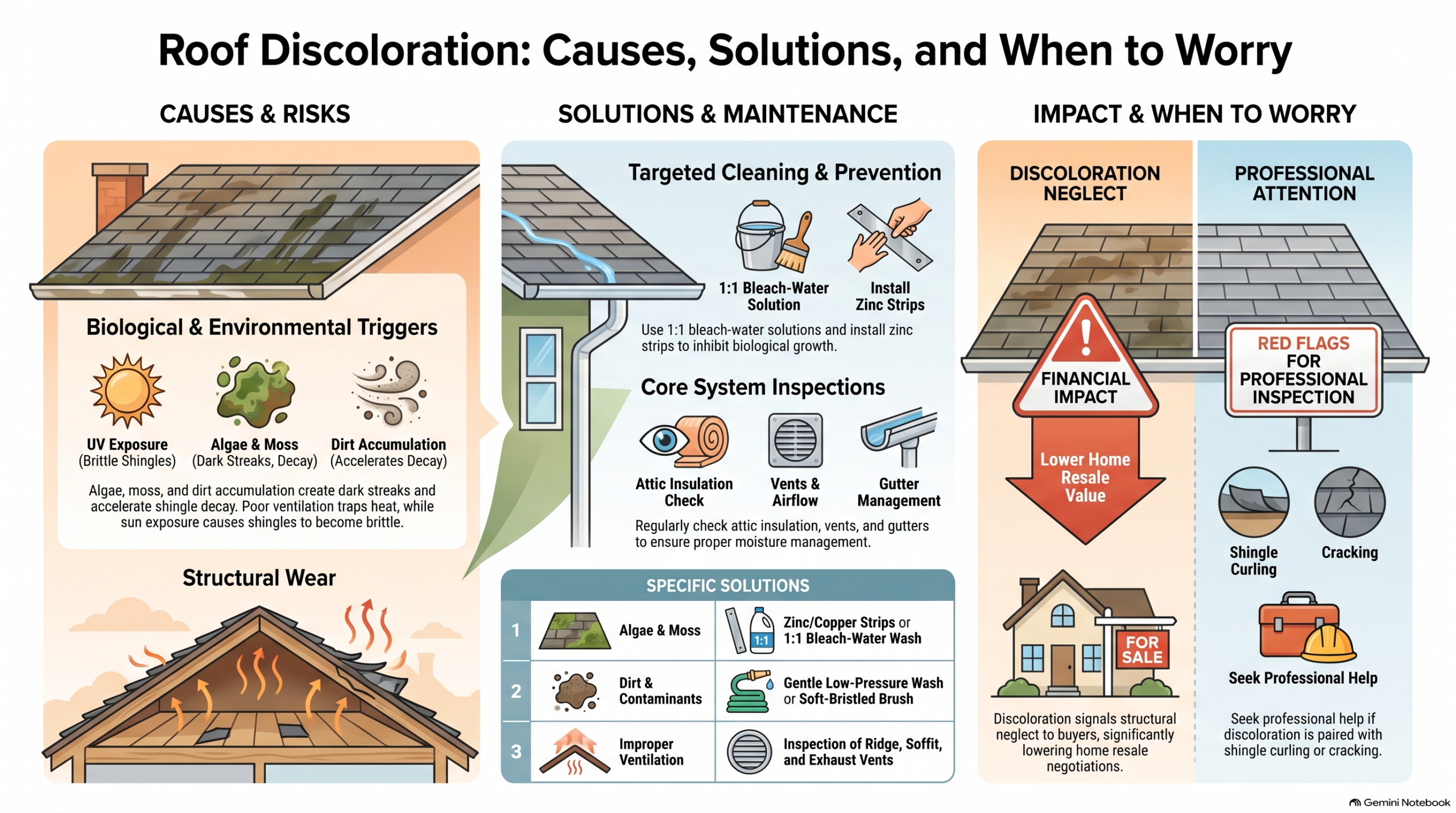
Here are the five most common reasons for a discolored roof and the methods for fixing those problems:
1. Improper Ventilation
When your roof isn’t properly ventilated, moisture may get trapped beneath the surface (such as in an attic or crawl space), promoting the growth of small organisms, like algae, moss, and lichen. Additionally, improper ventilation can result in heat below the surface of the shingles, which may lead to curling and cracking.
Consider scheduling a roofing inspection with a South Jersey roofing contractor to check the status of your ridge vents, soffit vents, and exhaust outlets.
2. Algae and Moss Growth
Moss and algae tend to grow rapidly in damp areas, like a shaded roof. Most of these can lead to dark patches and stains across the roof. If moss is allowed to grow across your roof, it will continue to soak in moisture, saturating your shingles until they begin to weaken and break down at an accelerated rate.
To tackle this problem, consider having zinc or copper strips installed near the roof ridge. Zinc and copper both have ions that inhibit moss and algae growth. It’s also recommended that homeowners have their roofs regularly cleaned with a solution of water and bleach (1:1 ratio) to remove any existing algae streaks and moss.
3. Environmental Contaminants
Your roof is routinely exposed to contaminants and pollution. Dirt, dust, and other fine particles can accumulate on the roof, leading to discoloration over time. In most cases, there is not much you can do to prevent contaminants from collecting on your roof, but you can commit to regular maintenance to keep the roof clean.
A gentle roof cleaning with a soft-bristled brush or a low-pressure washer can gently remove the contaminants discoloring the surface, restoring the appearance. Avoid using harsh chemicals or abrasive brushes, as these can damage rather than clean the roof.
4. UV Damage
While constant exposure to humidity can lead to damage, so too can consistent UV exposure. Roofing materials are made to withstand the sun, but they do age, becoming susceptible to gradual fading and discoloration as time goes on. Signs of excessive UV exposure include faded, brittle roofing materials, as well as curling and cracking.
5. Aging and Weathering
Roofing materials generally last between 20 and 30 years, depending on their quality and durability. During that time, they may begin to lose their pigment due to wear and tear. Maintenance can assist with prolonging the condition of your shingles, keeping their color vibrant for longer. If you have a flat roof, a high-quality roof coating may restore the appearance and also protect against further discoloration.
The Impact of Roof Discoloration on Home Value
For homeowners who are planning on selling their home in the near future, there is one thing you need to know about roof discoloration: It can diminish the perceived value of your home. A discolored roof is often seen as a sign of neglect. To a prospective buyer, a discolored roof creates the impression of a compromised roof structure or underlying issues. In short, buyers may be less persuaded to purchase a home that has discoloration. Buyers may attempt to negotiate for a lower price if they feel that they will have to replace the roofer sooner than later.
The Role of Proper Roof Maintenance and Inspections
Discoloration can be caused by built-up contaminants like dirt and dust, moss and algae, and natural wear. Each of these factors that may lead to discoloration can be mitigated by roof inspections and maintenance.
Regular maintenance, such as cleaning gutters, patching minor punctures, and checking the attic insulation can all extend the lifespan of your roof and preserve its appearance. When you detect the early signs of roof problems, you can also have them repaired more quickly. In turn, the condition of your roof stays better for longer.
Frequently Asked Questions
Roof discoloration can have several causes, ranging from environmental buildup to natural aging. Understanding what you’re seeing can help you determine when your roof may need attention.
What causes roof discoloration in New Jersey?
Roof discoloration can result from algae and moss growth, environmental contaminants, UV exposure, improper ventilation, and natural aging and weathering. Humidity and shaded areas can also create conditions that encourage moss and algae growth.
Does roof discoloration mean I need a new roof?
Not necessarily. Discoloration can have several causes, and some are primarily cosmetic. However, discoloration accompanied by curling, cracking, moisture, or other signs of deterioration may warrant a professional inspection.
Can moss and algae damage roof shingles?
Moss can retain moisture against roofing materials, which may contribute to accelerated deterioration over time. Algae primarily causes discoloration, although persistent moisture and growth on the roof should still be evaluated as part of regular maintenance.
Can roof discoloration affect my home’s value?
It can affect how prospective buyers perceive a home. A visibly discolored roof may create the impression that the roof has been neglected or could require repairs or replacement, potentially affecting a buyer’s willingness to pay.
When should I have a discolored roof inspected?
Consider scheduling an inspection if discoloration is persistent, widespread, or accompanied by other signs of deterioration such as curling or cracking shingles, moisture, or other visible changes. An inspection can help identify the underlying cause and determine whether maintenance or repairs are appropriate.
Final Thoughts: Long-Term Solutions for Discoloration Begin with a South Jersey Roofer
Don’t let roof discoloration drag your roof down. While discoloration may appear cosmetic, it can also be caused by moss and ventilation issues. If you notice that your roof is darker, streaked, or faded, consider having a roofing inspection done to learn more about why it is happening. Knowledge, after all, is a homeowner’s best line of defense after maintenance.
T.A. Hughes III has over 45 yeas of experience in residential and commercial roofing in South Jersey. Our team can help you assess the reason behind your roof discoloration and provide a solution.