When a roof begins to noticeably sag, you may feel alarmed. After all, a roof is supposed to have a consistent slope. There are several problems that may lead to a roof sagging in one spot, such as weakened decking, framing problems, and accumulated weight. Knowing what the issue may be can help you when it comes time to call a roofer to diagnose the problem.
What caused the sag, and when do you call a roofer? We’re going to answer those questions today, so you’re prepared should your roof ever sag.
Key Takeaways
- A localized sag, dip, or low spot in your roof can indicate problems with the roof decking, framing, or other structural components.
- Water damage and long-term moisture exposure are common causes of roof sagging because they can weaken or deteriorate the materials supporting the roof.
- Heavy snow, ice, or other excessive weight can place additional stress on a roof, particularly when underlying components have already been weakened.
- Previous roofing work, additions, skylight installations, or other structural modifications can contribute to localized sagging if the roof’s support has been altered.
- Roof sagging should not be ignored. Avoid climbing onto the affected area, document what you see, and schedule a professional inspection to determine the cause and extent of the problem.
What Does a Sagging Roof Look Like?
Sagging is a major visual sign that something is happening to your roof. If you notice a valley, low spot, or dip in what should be an otherwise straight roofline, there may be sagging.
Other signs of a sag include:
- Wavy or distorted shingles over the affected area,
- Uneven roofline,
- An unexpected depression on the roof that is not part of the architectural design.
What Causes a Roof to Sag in One Spot?
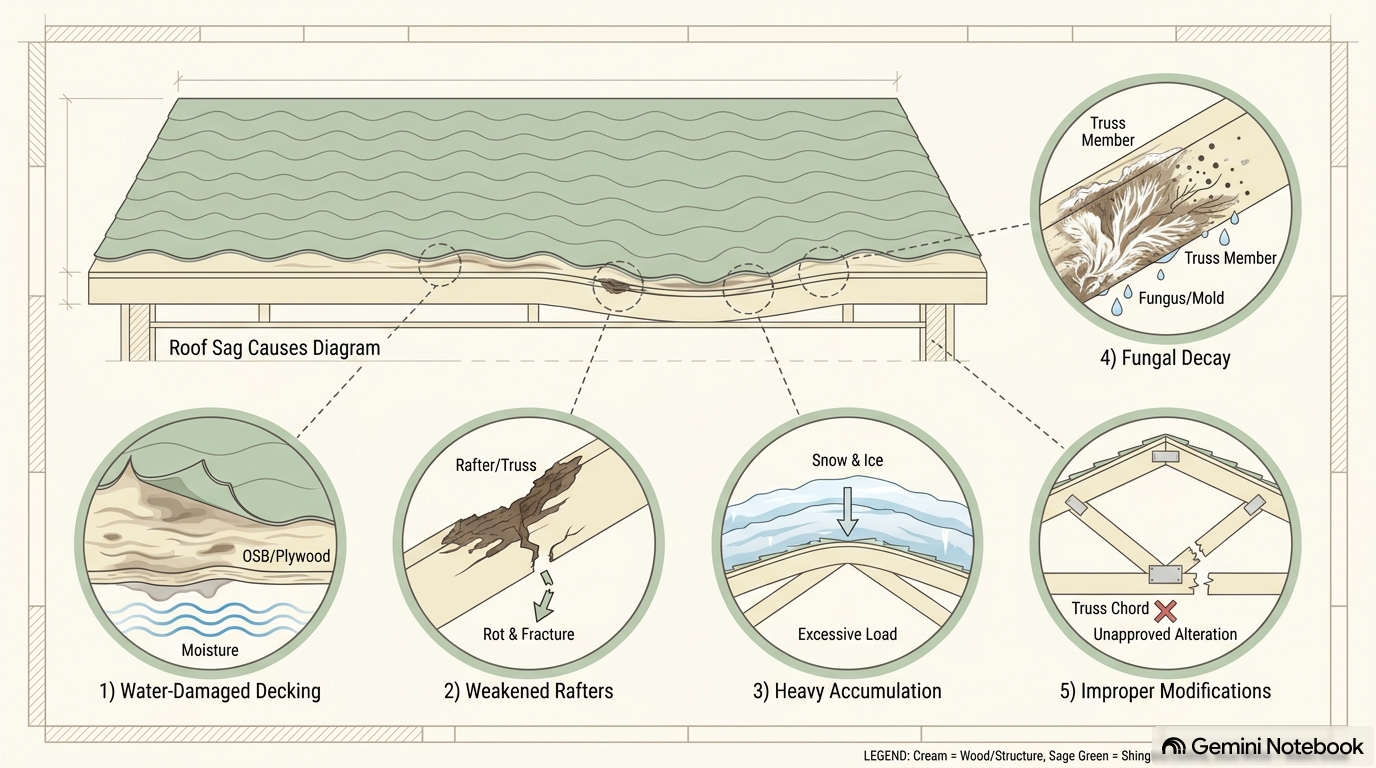
There are five potential causes of roof sagging.
1. Water Damage to the Roof Deck
In South Jersey, there are long stretches of high humidity and frequent precipitation. When this happens, roofing materials may weaken, leading to leaks. Even a tiny leak allows water to reach the OSB sheathing or plywood beneath the shingles. Repeated exposure may lead to saturation, which causes the roof deck to swell or deteriorate.
It may take time for the sag to become noticeable. Water may travel some distance from the original leak before soaking into the roof deck or structure.
2. Damaged or Weakened Roof Framing
Beneath the roof deck are rafters and trusses that provide support. If a leak or damage affects the roof frame, the surface may start to sag. Moisture damage, aging, previous alterations to the roof line, and other structural issues may exacerbate the sag.
For example, if the roof deck is improperly supported, it may begin to sag in the places where there is less support.
3. Snow, Ice, or Other Excessive Weight
A roof is designed to tolerate weight, but if the framing underneath is deteriorating from a leak or poor support, the roof deck may start to sag. During winter, heavy and wet snow and ice places an additional load on the roof that may go beyond what the structure can tolerate.
If you notice a substantial sag after the snow melts, consider calling a roofing company like T.A. Hughes III to have it evaluated.
4. Long-Term Moisture and Rot
As mentioned previously, consistent exposure to moisture is a primary source of roof damage—and South Jersey experiences a lot of humidity. Wooden structural components may start failing due to deterioration. If you notice any of the following signs within your home, the sagging roof may be due to moisture and rot:
- Water stains on the ceiling
- Musty odors
- Damp attic insulation
Deteriorating wood - Mold or fungal growth
5. Previous Roofing or Structural Work
Has your roof been previously modified? Roof support may have been altered. Generally, roof sagging that occurs after an add-on or renovation is due to improper installation, resulting in displaced weight. Localized sagging may point to a place where a truss, for example, was removed.
If the sag appeared after construction, an addition, skylight installation, HVAC work, or another type of modification, mention this during the inspection.
Can a Roof Sag Because of a Leak?
Yes, it can. Leaks that form due to damaged shingles, loosened flashing, improperly installed skylights, or other issues often let water infiltrate the underlayment and roof deck. Unfortunately, signs of this intrusion may not show up right away. Furthermore, water will follow the path of least resistance, which means that signs of a leak may show up in places you wouldn’t expect.
Look for the following interior clues:
- Ceiling stains
- Peeling or bubbling paint
- Damp attic insulation
- Musty odors
- Visible moisture
What Should You Do If You Notice a Sagging Roof?
If you notice that your roof is sagging, the most important rule is to remain calm. A visible sag can be alarming, and you may have heard that it is a sign of significant structural damage. However, you can only learn the whole story with a professional evaluation.
Here are actionable steps to take if you notice a sagging roof:
- Don’t access the roof or climb onto the visibly sagging area.
- Look at the roof from the ground. Take pictures.
- Check the attic, if it can be done safely.
- Search for signs of moisture or interior water damage. Again, document this.
- Note when you first noticed the sag.
- Consider whether the sag formed during a period of rain or snow.
- Schedule a professional inspection to determine the cause and extent of the damage.
Once you’ve had an evaluation, the roofing company will provide you with advice on what to do next. Whether it’s a repair or a replacement, having the work done is crucial to keeping your home dry.
Can a Sagging Roof Be Repaired?
The underlying cause determines whether roof sag can be repaired. A localized problem that is caused by poor support or a small leak can be fixed. Repairs may include replacing damaged decking, repairing a roof leak, addressing damaged framing, correcting flashing and drainage problems, and replacing deteriorated roofing materials.
Should structural components be compromised, the repair may require more than replacing shingles or sections of the roof deck.
It’s essential to find the cause of the sag prior to repair. In the event the cause isn’t solved, the same issue will occur again in another few years.
Frequently Asked Questions
Why is my roof sagging in one spot?
A localized roof sag can result from water damage to the roof deck, weakened framing, long-term moisture and rot, excessive weight from snow or ice, or previous roofing and structural modifications.
Can a roof sag because of a leak?
Yes. A roof leak can allow water to reach the roof deck and structural components, where repeated moisture exposure may cause materials to swell, deteriorate, or weaken. Signs of the leak may appear away from the original source because water can travel through the roof structure.
What are the signs of a sagging roof?
A sagging roof may have a visible dip, valley, low spot, uneven roofline, or wavy and distorted shingles. Interior signs such as ceiling stains, damp attic insulation, musty odors, or deteriorating wood may also point to an underlying moisture problem.
Can a sagging roof be repaired?
It depends on what caused the sag and how extensive the damage is. Repairs may involve replacing damaged decking, fixing leaks, addressing framing problems, correcting flashing or drainage issues, or replacing deteriorated roofing materials. Structural damage may require more extensive repairs.
What should I do if I notice my roof is sagging?
Do not climb onto the visibly sagging area. Instead, photograph the roof from the ground, safely check for signs of moisture inside the home or attic, note when you first noticed the sag, and schedule a professional roofing inspection to determine the cause.
Final Thoughts: Don’t Overlook Roof Sagging
Even a slightly noticeable sag should prompt homeowners to ask questions because roof sagging isn’t normal. Localized sagging points to moisture intrusion, deteriorating roof decking, framing issues, or structural defects. Don’t wait until the sag worsens; schedule a roofing inspection as soon as you can to determine the root of the sag.
T.A. Hughes III has been serving South Jersey for over 45 years. We’ve seen a fair share of sagging roofs and have repaired dozens of them. When it comes to our ability to evaluate and fix roofing problems, few can compare.