
Understated yet essential, fascia boards are one part of the roof that is out of sight and mind for many homeowners. That said, these vertical pieces of wood along the lower edge of your roof are worth a look, as they seal the rafter tails and mount gutters. When fascia boards rot, you may end up with more than poor curb appeal. Water can infiltrate the underlayment of your roof, causing more problems.
What causes fascia boards to rot and how can it be prevented? The professionals at T.A. Hughes III Roofing, Siding & Windows are here to answer those questions.
Key Takeaways
- Fascia boards are vulnerable to wood rot when moisture, wood, and temperatures above 40°F create conditions that support fungal growth.
- Clogged gutters, missing or failed drip edges, soffit problems, deteriorating paint, and ice dams can all contribute to moisture exposure and fascia rot.
- Rotting fascia can weaken gutter attachments and allow moisture to reach the sub-fascia, rafters, and other structural components.
- Soft or visibly rotten fascia, sagging gutters, deteriorating soffits, nearby roof or flashing damage, and interior ceiling discoloration are signs that a professional inspection may be needed.
- Addressing the source of the moisture—not just replacing the damaged fascia—can help prevent the problem from spreading or returning.
The Reason Fascia Boards Rot
Wood rot can be caused by a number of factors, but most of those causes stem from one thing: wood decay. More specifically, fungus that causes wood to decay faster. For the fungus to grow, three conditions must be met:
- Wood
- Consistent moisture about 19%
- Temperatures above 40 degrees F
When these conditions are met, the fungus may begin to form. It will digest cellulose and lignin, spreading as it eats.
Unfortunately for South Jersey homeowners, these conditions are met frequently, which is why roofing inspections and maintenance are essential.
What Supports Fungal Growth in Fascia Boards?
There are five specific ways your fascia boards may rot because of fungus. Let’s explore these causes and how they can be tackled.
Clogged Gutters
Moisture is one of the three factors that you have some control over. The gutters are often mounted to the fascia, meaning that when the system is backed up with leaves and other organic material, moisture is up against the roof’s fascia boards. Behind the gutter lip, moisture may accumulate, accelerating the wear around the gutter screws, leading to moisture infiltration over time.
The fix for clogged gutters is maintenance. Gutter guards can prevent the majority of debris from clogging the system, but it is still recommended—whether you have gutter guards or not—to clean your gutters at least twice a year.
Missing or Failed Drip Edges
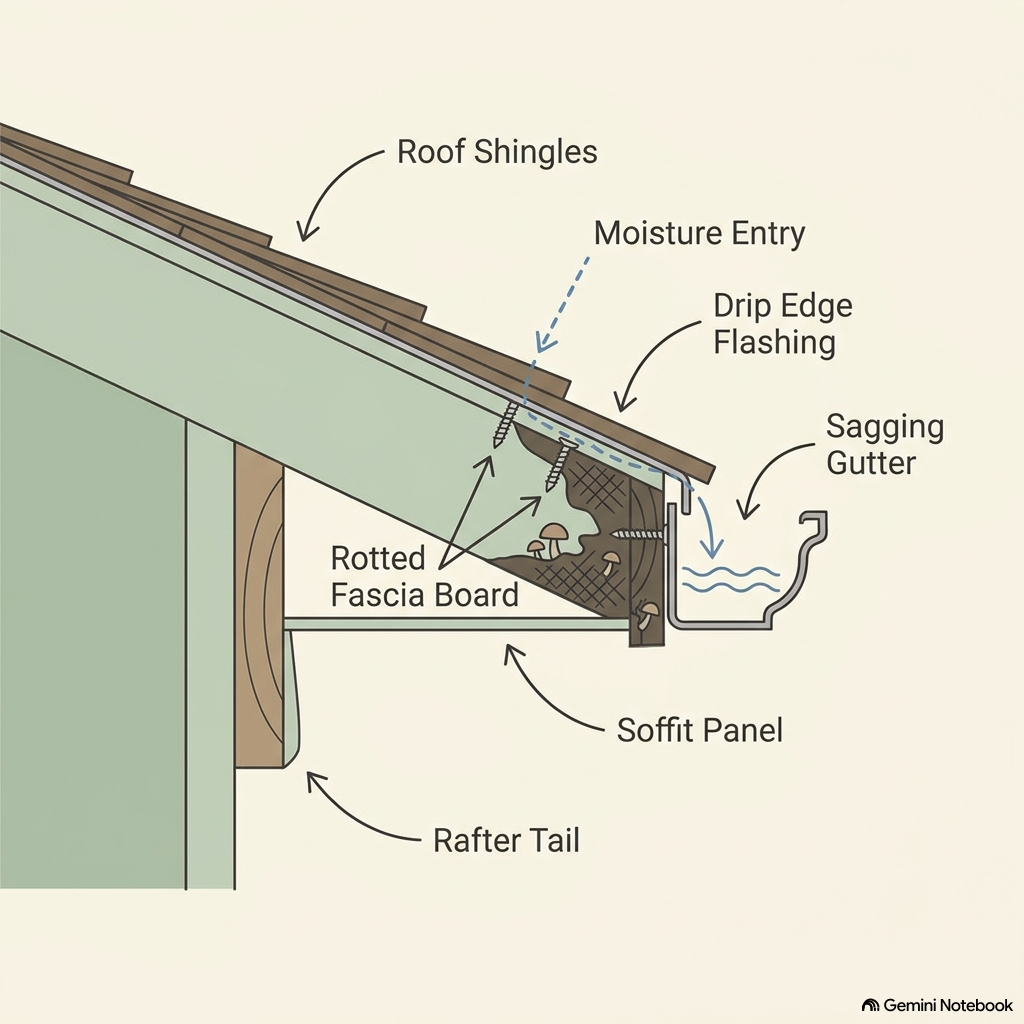
Another critical component of any roof is the drip edge. This piece of flashing protects the place where the shingles meet the fascia. When a drip edge is correctly installed, it moves runoff to the gutter instead of allowing the water to seep into the shingles along the fascia boards. If the drip edge wasn’t installed correctly or if it’s nonexistent, runoff may flow directly to the gutter lip, where it will soak in. This may sound similar to a clogged gutter, but it can occur even when the gutter is clean.
Look for a drip edge on your roof. If you don’t have one, consider having it installed by a professional roofer. If it’s damaged, they can also repair or replace it. Generally, a drip edge is installed during fascia repair or a re-roofing, since it is placed before the shingles.
Soffit Failure
When roofers talk about your roof, they will often mention the soffit and fascia as a combination. This is because the soffit connects to fascia boards at the J- or F-channel. If the soffit does not lay flat at these junctions—for a number of reasons—it may allow moisture to seep it. Gradually, the soffit may pull away from the aluminum cap. It will be enough for water but not easily visible from below.
Should this happen, the ideal fit is to reseat the soffit against the fascia board’s aluminum cap, resealing the junction. If rot is found in this area, you may need to have the boards replaced before the soffit can be reattached.
Poor Fascia Board Maintenance
As mentioned previously, moisture control is one of the best ways to prevent rot from spreading through your fascia boards. Painting wooden fascia can keep the moisture percentage lower than 19%. However, paint can also be a catch-22, particularly when it prevents wood from drying. As paint ages, tiny cracks form. These cracks can be difficult to detect with the naked eye, but they are enough for water to penetrate the wood.
To prevent paint from breaking down quickly, consider using a high-quality exterior primer followed by two topcoats. Repaint every 5-7 years, depending on UV exposure and humidity levels. If any peeling or cracking develops, you may need to remove all of the paint first to check for rot.
Ice Dams
Ice dams commonly form when heat trapped within a building rises to the attic, where it causes the snow on the roof to melt. The meltwater runs to a lower spot on the roof where it is cooler, generally the eaves, and begins to refreeze. As this process continues, more ice forms on top of the previously cooled section, forming a dam that prevents water from getting to the gutters as the days warm. Water will always follow the path of least resistance. In this case, it will flow back up the roof, often into the eave cavity.
Stopping ice dams often means improving attic insulation before the next freeze-thaw cycle. If ice dams have occurred, an inspection is recommended. There is a high chance that the rafter tails and sub-fascia have been exposed to repeated moisture.
What Happens If Fascia Boards Are Left to Rot?
Rot should be treated to prevent more costly repairs. If left untreated, the rot spreads from the fascia boards laterally. Over time, the wood softens, compromising the gutter screws. This usually progresses over a few seasons to a few years, depending on the level of humidity. As the structural rot worsens, the gutter begins to sag then pull away from the fascia boards. At this point, water can enter the damaged fascia more readily, entering the sub-fascia and rafters.
It is at this point homeowners begin to notice water damage in their home. If the rot is allowed to progress to this point, however, it may have spread farther than the fascia boards. It’s not uncommon to find rot in the structural framing of the home.
When to Call a Roofing Inspector in South Jersey
Since fascia boards sit at the intersection of several roofing components, a ground-based inspection may not be enough. A roofing professional can look at your roof, gutters, soffit, and fascia to see where the damage is located and how far it has spread.
If you notice the following signs, consider scheduling a roofing inspection as soon as possible:
- The fascia boards look visibly rotten or soft
- Gutters are sagging and pulling away from the fascia
- Rot persists after repairs
- You spot flashing or roof damage near the fascia
- Ceiling discoloration within your home
- Deteriorating soffits
- Excess moisture in your home
Frequently Asked Questions About Fascia Board Rot
What causes fascia boards to rot?
Fascia boards typically rot when they are exposed to consistent moisture for long enough to support fungal wood decay. Clogged gutters, failed drip edges, soffit problems, deteriorating paint, and ice dams can all increase moisture exposure around the fascia.
Can clogged gutters cause fascia rot?
Yes. When gutters become clogged, water and organic debris can remain against the fascia instead of flowing properly through the drainage system. Over time, this repeated moisture exposure can contribute to wood decay and damage around gutter fasteners.
What does rotted fascia look like?
Rotted fascia may look soft, deteriorated, cracked, or discolored. Other warning signs can include sagging gutters, gutters pulling away from the fascia, deteriorating soffits, peeling or cracking paint, and visible damage around the roof edge.
Can a damaged drip edge cause fascia to rot?
It can contribute to fascia moisture problems. A properly installed drip edge helps direct roof runoff toward the gutter and away from the area where the shingles meet the fascia. If the drip edge is missing, damaged, or improperly installed, water may reach the fascia instead.
What happens if rotted fascia boards are left untreated?
Rot can spread through the fascia and weaken the areas where gutters are attached. As the damage progresses, gutters may sag or pull away, allowing even more water to reach the fascia, sub-fascia, and rafters. In more advanced cases, rot may extend into structural framing.
When should I call a roofing professional about rotting fascia?
Consider scheduling an inspection if your fascia looks soft or rotten, gutters are sagging or pulling away, rot keeps returning after repairs, or you notice nearby roof, flashing, soffit, or interior water damage. A roofing professional can inspect the connected components to help identify the source and extent of the problem.
Final Thoughts: Does Your Fascia Need First Aid?
Fascia boards are often overlooked and, unfortunately, neglected during roofing maintenance. However, they are important facets of your roof and shouldn’t be ignored. When fascia boards break down, they can become a vulnerability that allows water to intrude. Stay ahead of your rooted fascia boards. Get a roofing inspection done by a reputable roofing contractor in South Jersey, like T.A. Hughes III.
T.A. Hughes III Roofing, Siding & Windows has served South Jersey homeowners for over 45 years. Our team can help you identify exterior roofing, window, and siding problems before small issues turn into bigger ones.