
Many homeowners in New Jersey have experienced a small but frustrating annoyance: a sticking door. Common on humid days, a sticking door is more than just a hinge issue. The temperature and humidity outside and in can affect how your doors function. Sometimes, a seasonal change or rainy day is enough to cause sticking, but if you notice that your doors are harder to open and close more often, something may be wrong.
Key Takeaways
- Humidity and seasonal changes can cause wooden doors and frames to swell, making doors harder to open and close.
- Moisture around doors and exterior walls can contribute to sticking and may be a sign of water intrusion.
- A sticking door can sometimes be related to structural movement, particularly when multiple doors suddenly become difficult to operate.
- Roof or attic moisture can affect wooden components inside the home and may contribute to changes in how doors fit and function.
- One sticking door isn’t necessarily cause for concern, but recurring problems or multiple signs of moisture or damage should be professionally evaluated.
Here’s what NJ homeowners should know.
What Causes Doors to Stick or Become Harder to Close?
While not every cause is a serious problem, there are some that may require a roofing inspector to fully diagnose.
1. Humidity and Moisture
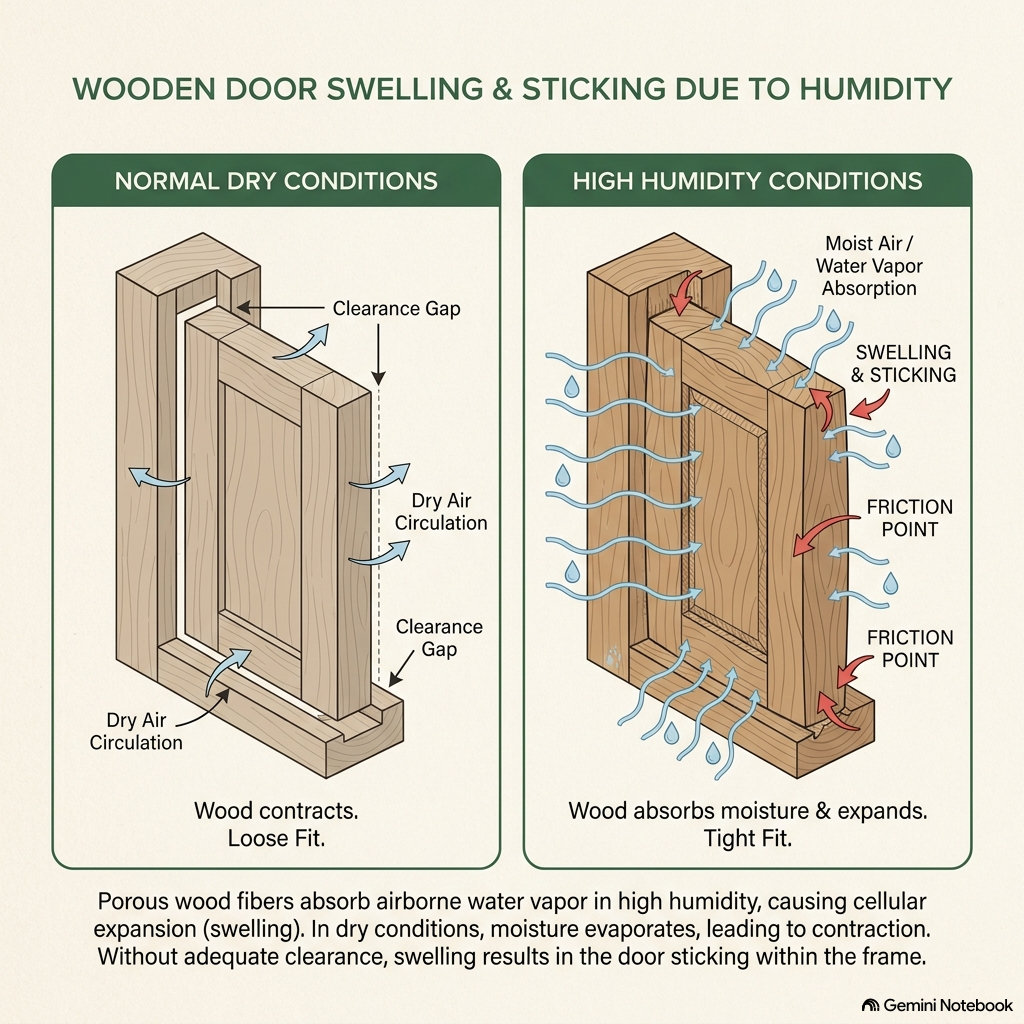
Various housing components—like wood—can absorb moisture. During certain times of the year, humidity increases. This can lead to retained moisture in places like window and door frames, making the door itself fit more tightly.
If you notice that your doors stick during periods of higher humidity but return to normal when the humidity decreases, ambient moisture may be the problem. However, if the stickiness persists after the humidity disappears, there may be an interior problem worth investigating.
2. Water Around the Door or Exterior Wall
Sometimes humidity is only the key to the problem. Materials may begin to degrade over time, particularly when exposed to constant moisture. For example, if there is flashing, siding, or caulking that has deteriorated, moisture could be getting into places it shouldn’t. When that happens, it can affect the humidity levels in your home.
Here are some signs that indicate water intrusion:
- Peeling or bubbling paint
- Deteriorating siding or trim
- Discoloration
- Missing or cracked caulking
- Damaged siding
- Water stains
- Musty odors
3. Foundation or Structural Movement
If humidity is low but the door continues to stick, it may be a sign of movement elsewhere in the home. Over time, a house may settle as structural components shift, such as the foundation. The door frame may subtly change. A sign of this is changing gaps around the door. One side may be uneven, or the door may drag as it opens and closes when it didn’t before.
While this can be a sign of foundation issues, further investigation is needed. That said, if multiple doors are suddenly sticking, this deserves attention. Call a window and door contractor in New Jersey for their professional opinion.
4. Roof or Attic Moisture
Even a tiny gap in the roof from a cracked shingle or lifted flashing is enough to let water in. Water then follows the path of least resistance through the house. It may soak into wooden structural components, thereby increasing interior humidity, even when it’s pleasant outside.
If you suspect that the sticking doors may be a side effect of a roof leak or attic moisture, look for signs like:
- Damp insulation
- Musty odor
- Ceiling stains
5. Seasonal Changes
Sometimes it really is as simple as blaming the weather. In places with four distinct seasons, like New Jersey, humidity levels fluctuate throughout the year. Those temperature and moisture changes directly impact your home’s building materials. A door that sticks during a stretch of humid weather may be nothing to worry about.
What is more important is the pattern. Does the door stick occasionally or all the time? Do you notice other areas of the house affected or a single door? Do other places throughout your home show signs of water damage?
If you notice that one sticking door suddenly becomes several, you may need to consider water intrusion.
Does a Sticking Door Mean There’s Water Damage?
No. A sticking door means that there is humidity, but that may occur after a particularly hot shower. One sticking door is not enough to diagnose an issue. Therefore, roofing companies like T.A. Hughes III recommend searching for other signs of water damage in your home. Document the changes. Take pictures. If you find more than one sign of water damage, call in an inspector.
You may want to investigate further if you notice:
- A door or several sticking after rain
- Water stains near ceilings and doorways
- Damp or musty smells
- Peeling paint or damaged trim
- Cracked or deteriorated caulking
- Siding that is loose, warped, or damaged
- Moisture in the attic
- Visible roof damage
What Should NJ Homeowners Check?
If you notice that your doors are harder to open and close, start by asking yourself a couple of questions:
- Is the door rubbing against the frame?
- Do the frame look visibly uneven?
- Is there any sign of water damage nearby?
- Are the hinges loose?
- Does this happen after extended periods of humidity?
If you notice a pattern, go beyond the door. Look for signs of damage around the house before heading outside. Then check the gutters, the roof, and the foundation for visible issues. It is highly recommended that you do this check from the ground. Let an experienced professional with safety equipment step onto your roof for a closer look.
Frequently Asked Questions
Why do my doors stick when it rains?
Rainy weather can increase humidity and cause wood and other building materials to absorb moisture and swell. If a door continues to stick after the weather dries out, look for other signs of moisture or water intrusion.
Can humidity make my doors harder to open and close?
Yes. Higher humidity can cause wood to absorb moisture and swell, which may make a door fit more tightly within its frame. If the door returns to normal when humidity decreases, seasonal moisture may be the cause.
Can a sticking door be a sign of water damage?
It can be, but a sticking door alone does not mean your home has water damage. Look for other warning signs, such as water stains, peeling paint, damaged siding, deteriorating trim, musty odors, or moisture in the attic.
Why are several doors in my house suddenly sticking?
When multiple doors become harder to open or close, it may be worth investigating further. Humidity and seasonal changes can affect several doors at once, but multiple sticking doors can also indicate movement elsewhere in the home or a moisture problem.
When should I call a professional about a sticking door?
Consider calling a professional if a door continues to stick after humidity decreases, several doors are affected, or you notice signs of water intrusion such as stains, damp insulation, damaged siding, peeling paint, or a musty odor. A professional can help determine whether the problem may be related to moisture, roofing, siding, windows, doors, or another part of the home.
Final Thoughts: Don’t Ignore Your Sticking Doors
If you ever wondered, “Why are these doors harder to open and close?” after a rainy day, you now have an answer. Humidity can cause wooden components in the house to swell, making your door stick. While this isn’t always a cause for concern, it can also be a sign that you have water intrusion. If you notice a musty odor, have several doors that are difficult to open or close, and see signs of damage around the house, consider calling a roofing inspector.
T.A. Hughes III Roofing, Siding & Windows has served South Jersey homeowners for over 45 years. Our team can help you identify exterior roofing, window, and siding problems before small issues turn into bigger ones.