
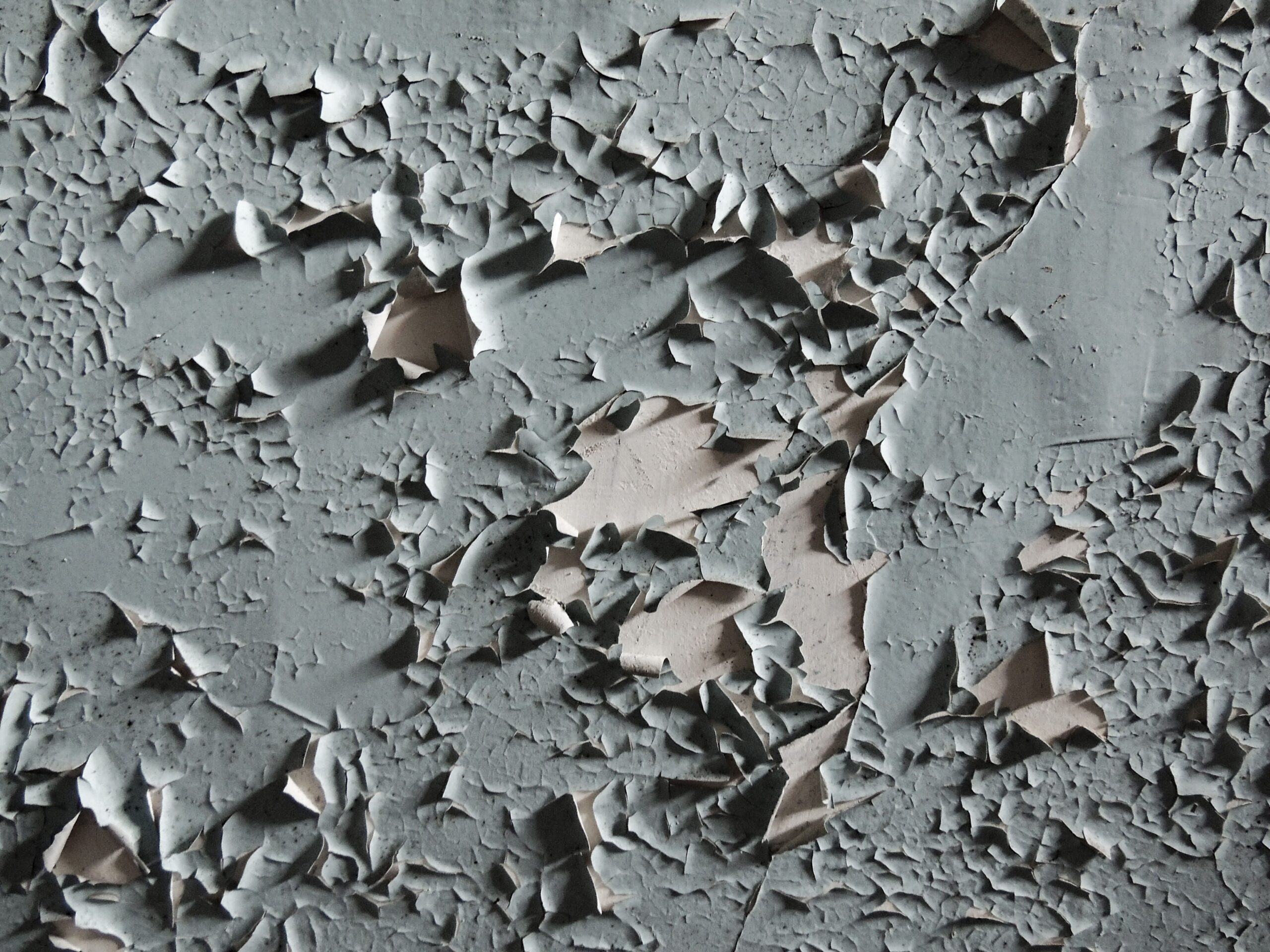
When the walls inside your home start to flake or bubble, you may think it’s a cosmetic problem. Sometimes, paint may peel or bubble due to age or poor adhesion, but if the paint is located on the ceiling, near windows or doors, or seems wet after a storm, it may go beyond normal wear and tear. In South Jersey, where four seasons regularly bring rain, humidity, and high temperatures, trapped moisture can quickly become an issue for the interior and exterior walls.
Key Takeaways
- Peeling or bubbling interior paint can result from aging or poor surface preparation, but it may also indicate moisture behind the walls or ceiling.
- Roof leaks, damaged siding, and failing window or door seals can allow moisture to reach areas behind the interior paint.
- High indoor humidity and condensation can also cause localized paint damage, particularly in kitchens, bathrooms, basements, and poorly ventilated areas.
- The location and frequency of the peeling paint can provide clues about its potential cause, especially when damage returns after rain or repainting.
- If paint damage continues, worsens, or appears alongside other signs of moisture, a professional inspection can help identify whether roofing, siding, window, or door problems are contributing to the issue.
If paint is peeling or bubbling inside your house, there are two questions you must ask yourself. Is the paint revealing a moisture-related issue? And, if so, when should you call for help?
What Causes Paint to Peel or Bubble Inside a House?
If age-related issues have been ruled out, the next culprit is often moisture. Here are six ways moisture may play a role in paint peeling or bubbling inside a house:
1. Moisture Behind the Paint
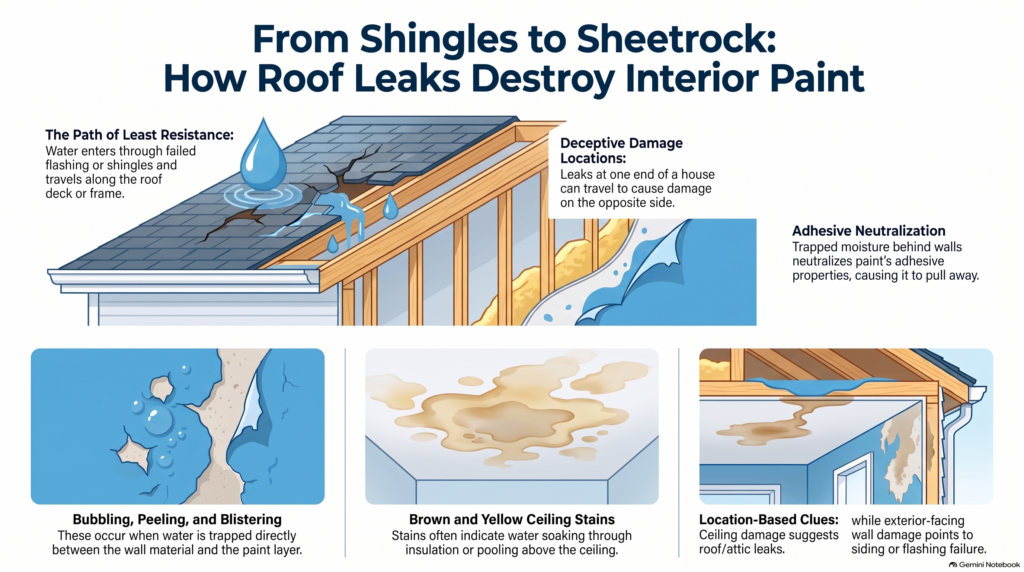
The dominant cause of peeling or bubbling paint inside a house is moisture that is trapped in the walls behind the paint. If there are tiny cracks in the shingles or areas where flashing or siding has pulled away from the house, water can infiltrate. It doesn’t take much for moisture to seep into the unprotected areas of a home and increase the humidity levels inside. As moisture increases, the adhesive properties in paint can be neutralized, leading to bubbling, peeling, and blistering.
2. Roof Leaks
Depending on the size of the leak, the issue may not be obvious. Additionally, water can intrude along a valley, for example, and end up affecting the ceiling of a room on the opposite end of the house. If you suspect that paint peeling and bubbling are caused by a roof leak, there are several steps you can take. First, check the attic for moisture. Damp insulation, discoloration, and musty odors indicate substantial moisture retention. Second, call in a roofing inspector to take a look and verify whether there is damaged.
Keep in mind that moisture in the attic does not automatically point to a roof leak. Moisture may collect when insulation and ventilation are insufficient.
3. Problems Around Windows and Doors
Caulking, flashing, and other seals around windows and doors can fail due to wear and tear. In turn, cracks in caulking or lifted flashing, for example, can allow moisture to seep into the wood around the assembly.
If you notice the following signs, the seals around the windows and doors may need to be repaired or replaced:
- Peeling or bubbling paint around frames
- Doors that are harder to open and close
- Discoloration
- Soft or deteriorating trim
- Musty odors inside
- Visibly cracked and missing exterior caulking
4. Siding and Exterior Wall Problems
A common issue that many South Jersey homes face is damaged siding. Throughout the years, siding can become damaged, loose, or warped. If it isn’t properly sealed during installation, water will find the tiny gaps, and reach the house wrap and sheathing. While the house wrap can prevent immediate leaks, continued exposure to moisture will cause deterioration. Eventually, the moisture may soak into the OSB or plywood underneath, where it will impact the interior. As a result, paint may peel and bubble inside the house.
5. High Indoor Humidity and Condensation
Not every paint problem is caused by an exterior leak. As mentioned previously, moisture retention is caused by a number of factors, one being indoor humidity produced by appliances and your life. Kitchens, bathrooms, basements, and poorly ventilated areas are susceptible to high humidity. In turn, the moisture contributes to condensation on walls and other surfaces.
Condensation caused by a hot shower, for instance, will produce localized peeling and bubbling. Keep an eye out after a hot shower or boiling water to see if the suspected water damage is from specific activities rather than an exterior leak.
6. Improper Surface Preparation or Aging Paint
Sometimes the paint is the source. If the paint was applied over glossy, damp, dirty, or an ill-prepared surface, adhesion is reduced. That can lead to paint that is unable to resist moisture and blister easily. Furthermore, multiple layers of old paint can weaken underneath a newer layer, leading to peeling and bubbling.
Where Is the Peeling Paint Located?
While it is recommended that homeowners request the assistance of a roof inspector to find any exterior issues, you may be able to pinpoint the source of the issue by considering the location of the bubbling and blistering paint.
Here’s what the four most common locations for peeling paint may indicate:
- Ceiling: May be a sign of moisture infiltrating through the roof, attic, or plumbing. Look for recurring damage and stains, especially after rain or if your roof is visibly worn.
- Around Windows: This may be caused by condensation or indoor humidity but may also indicate issues with flashing or exterior seals.
- Exterior-Facing Walls: If the paint is on an exterior-facing wall, it may be a sign that siding, flashing, window, or door seals or caulking is failing.
- Near Bathrooms and Kitchens: Humidity is the main culprit, but poor ventilation can also contribute.
How Can You Tell If Peeling Paint Is Caused by Roofing Damage?
After looking at the location of the peeling or bubbling paint, consider the frequency. There may be a pattern that tells you whether the peeling paint is caused by roofing damage.
Ask yourself the following questions:
- Does the paint show signs of moisture retention after heavy rain?
- Does the area keeping getting worse?
- Is the location near an exterior wall, window, or ceiling?
- Has the problem returned after repainting?
If you answered yes to one or more of those questions, it may be roofing damage. Consider scheduling an inspection with a reputable roofing, window, or siding company like T.A. Hughes III to learn more about the condition of your roof.
Frequently Asked Questions About Peeling or Bubbling Paint
Why is the paint peeling or bubbling inside my house?
Interior paint can peel or bubble because of age, poor surface preparation, high indoor humidity, condensation, or moisture behind the painted surface. Roof leaks, damaged siding, and failing seals around windows and doors can also allow moisture to affect interior paint.
Can a roof leak cause paint to peel or bubble?
Yes. Moisture from a roof leak can travel through the roof and attic before affecting an interior ceiling or wall. If peeling or bubbling paint gets worse after heavy rain, or appears alongside stains, damp insulation, discoloration, or musty odors, a roofing inspection may help identify the source.
Can humidity cause interior paint to bubble?
Yes. High indoor humidity can contribute to condensation on walls and other surfaces, which may cause localized peeling or bubbling. Kitchens, bathrooms, basements, and poorly ventilated areas are particularly susceptible to humidity-related paint problems.
Why is paint peeling around my windows and doors?
Peeling or bubbling paint around windows and doors can result from condensation or indoor humidity, but it may also indicate failing exterior caulking, flashing, or other seals. Look for additional signs such as deteriorating trim, discoloration, musty odors, or cracked or missing exterior caulking.
Does peeling paint always mean I have water damage?
No. Paint can peel or bubble because of age, poor surface preparation, high humidity, or condensation without an exterior leak being present. However, recurring damage, moisture after heavy rain, or peeling near ceilings, exterior walls, windows, or doors may warrant a closer inspection.
When should I call a professional about peeling paint?
Consider scheduling an inspection if the paint damage continues or gets worse, returns after repainting, or appears after heavy rain. It is also worth investigating when peeling paint occurs alongside roof, siding, window, door, or other signs of moisture-related damage.
Final Thoughts: Don’t Let Moisture-Related Damage Persist
If you notice paint peeling or bubbling in your house, it may not be an immediate emergency. Consider the location and the frequency. If the paint damage continues or gets worse, the cause may be related to roofing damage. T.A. Hughes III Roofing, Siding & Windows has served South Jersey homeowners for over 45 years. Our team can help you identify exterior roofing, window, and siding problems before small issues turn into bigger ones.