
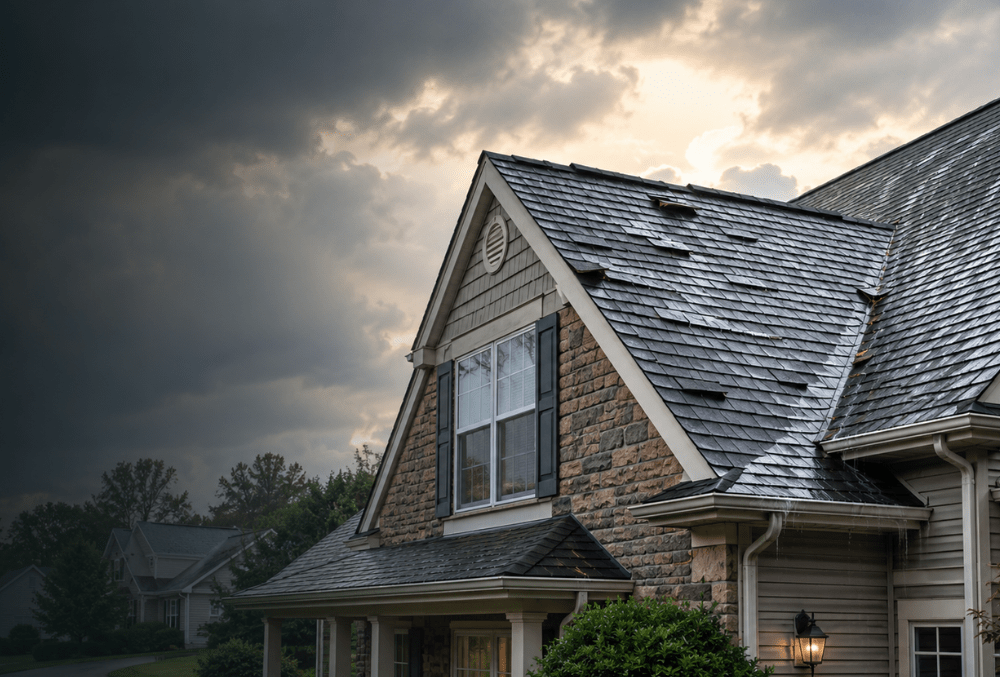
Summer in South Jersey can be beautiful, but it can also be rough on your roof. One day it is hot and humid, and the next day a strong thunderstorm rolls through Gloucester County, Camden County, or Burlington County with heavy rain, high winds, hail, and falling branches.
For many homeowners, roof damage is not always obvious right away. You may not see shingles sitting in your yard or water dripping from the ceiling immediately after a storm. But that does not mean your roof escaped unharmed.
Summer storms can loosen shingles, damage flashing, clogged gutters, expose weak spots, and create leaks that show up weeks later. That is why it is important to know what to look for after severe weather and when to call a trusted NJ roofing contractor for help.
T.A. Hughes III Roofing, Siding, and Windows has served South Jersey homeowners for more than 45 years, helping families protect their homes with roofing, siding, gutters, windows, inspections, repairs, and replacements. If your home was hit by a recent storm, here is what you should know.
What Can Summer Storms Do to a South Jersey Roof?
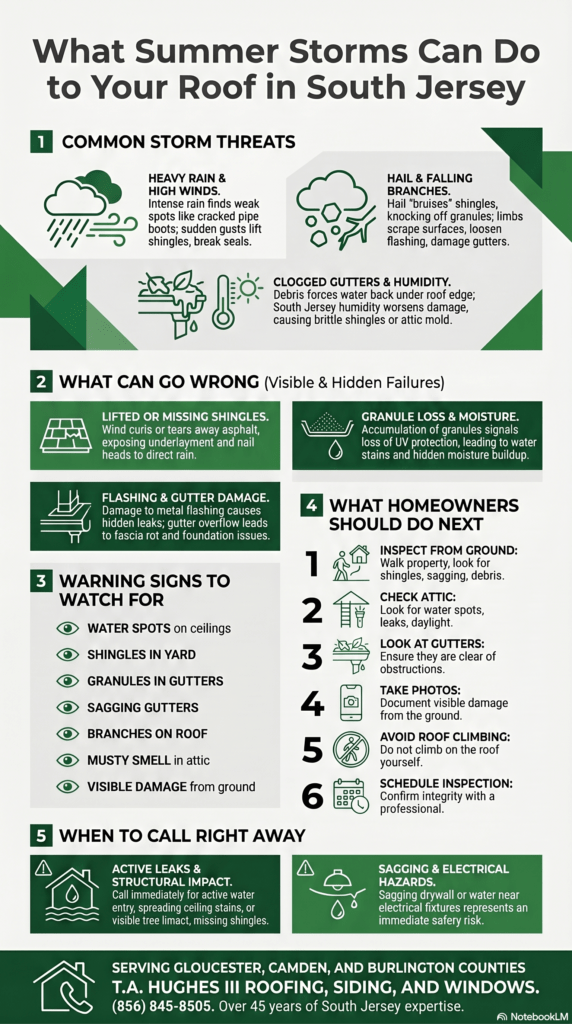
Summer storms can damage South Jersey roofs through heavy rain, high winds, hail, falling branches, clogged gutters, lifted shingles, flashing leaks, and roof valley drainage problems. Homeowners should check for missing shingles, ceiling stains, gutter overflow, attic moisture, and visible storm damage after severe weather.
Heavy Rain Can Find the Weakest Spot in Your Roof
A strong summer storm can dump a lot of rain in a short amount of time. When that happens, your roof, gutters, flashing, and drainage system all have to work together.
If one part of the system is weak, water can find its way inside.
Common problem areas include:
- Missing or lifted shingles
- Cracked pipe boots
- Damaged flashing around chimneys or vents
- Clogged gutters
- Poor roof drainage
- Soft or aging roof decking
- Low-slope roof sections
Even a small opening can become a bigger issue during heavy rain. Water does not need much space to get inside. Once it enters your roof system, it can travel along rafters, insulation, drywall, and ceilings before you notice a stain.
If you see water spots, peeling paint, bubbling drywall, or moisture in your attic, schedule a professional roof inspection in New Jersey before the issue gets worse.
High Winds Can Lift or Loosen Shingles
South Jersey summer storms often bring sudden wind gusts. These winds can lift shingles, break the seal between shingles, or tear older shingles away from the roof.
The tricky part is that wind damage is not always easy to spot from the ground. A shingle may still look like it is in place, but if the seal has been broken, future rain can get underneath it.
Signs of possible wind damage include:
- Shingles that look raised, curled, or uneven
- Missing shingles
- Pieces of shingles in the yard
- Exposed nail heads
- Loose ridge caps
- Granules collecting near downspouts
- New leaks after a storm
If you are in Gloucester County and notice these signs after severe weather, you may also want to read What to Do After a Storm Damages Your Roof in Gloucester County for a step-by-step guide.
Hail Can Bruise and Weaken Your Shingles
Hail is one of the most overlooked causes of roof damage. Small hail may not look like a big deal, but it can still damage asphalt shingles by knocking off protective granules.
Those granules matter. They help protect shingles from sun exposure, rain, and normal wear. When hail knocks them loose, the shingle becomes more vulnerable to aging, cracking, and leaks.
Possible signs of hail damage include:
- Small dark spots on shingles
- Dents on gutters, downspouts, or metal vents
- Granule loss in gutters
- Bruised-looking shingles
- Damage to siding, window screens, or outdoor fixtures
Because hail damage can be difficult to confirm from the ground, homeowners should avoid climbing onto the roof themselves. Instead, review What Does Hail Damage Look Like on a Roof and call a qualified roofer if you suspect a problem.
Clogged Gutters Can Push Water Back Toward the Roof
Your gutters play a bigger role in roof protection than many homeowners realize. During a summer storm, gutters move water away from your roofline, siding, foundation, and landscaping.
When gutters are clogged with leaves, twigs, roof granules, or storm debris, water can back up under the roof edge. This can lead to fascia damage, soffit problems, siding stains, basement moisture, and roof leaks.
Warning signs of gutter-related storm problems include:
- Water spilling over the sides of the gutters
- Sagging gutters
- Gutters pulling away from the home
- Water pooling near the foundation
- Staining on siding
- Plants or weeds growing from gutters
- Damp areas near soffits or fascia boards
If your gutters struggled during the last storm, visit the gutter repairs and cleaning page or learn more about Leaf Relief gutter protection to help reduce future clogs.
Falling Branches Can Damage More Than Shingles
Summer storms can bring down tree limbs, especially when high winds hit trees that are already weak, overgrown, or heavy with leaves.
A branch does not have to crash through the roof to cause damage. Even a smaller limb can scrape shingles, loosen flashing, damage gutters, or crack siding.
After a storm, walk around your property and look for:
- Branches sitting on the roof
- Scratched or missing shingles
- Damaged gutters
- Loose siding panels
- Broken trim
- Dented metal vents
- Debris near valleys or roof edges
Do not try to remove large branches from the roof yourself. Pulling them the wrong way can cause more damage or create a safety risk. If a branch has hit your roof and you are worried about leaks, contact a roofer that handles 24 hour emergency roof repair in NJ.
Heat and Humidity Can Make Storm Damage Worse
Summer storms are not the only issue. South Jersey heat and humidity can make existing roof problems worse.
When your roof is already aging, heat can dry out shingles and make them more brittle. Humidity can contribute to moisture problems in the attic. If your attic does not have proper ventilation, heat can build up under the roof deck and shorten the life of roofing materials.
That means a small storm problem in June can become a bigger leak by August if it is ignored.
Common heat and humidity warning signs include:
- Curling shingles
- Musty attic odors
- Dark streaks or algae growth
- Excessive upstairs heat
- Higher energy bills
- Moisture on attic surfaces
- Mold-like staining around roof decking
For homeowners comparing long-term roofing options, the article on energy-efficient roofing options in New Jersey is a helpful next read.
Flashing Damage Can Lead to Hidden Leaks
Flashing is the thin metal material installed around vulnerable areas of the roof, including chimneys, skylights, vents, walls, and roof valleys.
During summer storms, wind and rain can expose flashing problems. If flashing is loose, rusted, bent, or improperly sealed, water can enter around those transition points.
Flashing-related leaks often show up near:
- Chimneys
- Skylights
- Bathroom vents
- Plumbing stacks
- Dormers
- Roof-to-wall intersections
- Valleys where two roof slopes meet
These leaks can be frustrating because the water stain inside your home may not appear directly below the entry point. Water can travel before it becomes visible. That is why a professional inspection is often the safest way to identify the source.
When Storm Damage Becomes an Emergency
Not every storm issue is an emergency, but some problems should be handled right away.
Call for help quickly if you notice:
- Active water leaking into the home
- A tree or large branch on the roof
- Missing shingles over a large area
- Ceiling stains that are spreading
- Wet insulation in the attic
- Sagging drywall
- Electrical fixtures near a leak
- Visible holes or punctures in the roof
If water is actively entering your home, try to contain it with buckets or towels, move valuables away from the leak, and avoid rooms where water is near electrical outlets or fixtures.
Then contact a professional for emergency roof repair in NJ.
Should You Repair or Replace the Roof After a Summer Storm
After storm damage, many homeowners wonder whether they need a repair or a full replacement. The answer depends on the age of the roof, the type of damage, how widespread the issue is, and whether the roof already had problems before the storm.
A repair may be enough if:
- Only a few shingles are missing
- The roof is relatively new
- Damage is limited to one small area
- The decking is still solid
- Flashing or pipe boots need simple correction
A replacement may make more sense if:
- The roof is near the end of its life
- Shingles are curling, cracking, or losing granules
- Multiple areas are leaking
- Storm damage is widespread
- Repairs would only delay a larger problem
- The roof has had repeated issues
For cost planning, you can review The 2024 Guide to Roof Replacement Costs in South Jersey. While pricing changes over time, this guide can help homeowners understand the major factors that influence roof replacement cost.
What South Jersey Homeowners Should Do After a Summer Storm
After a major storm, you do not need to panic. But you should be proactive.
Here is a simple post-storm checklist:
- Walk around your property from the ground
- Look for missing shingles, loose debris, or damaged gutters
- Check your attic for moisture or daylight coming through
- Look for ceiling stains or bubbling paint
- Check downspouts for heavy granule buildup
- Take photos of visible damage
- Avoid climbing onto the roof
- Schedule a professional roof inspection if anything looks suspicious
Homeowners in Gloucester County can start with the Gloucester County roofing contractor page. Homeowners in Camden County can visit the Camden County roofing contractor page. Homeowners in Burlington County can visit the Burlington County roofing contractor page.
Protect Your Roof Before the Next South Jersey Storm
The best time to deal with roof problems is before the next storm, not after water is already coming through your ceiling.
Regular inspections, clean gutters, proper ventilation, and timely repairs can help extend the life of your roof and protect your home from costly damage.
If you are unsure whether your roof is ready for summer storm season, T.A. Hughes III Roofing, Siding, and Windows can help. Our team provides roofing, siding, gutter, window, and exterior services throughout South Jersey, including Gloucester County, Camden County, Burlington County, and surrounding communities.
Whether you need a roof inspection, storm damage repair, gutter help, or a full roof replacement, you can count on a local team with decades of experience and a reputation built on craftsmanship, honesty, and care.
Schedule a Roof Inspection After a South Jersey Storm
Do not wait for a small roof problem to become a major leak. If your home was recently hit by heavy rain, hail, high winds, or falling branches, schedule a professional inspection with T.A. Hughes III Roofing, Siding, and Windows.
Call (856) 845-8505 or visit the contact page to request a free quote.
Disclaimer: This article is for general informational purposes only and does not replace a professional roof inspection. Storm damage can vary from home to home, and a qualified roofing contractor should evaluate your specific situation.