
If you’re a homeowner in Mullica Hill, you’ve probably asked yourself at some point:
“Can I trust this roofer… or am I about to make an expensive mistake?”
It’s a fair concern.
Between unpredictable South Jersey storms, aging roofs, and contractors who don’t always deliver what they promise, choosing the right roofing company can feel overwhelming.
The good news? Once you understand what to expect from a professional roofing contractor, the entire process becomes clearer—and you’ll be able to spot the difference between a quality company and one you should avoid.
Let’s walk through exactly what Mullica Hill homeowners should expect—and what most people get wrong.
Why Roofing Services Matter in Mullica Hill Homes
Homes in Mullica Hill and across Gloucester County deal with:
- Strong wind and rain storms
- High humidity that wears down materials
- Winter snow and ice buildup
- Seasonal temperature swings
Over time, these conditions can cause:
- Shingle damage
- Hidden leaks
- Ventilation issues
- Structural wear
Even a roof that “looks fine” from the ground can have serious issues underneath.
That’s why working with a trusted local contractor like T.A. Hughes III Roofing—with 35+ years of experience in South Jersey—makes a real difference.
Step 1: A Thorough Roof Inspection (Not a Quick Estimate)
A professional roofing service always starts with a complete inspection—not a quick glance from the driveway.
What a real inspection includes:
- Shingle condition (missing, curling, cracking)
- Flashing around chimneys, vents, and valleys
- Roof decking and structural integrity
- Gutters and drainage systems
- Attic ventilation and signs of moisture
Many of the most expensive roofing problems start small—and go unnoticed.
Pro Tip: If a contractor gives you a price without inspecting your roof properly, that’s a red flag.
Step 2: Honest Recommendations (Repair vs Replacement)
After the inspection, a trustworthy contractor will walk you through your options clearly.
You should expect:
- A breakdown of what’s damaged
- Repair options (if possible)
- Replacement recommendations (if necessary)
- Clear explanation of urgency
Not every roof needs to be replaced.
In fact, one of the biggest mistakes homeowners make is:
Replacing a roof when a repair would have solved the problem.
A reputable company will help you make the right decision—not the most expensive one.
Step 3: Transparent Pricing (No Surprises)
Let’s talk about cost—because this is where things can go wrong fast.
A professional estimate should include:
- Detailed scope of work
- Material types and options
- Labor costs
- Cleanup and disposal
- Timeline expectations
But here’s what most homeowners don’t realize: the estimate itself tells you a lot about the contractor. A clear, itemized quote shows that the company has a structured process and understands exactly what your project requires. On the other hand, vague or overly simple pricing often leads to change orders, hidden costs, or corners being cut during the job.
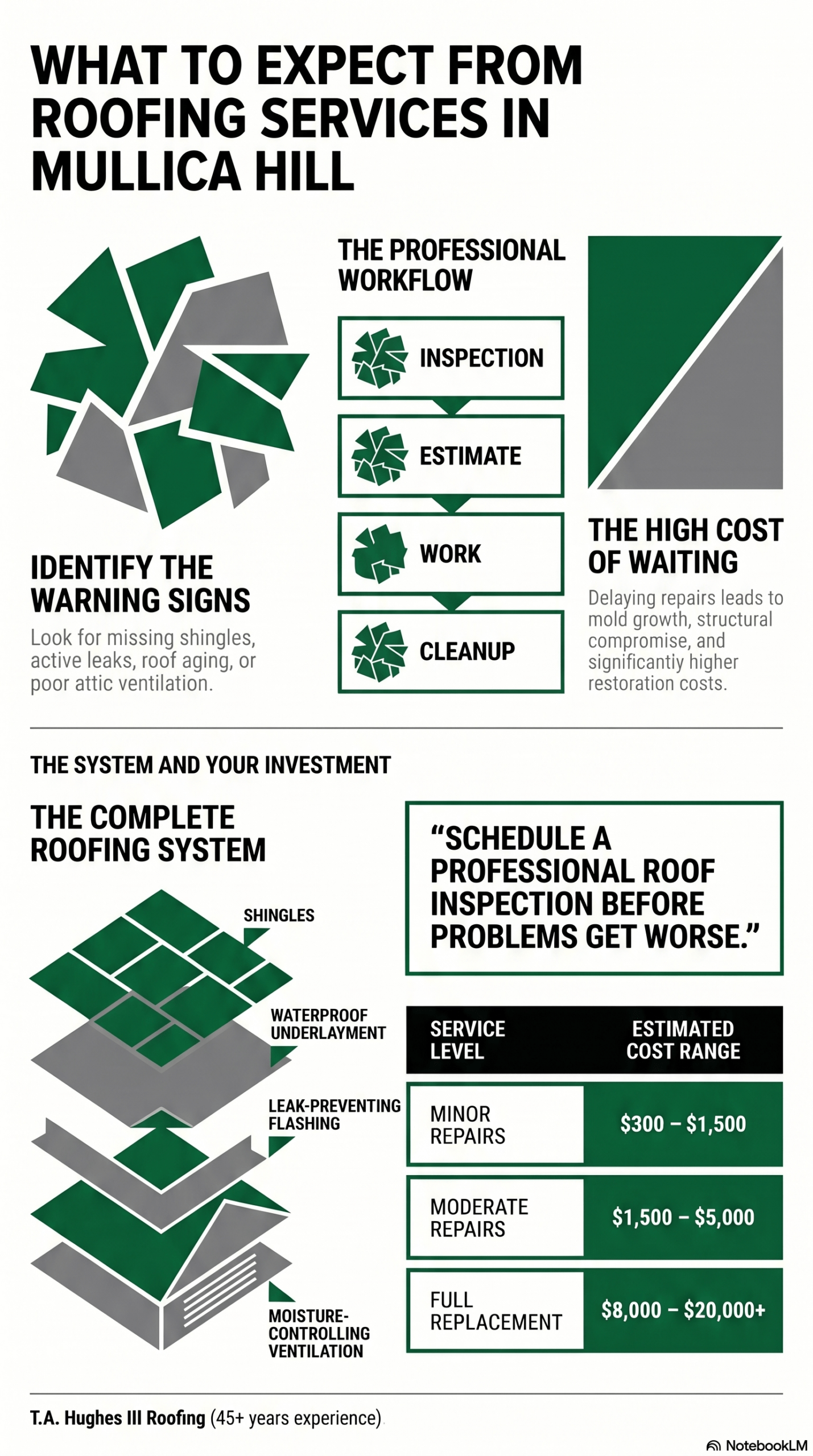
Average costs in Mullica Hill:
- Minor repairs: $300 – $1,500
- Moderate repairs: $1,500 – $5,000
- Full roof replacement: $8,000 – $20,000+
(Varies based on size, materials, and complexity)
These ranges depend heavily on factors like roof pitch, accessibility, number of layers, and the condition of the underlying structure. Two homes that look similar from the outside can have very different costs once the inspection is complete.
If a quote is vague, rushed, or significantly cheaper than others, proceed with caution. In roofing, you almost always get what you pay for—and the cheapest option often becomes the most expensive over time.
Step 4: Materials That Can Handle New Jersey Weather
Not all roofing materials are created equal—especially in South Jersey.
A quality roofing system includes:
- Durable asphalt or architectural shingles
- Waterproof underlayment
- Proper flashing (critical for leak prevention)
- Ventilation systems to control moisture and heat
What matters most isn’t just the shingles—it’s how the entire system works together. Your roof is a layered structure designed to shed water, regulate temperature, and protect your home from moisture intrusion.
In areas like Mullica Hill, where you get everything from humid summers to freezing winters, materials need to handle expansion, contraction, and prolonged exposure to moisture. Poor-quality materials or improper installation can lead to premature failure—even if the roof looks good initially.
Cheap materials might save money upfront—but cost you far more in repairs later. A properly installed, high-quality system is designed to last decades, not just a few years.
Step 5: A Clear Timeline and Communication
You should never be left wondering what’s happening with your roof.
Typical timelines:
- Repairs: 1–2 days
- Full replacement: 1–3 days
You should expect:
- A clear start date
- Updates if weather delays occur
- Communication throughout the project
But timelines aren’t just about how fast the job gets done—they’re about how well it’s managed. A professional contractor schedules materials, crew, and disposal in advance to avoid unnecessary delays.
Weather is always a factor in South Jersey, especially during storm seasons. The difference is how the contractor communicates. You should always know:
- When work is starting
- What’s happening each day
- If anything changes
Lack of communication is one of the biggest complaints homeowners have—and a major warning sign. A company that communicates well before the job will usually perform well during it.
Step 6: Clean, Professional Workmanship
A quality roofing company respects your property—not just your roof.
Expect:
- Protection for landscaping and siding
- Organized job site
- Full cleanup after completion
- Nail sweep with magnets
Roofing projects can get messy fast. Without proper preparation, debris can damage plants, siding, and outdoor areas. A professional crew takes steps to minimize disruption and protect your home throughout the process.
Cleanup is just as important as installation. Leftover nails and debris aren’t just inconvenient—they’re dangerous for kids, pets, and vehicles. A thorough cleanup shows attention to detail and pride in the work.
When the job is done, your property should be clean, safe, and ready to enjoy—without you having to pick up after the contractor.
What Happens If You Wait Too Long?
This is where many homeowners get into trouble.
Ignoring roof issues can lead to:
- Interior water damage
- Mold growth
- Insulation damage
- Structural problems
- Higher repair costs
What starts as a small leak or a few missing shingles can quickly spread beneath the surface. Water doesn’t just stay in one spot—it travels, often damaging areas you can’t see until it’s too late.
In many cases, homeowners don’t notice a problem until there’s visible interior damage. By that point, what could have been a simple repair may require a much larger and more expensive fix.
A small repair today can turn into a $10,000+ problem later. Acting early isn’t just smart—it’s one of the best ways to protect your home and your budget.
Common Roofing Problems in Mullica Hill
Based on local experience, the most common issues include:
- Missing or wind-damaged shingles
- Roof leaks and water stains
- Aging roofs reaching end of life
- Flashing failures around vents and chimneys
- Poor attic ventilation
These problems are especially common after storms or during seasonal transitions. In older neighborhoods around Mullica Hill, many homes are now dealing with roofs that are approaching or past their expected lifespan.
Ventilation is another issue that’s often overlooked. Poor airflow in the attic can trap heat and moisture, leading to faster deterioration of roofing materials and even mold growth inside the home.
These problems often start small—but escalate quickly if ignored. Regular inspections can catch them before they turn into major repairs.
How to Choose the Right Roofing Contractor in Mullica Hill
Before hiring anyone, take a few minutes to check:
Contractor Checklist:
- Licensed and insured in NJ
- Strong local reviews
- Clear written estimate
- Explains process in plain language
- Offers warranties
- No pressure sales tactics
Choosing the right contractor isn’t just about price—it’s about trust and consistency. A reliable company will take the time to explain your options, answer your questions, and make sure you understand the process before any work begins.
Be cautious of contractors who:
- Push for immediate decisions
- Avoid giving written estimates
- Offer deals that seem too good to be true
If something feels rushed or unclear, trust your instincts. A reputable contractor will give you the time and information you need to make the right decision for your home.
Why Local Experience Matters
A contractor familiar with Mullica Hill understands:
- Local weather patterns
- Common roofing failures in the area
- Building codes and permits
- Best materials for NJ homes
But it goes deeper than that.
Local experience means understanding how South Jersey storms actually impact homes in this area—how wind moves through open farmland, how older homes in Mullica Hill may have different structural considerations, and how humidity and seasonal changes affect roofing materials over time. These aren’t things you learn from a manual—they come from years of working on homes right here in Gloucester County.
It also means knowing what problems tend to show up before they become serious. An experienced local contractor can spot early warning signs that others might miss, helping homeowners avoid costly repairs down the line. That kind of insight can save you thousands—and give you confidence that your roof is built to last.
With decades of experience serving Gloucester County, T.A. Hughes III Roofing provides solutions built specifically for South Jersey homes.
Serving Mullica Hill and Surrounding Areas
We proudly serve:
- Mullica Hill
- Deptford
- Washington Township
- Woodbury
- Surrounding Gloucester County communities
Download Our Guide to Roofing Services in Mulllica Hill, NJ
Download Our Guide to Roofing Services in Mulllica Hill, NJ
FAQ: Roofing Services in Mullica Hill
How much does roof repair cost in Mullica Hill?
Most repairs range from $300 to $5,000 depending on severity. A professional inspection is the best way to determine exact cost.
How long does a roof last in New Jersey?
Most asphalt roofs last 20–30 years, but weather conditions can shorten that lifespan.
Should I repair or replace my roof?
If damage is localized, repair may be enough. If the roof is aging or has widespread damage, replacement is usually the better long-term option.
How do I know if my roof has storm damage?
Signs include missing shingles, leaks, granule loss, and debris impact. Some damage isn’t visible from the ground.
How quickly should I fix a roof problem?
As soon as possible. Delays often lead to more expensive repairs.
Not Sure About Your Roof? Start Here
If you’re unsure whether your roof needs repair or replacement, the best first step is simple:
Schedule a professional inspection.
At T.A. Hughes III Roofing, you’ll get:
- Honest evaluations
- Clear recommendations
- No pressure—just real answers
Contact us today for a free estimate and make sure your home is protected for the long run.
Disclaimer
This article is for informational purposes only and does not replace a professional roof inspection. Every home is different—always consult a qualified contractor for an accurate assessment.