
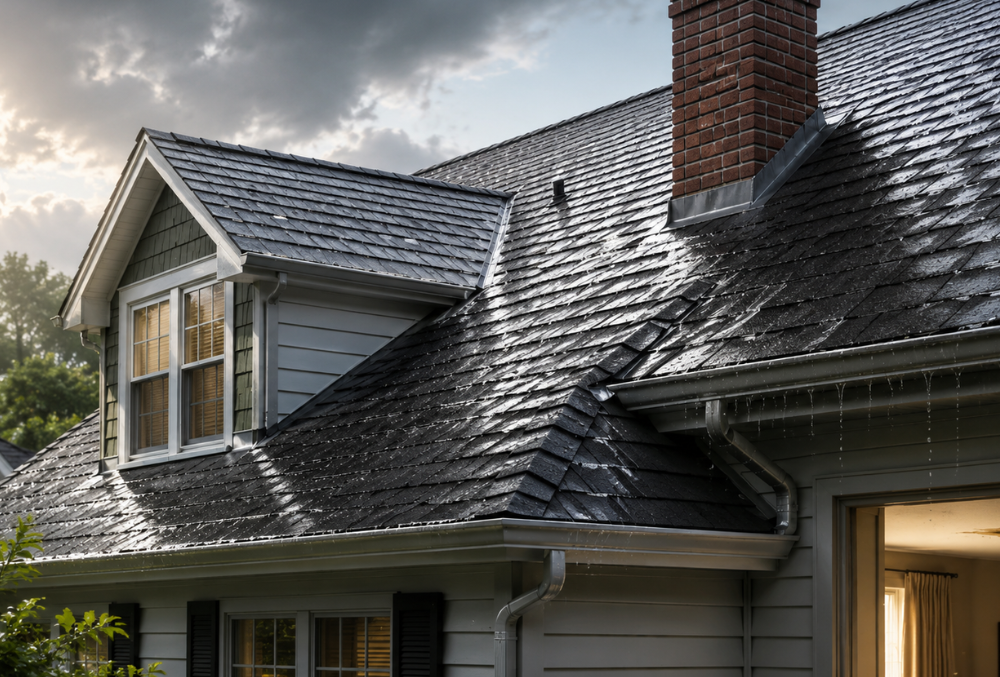
A roof leak that only shows up during heavy rain can be frustrating. One day your home seems fine, and the next strong South Jersey storm leaves a ceiling stain, attic moisture, or water dripping near a wall, chimney, vent, or light fixture.
The confusing part is this: if the roof does not leak during light rain, many homeowners assume the problem is minor. But heavy rain can expose weak points that normal rain may not reach. Wind-driven rain, clogged gutters, worn flashing, roof valleys, aging shingles, and hidden ventilation issues can all allow water into your home when the weather gets intense.
For homeowners in Gloucester, Camden, and Burlington Counties, heavy summer rain, coastal storm systems, winter freeze-thaw cycles, and strong wind can all test your roofing system. Here is why your roof may leak only during heavy rain, what the problem usually means, and when to call T.A. Hughes III Roofing for help.
Why Does My Roof Only Leak During Heavy Rain?
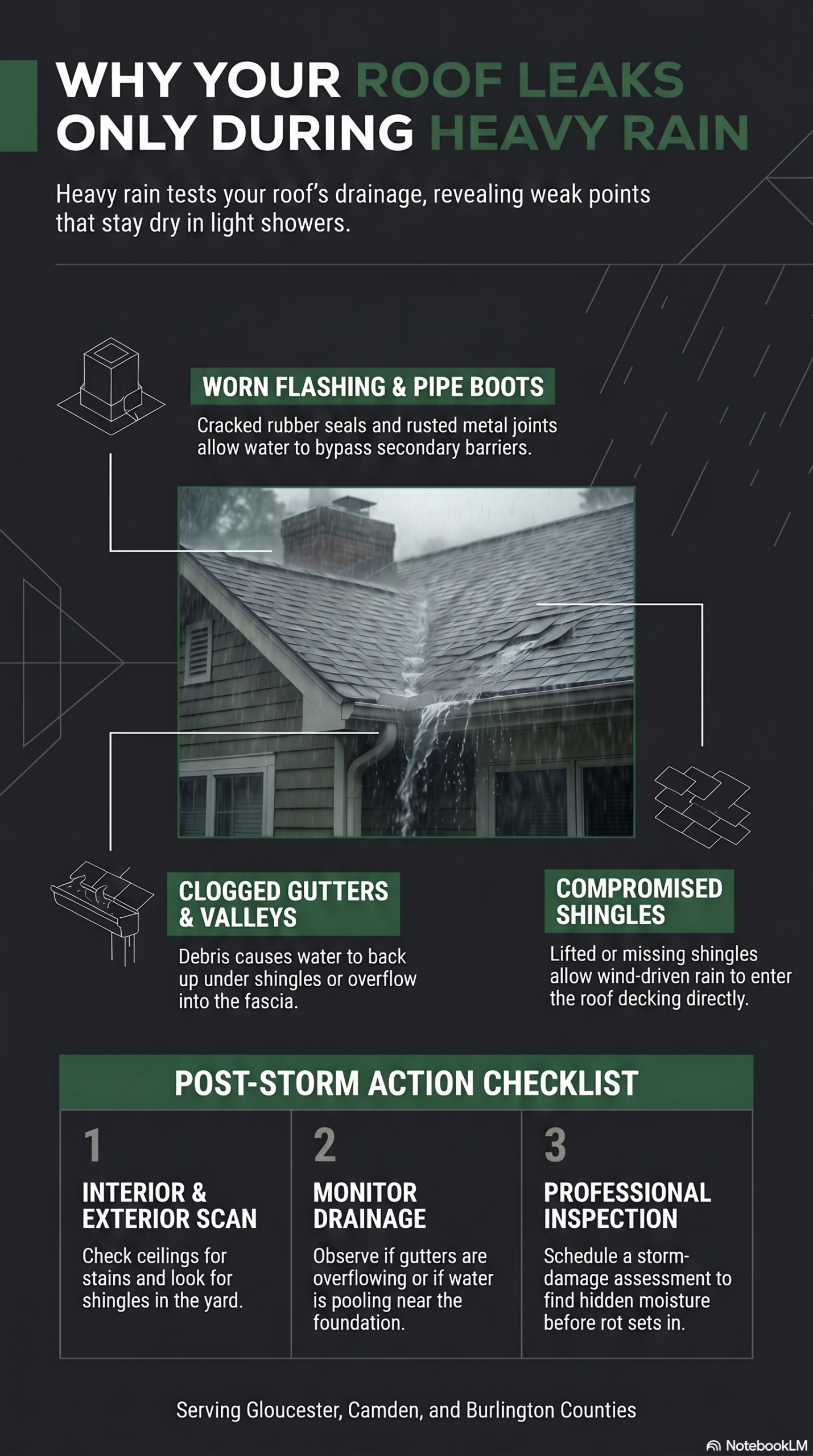
A roof may only leak during heavy rain because stormwater is reaching weak points that light rain does not expose. Common causes include worn flashing, clogged gutters, missing or lifted shingles, roof valley problems, cracked pipe boots, chimney leaks, wind-driven rain, and aging roofing materials. South Jersey homeowners should schedule a roof inspection if leaks appear after heavy rain, ceiling stains develop, gutters overflow, or water enters the attic or living space.
Quick Answer: Why Does My Roof Only Leak During Heavy Rain?
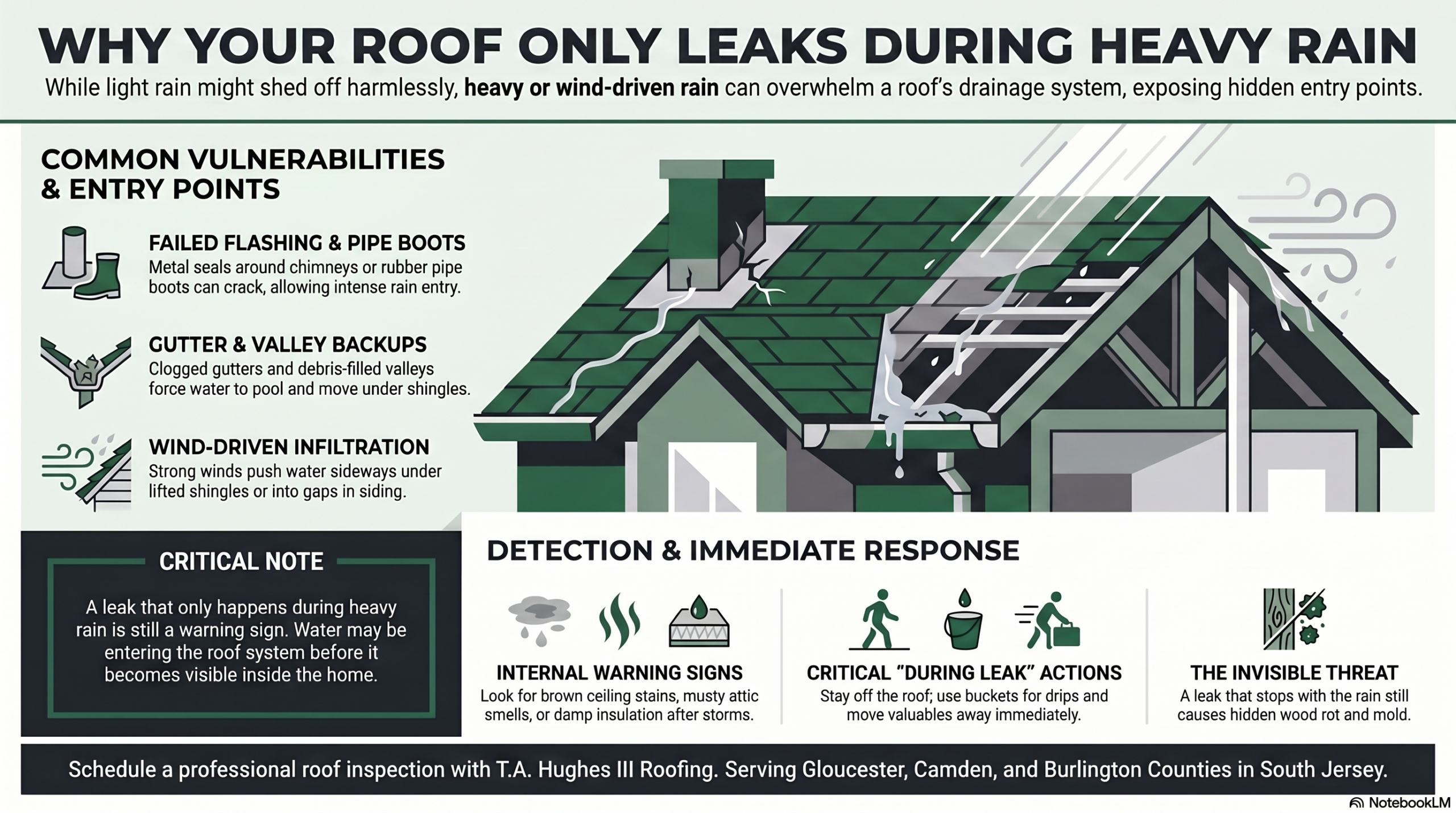
Your roof may only leak during heavy rain because water is being pushed into weak points faster than the roof can shed it. Common causes include worn flashing, missing or lifted shingles, clogged gutters, roof valley problems, cracked pipe boots, chimney leaks, poor attic ventilation, or wind-driven rain entering beneath loose materials.
A leak that only happens during heavy rain still needs attention. Water may already be entering the roof system before it becomes visible inside the home.
If water is actively entering your home, visit our emergency roof repair in South Jersey page for help.
Heavy Rain Finds Weak Points in the Roof
A properly functioning roof is designed to move water down and away from your home. Shingles, flashing, underlayment, gutters, valleys, and downspouts all work together to direct water safely off the roof.
During light rain, a small weakness may not be obvious. But during heavy rain, water volume increases quickly. If rainwater collects near a roof valley, backs up at a clogged gutter, or gets pushed sideways by wind, it can enter areas that normally stay dry.
This is why homeowners often notice leaks only during storms. The leak was not necessarily created by that storm. The storm may have revealed a problem that was already developing.
For a deeper explanation of how water travels through roofing systems, read our guide on how water actually moves through a roof and into a home.
Worn or Damaged Flashing
Flashing is the metal material used around areas where the roof meets another surface. You will often find flashing near chimneys, skylights, vent pipes, walls, roof edges, and valleys.
When flashing is loose, rusted, bent, poorly sealed, or pulling away from the roof, heavy rain can enter around it. This is especially common when rain is blowing sideways during a storm.
Common flashing-related leak areas include:
- Chimneys
- Skylights
- Vent pipes
- Dormers
- Roof-to-wall transitions
- Valleys where two roof slopes meet
A flashing leak may not show up directly under the damaged flashing. Water can travel along framing, insulation, or roof decking before appearing as a stain inside the home.
Clogged Gutters Can Make Roof Leaks Worse
Gutters are often overlooked when homeowners think about roof leaks. But clogged or overflowing gutters can contribute to water problems near the roofline.
When gutters are full of leaves, roof granules, sticks, or debris, rainwater cannot drain properly. During heavy rain, water may spill over the front of the gutter, back up under the roof edge, soak fascia boards, stain siding, or pool near the foundation.
In South Jersey, this is especially common during fall leaf season and after strong summer storms. If you notice water pouring over your gutters during heavy rain, that is a warning sign.
T.A. Hughes provides gutter repair and cleaning in South Jersey to help homeowners keep water moving away from the roofline, siding, fascia, and foundation.
Roof Valleys May Be Holding Too Much Water
Roof valleys are the areas where two roof slopes meet. They naturally collect and direct a large amount of water during rainstorms.
Because valleys handle so much runoff, even a small problem can lead to leaks during heavy rain. Debris, worn shingles, damaged valley flashing, or poor installation can slow drainage and allow water to find a path beneath the roofing materials.
Signs of a possible roof valley problem include:
- Leaks that appear only during storms
- Stains near interior corners
- Debris collecting in valley areas
- Missing or curled shingles near the valley
- Water stains that seem to move after each storm
Roof valleys should be checked carefully during a professional inspection because problems there can spread quickly.
Missing, Lifted, or Aging Shingles
Shingles do more than improve the look of your home. They are the first layer of protection against rain, wind, and sun.
If shingles are missing, lifted, curled, cracked, or losing granules, heavy rain can reach the underlayment and roof decking beneath. Wind-driven rain can make this worse by pushing water under areas that may look mostly normal from the ground.
After a storm, look for:
- Shingles in the yard
- Exposed dark patches on the roof
- Curled or lifted shingle edges
- Granules collecting in gutters
- New ceiling stains
- Damp attic insulation
If shingles are missing or your roof is actively leaking, do not climb onto the roof yourself. A wet roof can be dangerous. Contact a professional roofer for inspection or emergency help.
Pipe Boots and Roof Vents Can Crack Over Time
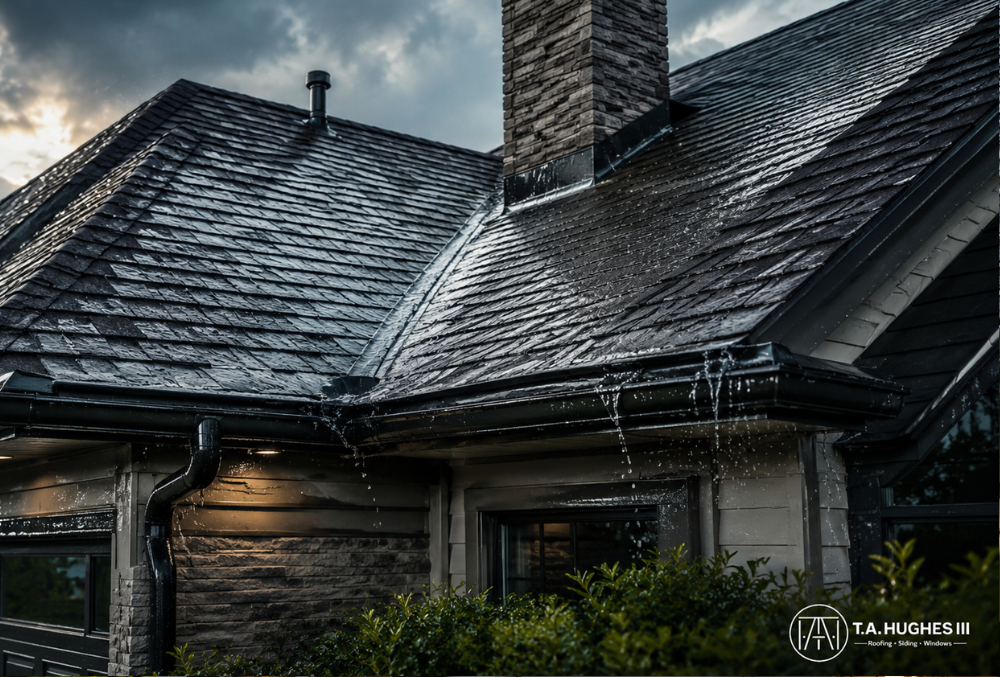
Pipe boots are the rubber or metal flashing pieces around plumbing vents that come through the roof. Over time, rubber can crack, split, or pull away from the pipe.
During light rain, the area may not leak enough to show inside. During heavy rain, water can enter around the cracked boot and travel into the attic or ceiling.
Vent-related leaks are common because these roof penetrations are exposed to sun, heat, cold, wind, and moisture year after year. If you see a stain near a bathroom, laundry area, or interior wall, a pipe boot or roof vent may be one possible cause.
Wind-Driven Rain Can Enter From the Side
Heavy rain becomes more dangerous when it is paired with strong wind. Wind-driven rain does not always fall straight down. It can push water sideways under loose shingles, behind siding, around flashing, or into gaps near roof edges.
This is one reason a roof may seem fine during normal rain but leak during a strong storm.
Wind-driven rain can affect:
- Shingle edges
- Chimney flashing
- Skylight seals
- Roof-to-wall intersections
- Siding gaps
- Soffit and fascia areas
- Ridge or ventilation areas
A professional inspection can help determine whether the leak is coming from the roof surface, flashing, gutters, siding, or another exterior entry point.
Poor Attic Ventilation Can Make Moisture Problems Look Like Roof Leaks
Not every stain is caused by rain entering from outside. Sometimes attic condensation can create moisture stains that look similar to a roof leak.
Poor ventilation can trap warm, moist air in the attic. When that moisture condenses on cold surfaces, it can dampen insulation, roof decking, or ceiling materials.
That said, if the stain appears after heavy rain, a roof or exterior leak should still be investigated first. A professional roof inspection can help identify whether the moisture is coming from stormwater, ventilation problems, condensation, or a combination of issues.
What to Do When Your Roof Leaks During Heavy Rain
If your roof starts leaking during a storm, focus on safety first.
Do not climb onto the roof while it is raining, windy, icy, or wet. Instead:
- Move furniture, electronics, and valuables away from the leak.
- Place a bucket or container under active dripping.
- Use towels to reduce spreading water.
- Take photos or videos if it is safe.
- Check the attic only if conditions are safe.
- Call a professional roofer after the immediate area is controlled.
If water is near electrical fixtures, outlets, or ceiling lights, be extra careful and avoid touching wet electrical areas.
For urgent leaks, T.A. Hughes provides emergency roof repair in South Jersey for active leaks, missing shingles, storm damage, wind damage, and water intrusion.
When to Schedule a Roof Inspection
A roof leak that only happens during heavy rain should not be ignored. Even if the leak stops when the storm passes, water may have entered the roofing system, attic, insulation, or walls.
Schedule a roof inspection if you notice:
- Ceiling stains after rain
- Water dripping during storms
- Missing shingles
- Lifted or curled shingles
- Damp attic insulation
- Musty attic smells
- Gutters overflowing during rain
- Leaks near a chimney, vent, or skylight
- Repeated leaks after previous repairs
T.A. Hughes III Roofing provides professional roof inspections in New Jersey to help South Jersey homeowners find the source of leaks before small issues become larger repairs.
Can Gutters Cause a Roof Leak During Heavy Rain?
Yes, gutter problems can contribute to roofline leaks. When gutters are clogged, loose, undersized, or draining poorly, water can overflow or back up near the roof edge.
This can lead to:
- Fascia damage
- Soffit moisture
- Siding stains
- Foundation pooling
- Basement moisture
- Water entering near the roof edge
If your roof leak only happens when rain is heavy and your gutters are overflowing, your gutter system should be checked along with your roof.
Learn more about gutter repair and cleaning in South Jersey.
Does a Heavy-Rain Leak Mean I Need a New Roof?
Not always. A leak during heavy rain may be caused by a small repairable issue like flashing, a pipe boot, a missing shingle, or a clogged gutter. But repeated leaks, widespread shingle wear, soft decking, or multiple problem areas may point to a larger roofing issue.
The only way to know is to inspect the roof and identify where the water is entering.
T.A. Hughes will explain whether your home needs a targeted repair, gutter correction, emergency stabilization, or a larger roofing solution.
Need Help With a Roof Leak During Heavy Rain?
If your roof only leaks during heavy rain, do not wait for the next storm to test it again. A small leak can lead to damaged insulation, stained ceilings, wood rot, mold concerns, and more expensive repairs if ignored.
T.A. Hughes III Roofing helps homeowners throughout Gloucester, Camden, and Burlington Counties with roof inspections, roof repair, emergency roof repair, gutter repair, siding, windows, and exterior services.
If water is entering your home now, visit our emergency roof repair page.
If the leak has stopped but you want to find the cause, schedule a professional roof inspection.
FAQs
Why does my roof only leak during heavy rain?
Your roof may only leak during heavy rain because water is reaching weak points that light rain does not expose. Common causes include worn flashing, clogged gutters, missing shingles, roof valley problems, cracked pipe boots, wind-driven rain, or aging roofing materials.
Should I worry about a leak that stops after the rain ends?
Yes. Even if the leak stops, water may have entered the roof system, attic, insulation, or walls. A leak that appears only during storms can still cause hidden damage over time.
Can clogged gutters make my roof leak?
Yes. Clogged or overflowing gutters can cause water to back up near the roof edge, soak fascia, stain siding, and contribute to roofline leaks. Gutters should be checked if leaks happen during heavy rain.
Should I call for emergency roof repair during heavy rain?
If water is actively entering your home, shingles are missing, or storm damage has exposed part of the roof, you may need emergency roof repair. Do not climb onto the roof during unsafe weather. Move valuables away from the leak and call a professional.
How can I find the source of a roof leak?
A professional roof inspection can help identify whether the leak is coming from shingles, flashing, gutters, roof valleys, vents, pipe boots, siding, or another exterior entry point.