
2January 2026
A roof leak in the middle of winter can feel overwhelming. It’s cold, conditions may still be dangerous, and water entering your home creates instant stress. The good news is this: what you do in the first hour matters more than anything else. Acting quickly—and correctly—can prevent thousands of dollars in additional damage.
Winter roof leaks are one of the most common emergency calls roofing professionals receive during cold weather. Here’s exactly what to do right now, what to avoid, and how to protect your home until the issue is properly resolved.
First: Take a Breath and Act Quickly
A winter roof leak is serious, but it doesn’t mean disaster is inevitable. Your priorities are simple:
-
Limit interior damage
-
Protect your safety
-
Get experienced guidance before the problem spreads
Calm, informed action makes all the difference.
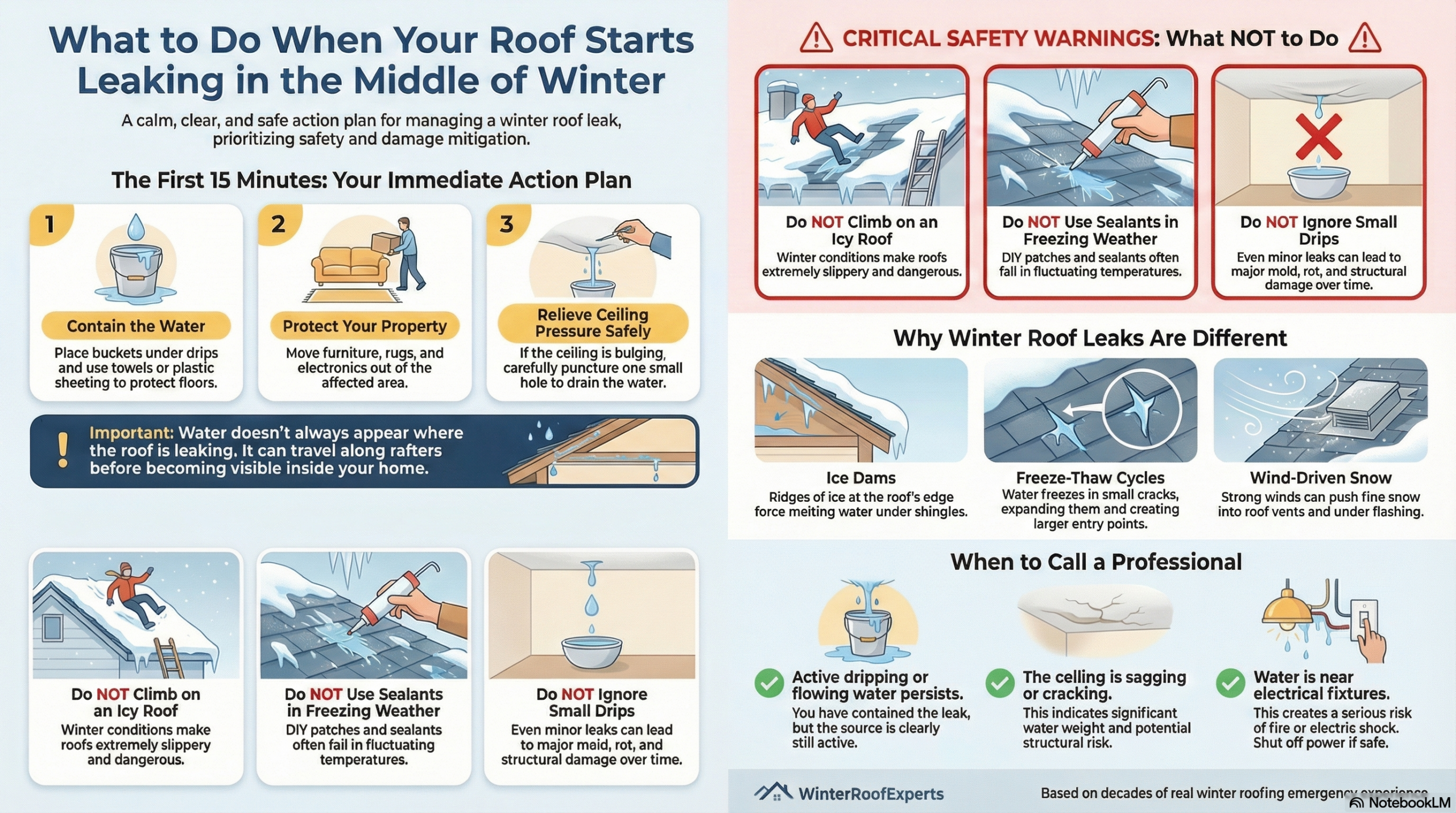
The First 15 Minutes: What to Do Immediately
Step 1: Contain the Water Inside Your Home
Start by protecting your interior space.
-
Place buckets or containers under active drips
-
Lay towels or plastic sheeting to protect floors
-
Move furniture, rugs, and electronics out of the area
Important to know:
Water often travels along rafters and drywall before it becomes visible. The spot where you see water inside your home is not always directly below the source of the leak.
Step 2: Reduce Interior Damage Safely
If you notice a ceiling bulge holding water:
-
Carefully puncture one small hole with a screwdriver
-
Let the water drain into a bucket
-
Do not poke multiple holes or press on the ceiling
⚠️ Safety warning:
If water is near light fixtures or electrical outlets, avoid the area and consider shutting off power.
Winter Roof Leak Management and Action Guide
What NOT to Do During a Winter Roof Leak
Some well-meaning actions can make the situation far worse—or put you at serious risk.
-
❌ Do not climb onto an icy or snow-covered roof
-
❌ Do not apply caulk, tar, or sealants in freezing temperatures
-
❌ Do not ignore a “small” drip
-
❌ Do not chip away ice dams yourself
Winter conditions make roofs extremely dangerous, and improper repairs often fail once temperatures fluctuate.
Why Winter Roof Leaks Are Different
Winter leaks behave differently than leaks in warmer months.
Common Winter-Specific Causes
-
Ice dams forcing water under shingles
-
Freeze–thaw cycles opening small cracks
-
Wind-driven snow entering flashing or roof vents
-
Condensation that mimics an active leak
Why Leaks Often Appear After the Storm
Snow can remain on a roof for days. As it melts—even slightly—water finds the weakest point and enters the home long after the weather has cleared.
What to Do vs What NOT to Do During a Winter Roof Leak
Can You Temporarily Stop a Roof Leak in Winter?
Sometimes—but only in limited, safe ways.
What May Help Temporarily
-
Interior water containment
-
Professional-installed temporary protection
-
Controlled ice dam mitigation by trained crews
What Usually Makes It Worse
-
DIY patching
-
Sealants applied in cold weather
-
Delaying professional evaluation
Temporary measures should never replace a proper inspection. They’re meant to buy time—not solve the problem.
When to Call a Professional (Timing Matters)
You should seek professional help immediately if you notice:
-
Active dripping or flowing water
-
Ceiling sagging or cracking
-
Water near lights, outlets, or breaker panels
-
Repeated leaks in the same area
What an Experienced Roofer Can Do in Winter
-
Access the roof safely using proper equipment
-
Identify the true source of the leak
-
Install temporary protection when conditions allow
-
Document damage for insurance purposes
After decades of responding to winter roof emergencies, one pattern is always clear: leaks addressed early cost far less than leaks that are delayed. Experience matters most when conditions are dangerous and time-sensitive.
Will Insurance Cover a Winter Roof Leak?
In many cases, yes—but coverage depends on the cause.
Often Covered
-
Storm-related damage
-
Sudden ice dam issues
-
Wind-driven snow intrusion
Often Not Covered
-
Long-term neglect
-
Pre-existing damage
-
Poor maintenance
What Helps Your Claim
-
Clear photos or videos
-
Dates and weather details
-
A professional inspection report
(Always review your specific policy, as coverage varies.)
How to Prevent Future Winter Roof Leaks
Once the immediate issue is under control, prevention becomes the priority.
Smart Preventive Steps
-
Schedule regular roof inspections
-
Improve attic insulation and ventilation
-
Keep gutters clear before winter
-
Address small roof issues early
Proactive maintenance before winter often prevents emergency repairs later.
Why Winter Roof Leaks Should Never Be Ignored
Even a slow drip can lead to serious long-term problems, including:
-
Mold growth
-
Structural wood rot
-
Damaged insulation
-
Significantly higher repair costs
Water damage spreads quietly. The longer it goes unaddressed, the more extensive—and expensive—it becomes.
Final Thoughts
A roof leak in the middle of winter is stressful, but it doesn’t have to turn into a major crisis. Taking the right steps immediately, avoiding risky DIY fixes, and getting experienced guidance early can protect both your home and your budget.
Winter roof leaks aren’t the time for guesswork. Clear information and professional insight can prevent unnecessary damage and long-term costs.
This guidance is based on real-world winter emergency experience from T.A. Hughes III Roofing, a company that has helped homeowners navigate challenging roofing situations for decades.