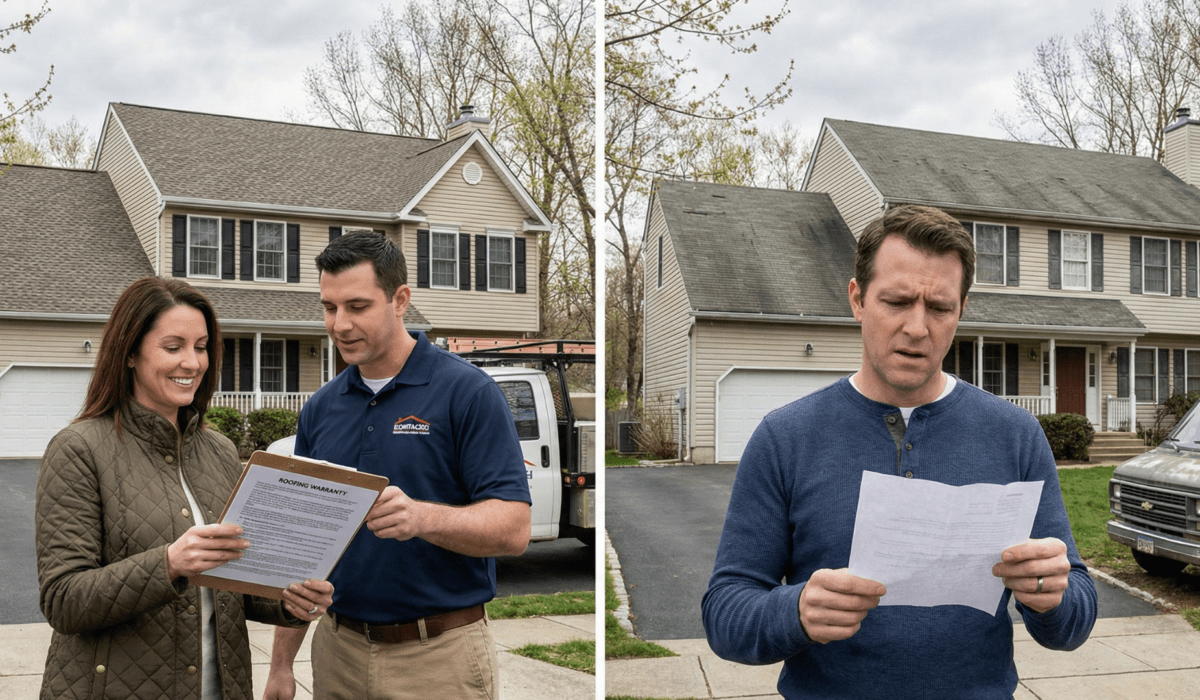
Your guide to roofing warranties — how they protect you, what they actually cover, and how to keep them valid.
Choosing the right roof and the right warranty can save you thousands of dollars over time. But many homeowners are surprised to learn that not all warranties are created equal — and that some routine roofing problems aren’t covered at all.
This guide breaks down:
-
What a roof warranty does cover
-
What it rarely covers
-
How NJ weather and roofing practices affect coverage
-
Steps you can take to protect your home and your investment
Related: Roofing Warranties Explained: What Gloucester County Homeowners Should Look For
Quick Take: Roof Warranty Basics (At a Glance)
A warranty is a promise, not automatic coverage.
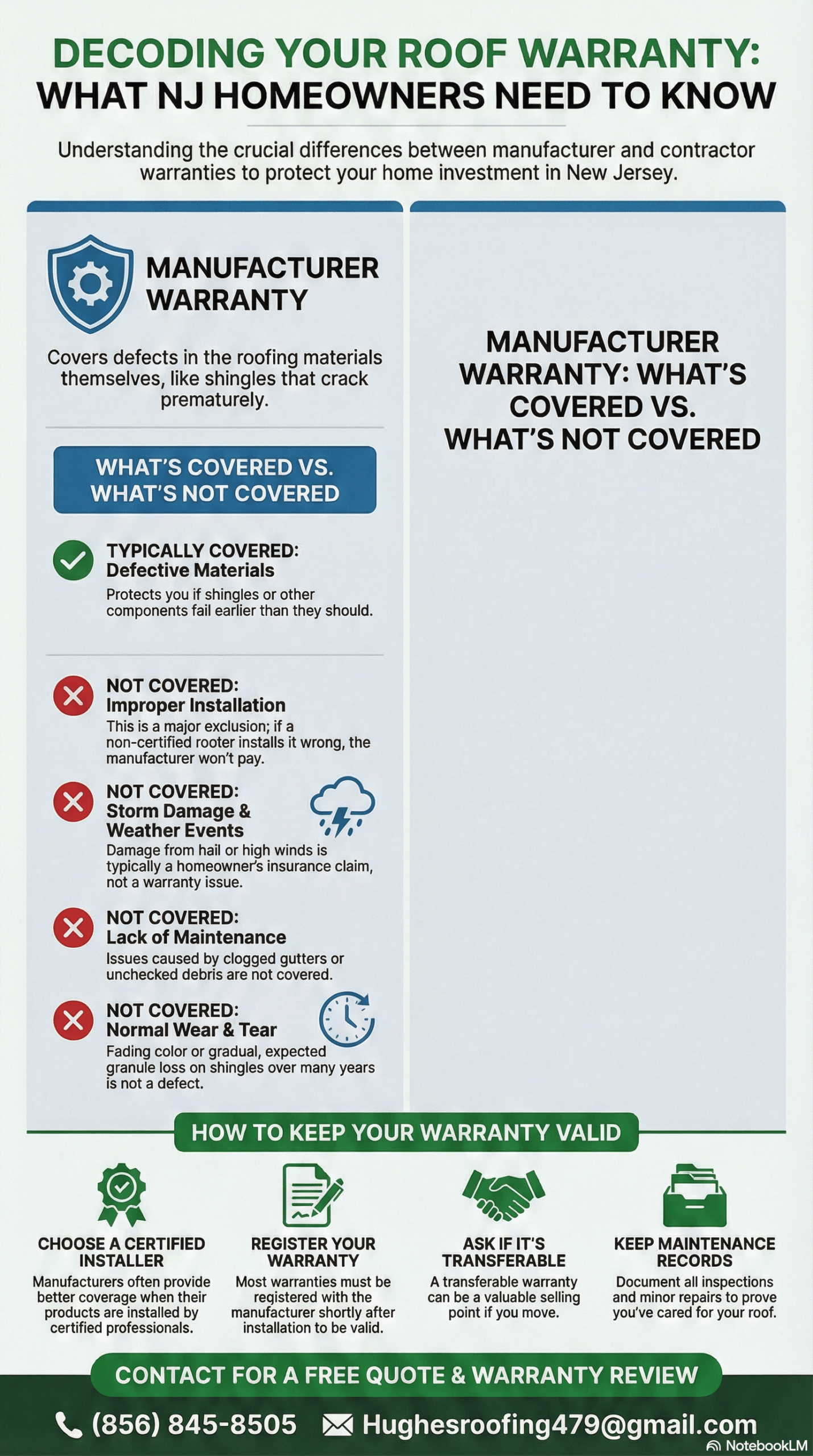
Most roof warranties cover:
-
Defective materials
-
Sometimes wind resistance or algae protection
-
Terms ranging from 10 years to “lifetime” (manufacturer definition)
Warranties usually do not cover:
-
Improper installation
-
Normal wear and tear
-
Weather events (hail, high winds outside rating)
-
Maintenance‑related issues
Your warranty is only as strong as the installation behind it — and how well you maintain your roof.
What Is a Roof Warranty — and Why It Matters
A roof warranty protects homeowners from paying full price when certain defects or failures occur.
Two Main Types of Warranties
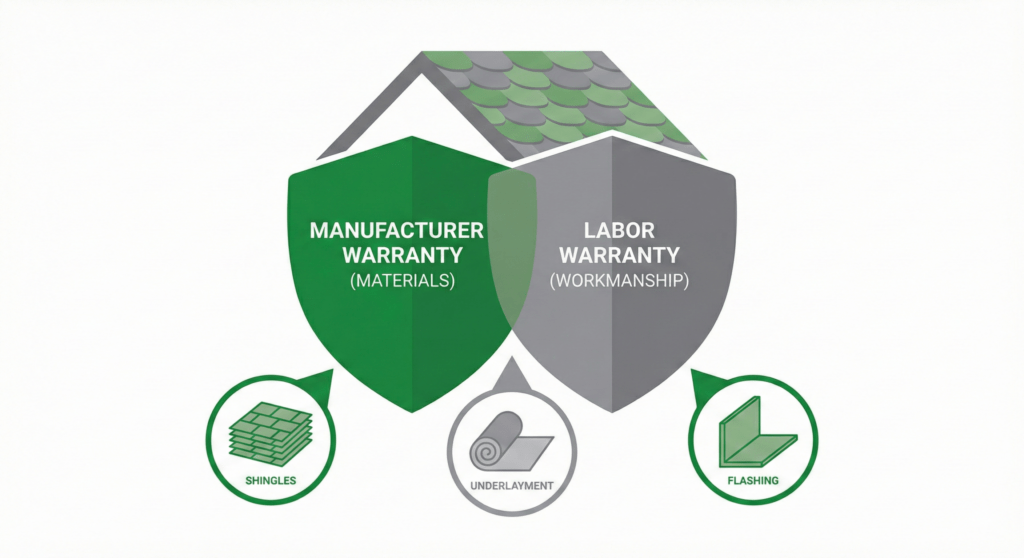
-
Manufacturer Warranty
Covers materials — shingles, underlayment, and sometimes system components. -
Contractor (Workmanship) Warranty
Covers the quality of the installation performed by your roofing contractor.
A roofing system can have both warranties — but they cover different things.
In New Jersey’s freeze‑thaw climate and seasonal storms, warranty clarity matters.
What Manufacturer Warranties Typically Cover
Manufacturer warranties are designed to protect against defective product performance.
Covered items may include:
-
Shingle defects (cracking, unusual granule loss)
-
Wind‑rated protection (to a specific mph threshold)
-
Algae resistance (if included in the shingle product)
Example warranties you might encounter (for reference — not promises of coverage):
-
GAF Lifetime Limited Warranty
-
Owens Corning TruProtection Warranty
-
CertainTeed SureStart PLUS
These warranties often have:
✔ A defined term (e.g., 25 years, “lifetime”)
✔ Requirements for product registration
✔ Exclusions for improper application or non‑certified installers
Pro Tip: Manufacturer warranties often increase in value when the product is installed by a certified roofing contractor.
What Roof Warranties Usually Do Not Cover
Understanding exclusions keeps homeowners from false expectations.
Common Exclusions
❌ Improper Installation — e.g., incorrect nailing, poor flashing placement
❌ Poor Attic Ventilation or Insulation — leads to premature aging
❌ Storm or Wind Damage Beyond Ratings — these are typically handled by insurance
❌ Ice Dams — unless a specific ice & water shield was installed
❌ Normal Wear & Tear — fading, granule loss over time
❌ Lack of Maintenance — clogged gutters, unchecked debris
These exclusions are normal — and most reputable manufacturers explain them clearly. If you’re unsure, ask your contractor to walk through the warranty document line by line.
How NJ Weather Affects Warranty Coverage
New Jersey’s climate presents unique challenges:
-
Winter freeze‑thaw cycles
-
Spring and summer storms
-
Occasional high winds and coastal effects
Many claims are denied not because the material is defective, but because:
-
The roof was installed without proper ventilation
-
Necessary underlayments weren’t installed per manufacturer specs
-
The homeowner didn’t register the product
Local Insight:
Contractors in Burlington, Camden, and Gloucester Counties often recommend ice & water shield in valleys and eaves — not just because it’s good practice, but because it helps support warranty claims should water infiltration occur.
How to Read the Fine Print (Without Getting Burned)
Roof warranty language can be dense. Here’s what to look for:
Key Terms
-
Limited Lifetime: “Lifetime” refers to the expected life of the product system – not your life.
-
Prorated: Coverage reduces over time; you get partial compensation.
-
Non‑Prorated: Full coverage for the stated period.
-
Transferable: Whether the warranty moves with the home if sold.
What You’ll Need for a Claim
-
Proof of purchase and installation date
-
Photos of the issue
-
Documentation of prior inspections and maintenance
-
Contractor’s name and certification info
Avoid oral promises alone — warranty claims require documentation.
Smart Questions to Ask Before Signing a Contract
As you evaluate roofing bids, include these questions:
-
What warranty comes with the materials?
-
Who registers the manufacturer warranty — you or the contractor?
-
Is labor included in the warranty? If so, for how long?
-
What voids the warranty?
-
Is the warranty transferable to a future homeowner?
Asking these ahead of time saves confusion later.
Related: Licensed vs Unlicensed Roofers in NJ: Why It Matters
How to Keep Your Warranty Valid (Checklist)
To ensure you get the protection you paid for:
✔ Choose a certified roofing contractor
✔ Register the warranty with the manufacturer soon after installation
✔ Maintain clear records of inspections and repairs
✔ Follow recommended maintenance schedules
✔ Avoid DIY patches that could void your warranty
Maintaining your roof proactively is the best defense against unexpected costs.
Warranty Claim Scenarios — Real NJ Homeowner Examples
Scenario 1 — Approved Claim:
A homeowner had a GAF product with a certified installer. A shingle defect was discovered in year 8 — manufacturer replaced materials at prorated cost.
Scenario 2 — Denied Claim:
Lack of proper underlayment and ventilation caused premature shingle failure. Warranty denied because installation specs weren’t followed — homeowner paid out of pocket.
Scenario 3 — Transfer Issue:
A warranty was not registered in time. When the home was sold, the buyer attempted coverage — but the warranty wasn’t valid due to missing registration.
Click to view or download this pdf
Click to view or download this pdf
NJ Codes, Permits, and Warranty Impact
While warranties are separate from building codes, following local permit requirements in NJ (Burlington, Camden, and Gloucester Counties) ensures:
-
Work meets minimum safety standards
-
Inspections occur at required stages
-
Documentation exists if you need to prove compliance
Permits do not directly grant warranty coverage — but not pulling them can void warranty claims.
Related: Do You Need a Permit for Roof Work in Burlington County?
Conclusion: Your Warranty Is Only as Good as Your Installation
Roof warranties can deliver serious financial protection, but only if you understand:
-
What’s actually covered
-
What voids coverage
-
How to document and file a claim
Want peace of mind before your next roofing project?
Schedule a free roofing inspection and warranty review with T.A. Hughes Roofing today.