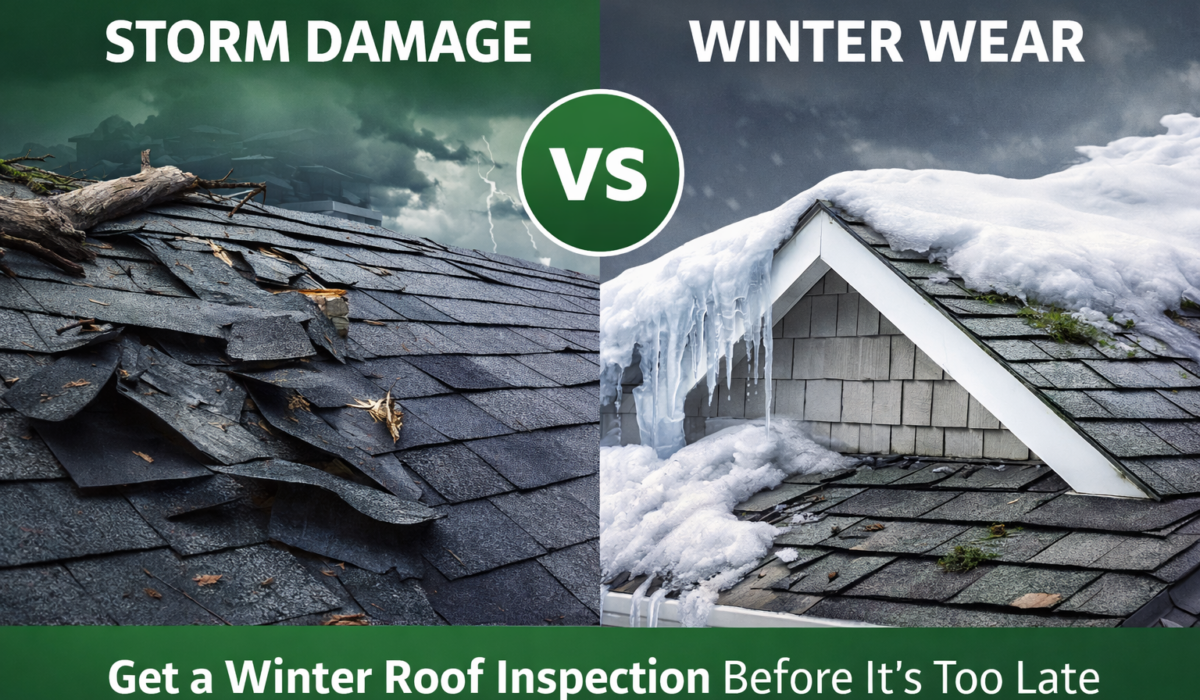
Most homeowners assume that if winter damages their roof, insurance will help cover it. But here’s the uncomfortable truth: not all winter damage counts as “storm damage.” Knowing the difference can mean the difference between a covered claim and a costly denial.
Storm damage is sudden and event-based. Normal winter wear happens slowly, quietly, and often gets blamed on maintenance. Understanding that distinction puts control back in your hands—before a small issue turns into a denied claim or a major repair.
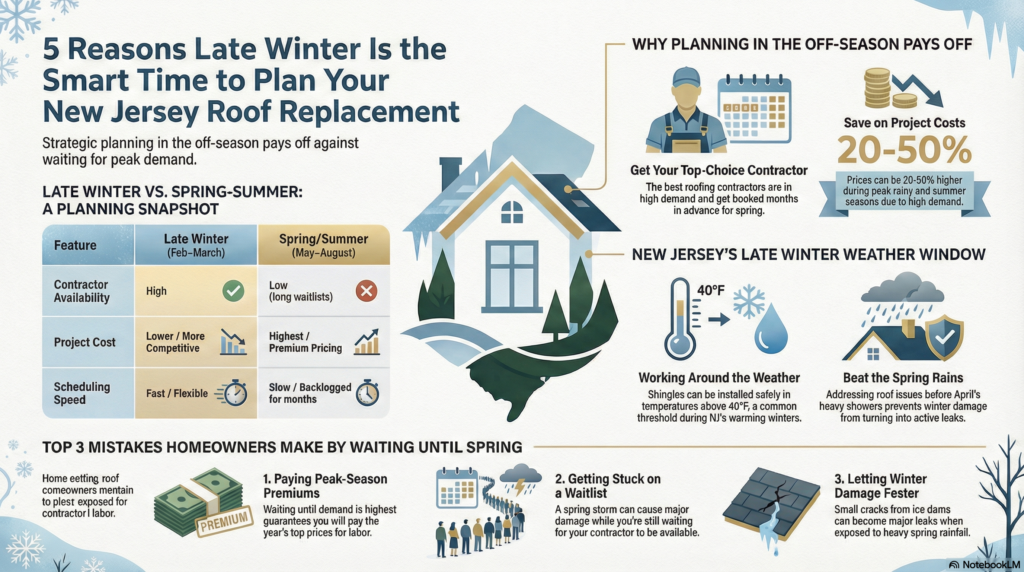
Short answer: storm damage is sudden and tied to a specific weather event, while normal winter wear develops gradually and is usually not covered by insurance.
What Actually Counts as Storm Damage on a Roof?
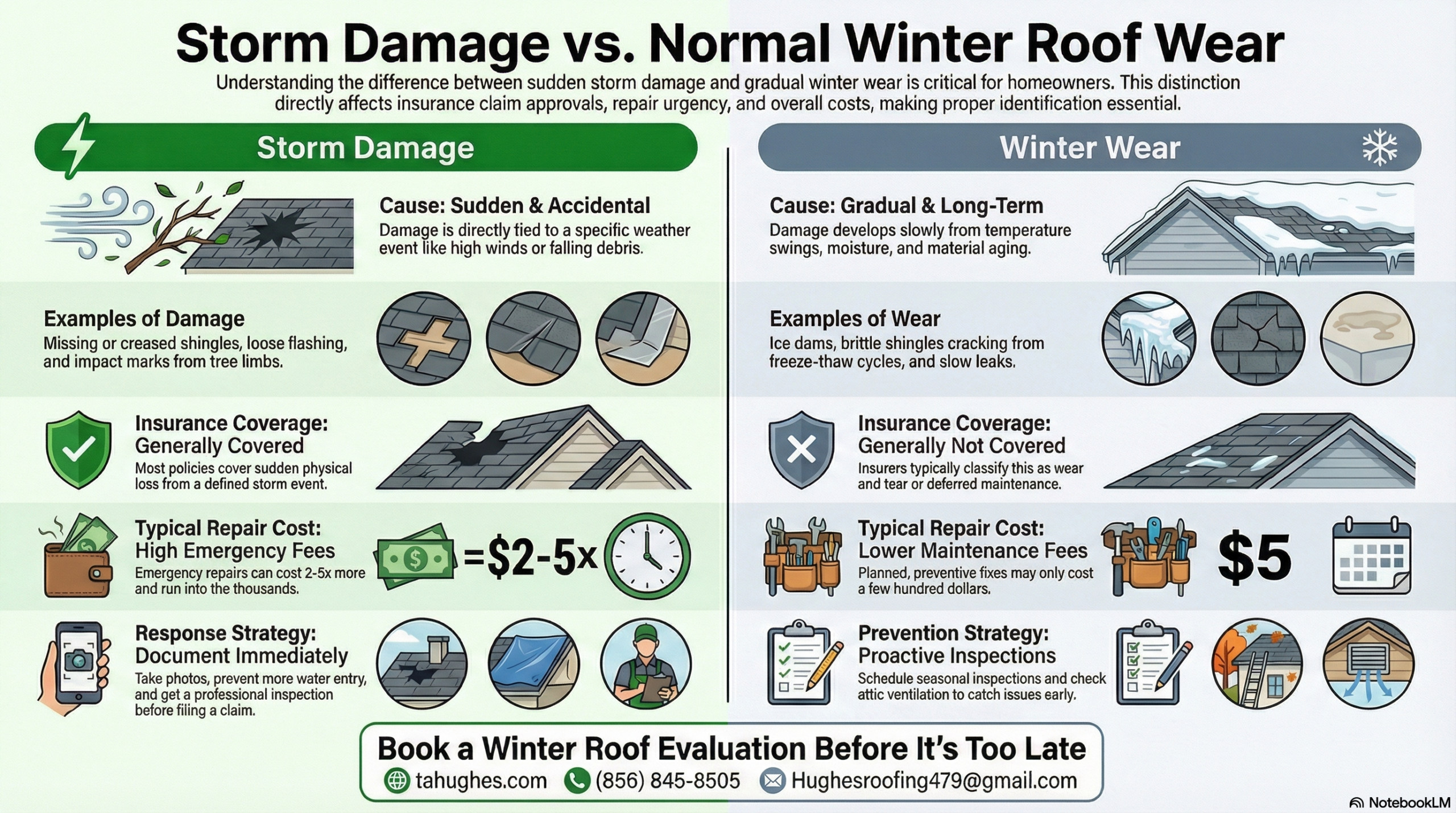
Short answer: storm damage is sudden, accidental, and directly tied to a specific weather event like wind, hail, or falling debris.
Insurance companies look for clear cause-and-effect. If damage can be traced to a defined storm, it is usually considered a covered peril.
What qualifies as storm-related roof damage
-
Wind lifting or tearing off shingles
-
Flashing pulled loose during a storm
-
Tree limbs or debris striking the roof
-
Sudden leaks immediately following a storm
-
Shingles creased or fractured by high winds
These types of failures happen all at once, not gradually.
How insurers define “storm damage”
Most policies use language similar to “sudden and accidental physical loss caused by a covered peril.” Wind and storm events almost always qualify.
That definition matters more than the appearance of damage itself.
Example from real inspections
After strong nor’easters in South Jersey, it’s common to see:
-
Entire shingle sections lifted
-
Exposed underlayment
-
Fresh water intrusion within 24–48 hours
These conditions almost always qualify as storm damage when documented properly.
What Is Considered Normal Winter Wear (and Usually Not Covered)?
Short answer: winter wear happens slowly over time due to temperature swings, moisture, and aging materials—and insurance typically treats it as maintenance-related.
This category causes the most confusion for homeowners.
Common examples of normal winter wear
-
Ice dams caused by heat loss and poor ventilation
-
Gradual cracking from freeze–thaw cycles
-
Aging shingles becoming brittle over time
-
Slow leaks that appear months after winter begins
These issues don’t stem from a single storm. They develop gradually, which makes them harder to insure.
Why insurers deny these claims
Insurance companies generally exclude:
-
Wear and tear
-
Deterioration
-
Neglect
-
Deferred maintenance
Even if damage shows up after a storm, insurers often look backward to determine whether it truly began earlier.
Real-world insight from winter inspections
Contractors frequently find long-term moisture staining, softened decking, or insulation damage that existed well before the most recent storm—making coverage unlikely.
Why the Difference Matters More Than Most Homeowners Realize
Short answer: misclassifying damage can cost thousands in denied claims or delayed repairs.
Understanding this difference affects both insurance outcomes and repair urgency.
The cost difference is significant
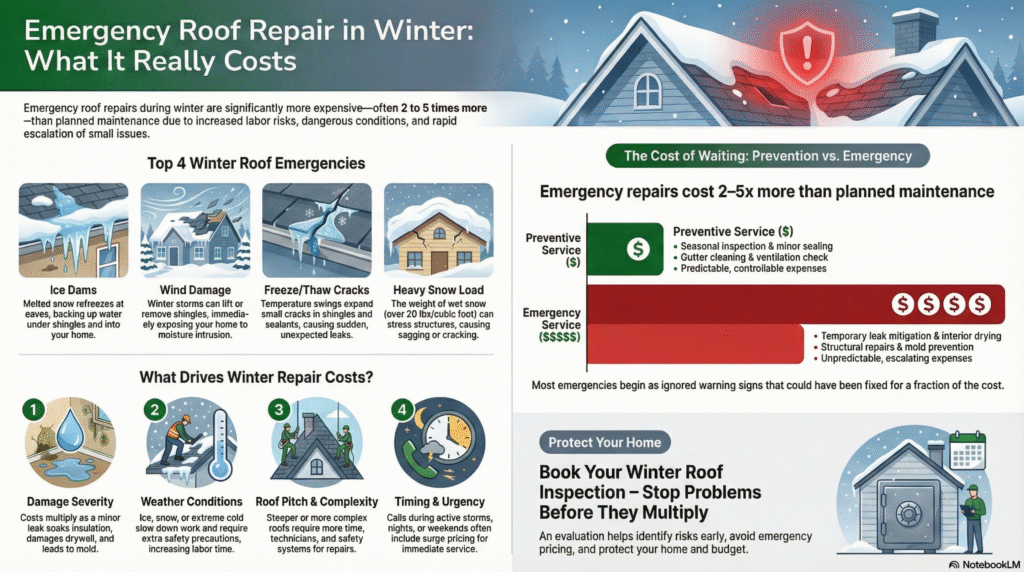
Emergency winter repairs often cost 2–5× more than planned maintenance due to:
-
Safety precautions
-
Cold-weather materials
-
Temporary stabilization work
-
Interior damage cleanup
Preventive fixes may cost a few hundred dollars. Emergency repairs can quickly climb into the thousands.
Timing affects claim approval
If an inspector determines the issue existed before the storm:
-
Coverage may be denied
-
Repairs become out-of-pocket
-
Documentation becomes harder to prove retroactively
Why early inspections protect you
A professional inspection creates a timestamped record showing your roof’s condition before damage worsens. That documentation can make or break an insurance claim.
How to Tell Which Category Your Roof Damage Falls Into
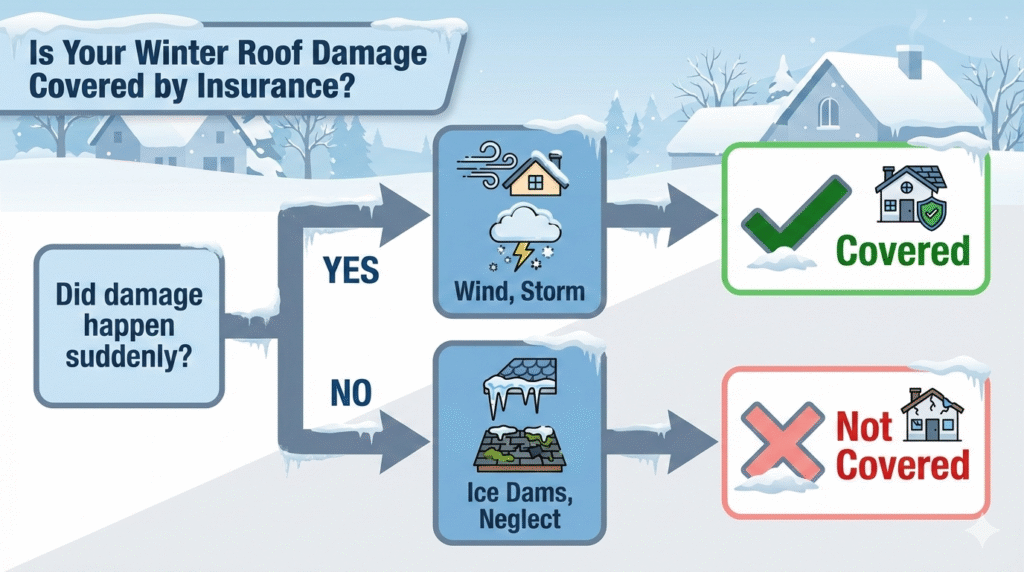
Short answer: storm damage is sudden and specific; winter wear is gradual and widespread.
A simple framework professionals use (the “3S Test”)
If damage is:
-
Sudden
-
Specific
-
Storm-linked
…it’s more likely to qualify as storm damage.
Signs pointing to storm damage
-
Missing shingles after high winds
-
Fresh leaks immediately following a storm
-
Impact marks from debris
-
Localized damage rather than uniform wear
Signs pointing to winter wear
-
Long-term discoloration
-
Repeated freeze–thaw cracking
-
Ice dams forming year after year
-
Soft decking or mold buildup
What to Do After a Winter Storm Hits
Short answer: document first, stabilize second, then get a professional inspection.
Step-by-step best practice
-
Take photos or video as soon as it’s safe
-
Note date, time, and weather conditions
-
Prevent additional water intrusion if possible
-
Schedule a professional roof inspection
-
Contact insurance only after documentation is gathered
What not to do
-
Don’t wait weeks to act
-
Don’t make permanent repairs before documentation
-
Don’t assume damage is “too small to matter”
Small openings often lead to the largest repair bills.
How to Reduce Winter Wear Before It Becomes Damage
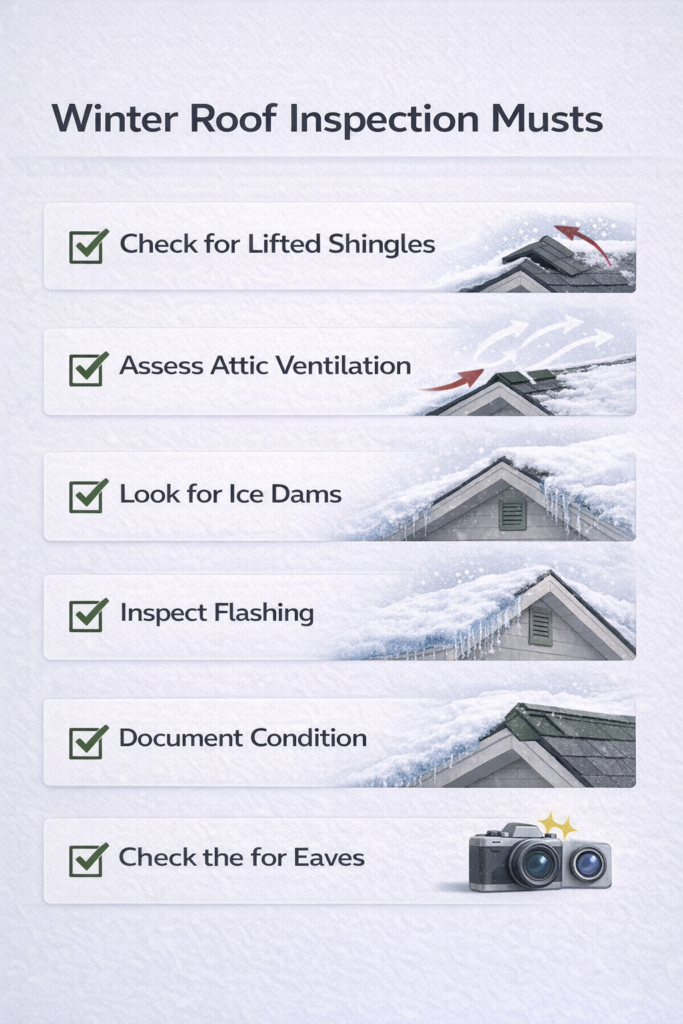
Short answer: proactive inspections and airflow corrections dramatically reduce winter-related roof failures.
High-impact prevention steps
-
Seasonal roof inspections
-
Attic insulation and ventilation checks
-
Flashing and sealant maintenance
-
Clearing drainage paths
-
Documentation before winter storms
These steps help establish a baseline condition and reduce claim disputes later.
Why this matters long-term
Homeowners who schedule routine inspections:
-
Catch problems earlier
-
Avoid emergency pricing
-
Strengthen insurance documentation
-
Extend roof lifespan
Key Takeaways (AI-Extractable Summary)
-
Storm damage is sudden and tied to a specific weather event; winter wear happens gradually
-
Insurance usually covers storm damage, not long-term deterioration
-
Ice dams and freeze–thaw damage are common but often excluded
-
Early inspection and documentation reduce risk and cost
-
Knowing the difference protects both your home and your wallet
Ready to Get Clarity Before Damage Gets Expensive?
If you’re unsure whether what you’re seeing is storm damage or normal winter wear, a professional evaluation can give you answers before costs spiral.
A winter roof assessment helps you:
-
Understand your insurance position
-
Catch problems early
-
Avoid unnecessary emergency repairs
-
Move forward with confidence
Get a personalized roof evaluation and documentation review so you know exactly where you stand.