As a business owner, you know that keeping your commercial property running smoothly is key to success. But with winter approaching in New Jersey, the roof over your head faces some of its biggest challenges. Heavy snow, freezing temperatures, and constant freeze-thaw cycles can wreak havoc on an unprepared commercial roof, threatening not just the building, but your entire operation. A damaged roof can lead to damaged inventory, structural issues, and costly business downtime. The time to act is now, before the first freeze, to protect your investment and your bottom line.
Key Takeaways
- Proactive Prep is Non-Negotiable: Winter weather in New Jersey, with its freeze-thaw cycles and heavy snow, can cause severe, costly damage to a commercial roof.
- Hidden Damage is a Major Threat: Unlike a residential roof, commercial flat roofs are prone to ponding water and stress on seams and flashings, making minor issues invisible from the ground a major risk.
- Financial & Operational Risk: A roof failure can lead to damaged inventory, operational shutdowns, and expensive emergency repairs that directly impact your business’s bottom line.
- A Professional Inspection is Your Best Defense: A pre-winter inspection can identify and fix minor issues before they escalate, potentially saving you thousands of dollars in emergency repairs and insurance claim headaches.
- Documentation Matters: Keeping a record of your roof’s condition and maintenance is crucial for a smooth insurance claims process if damage does occur.
The Unique Winter Risks for Commercial Roofs
Unlike residential roofs, commercial flat or low-slope roofs have unique vulnerabilities that winter weather can exploit. Ignoring these can lead to a domino effect of problems.
- Ponding Water & Ice: Clogged drains and scuppers on a flat roof can trap water. When this water freezes, it expands, putting immense stress on the roofing membrane and creating weak points.
- The Freeze-Thaw Cycle: This is winter’s most insidious threat. Water seeps into a tiny crack during the day, freezes and expands overnight, then melts and allows more water in the next day. This repeated cycle turns a minor crack into a major leak.
- Heavy Snow Loads: The immense weight of snow and ice, especially wet snow common in the Mid-Atlantic, can exceed a roof’s structural limits. This can cause dangerous sagging and, in the worst-case scenario, roof collapse.
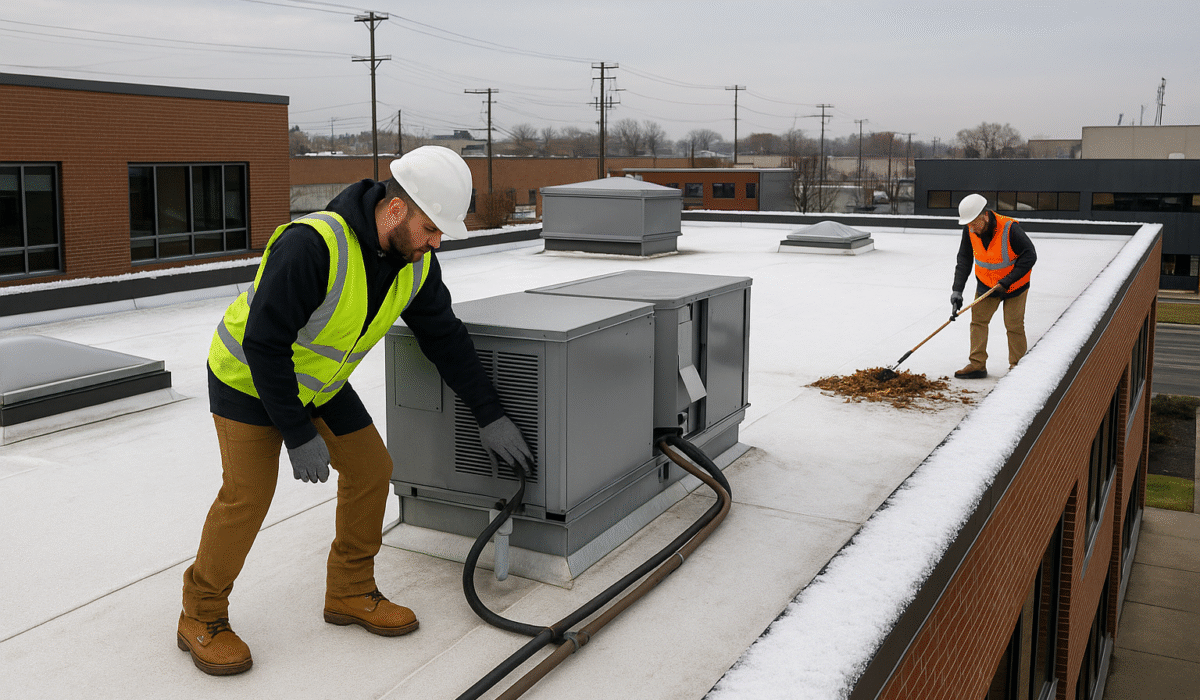
- Rooftop Equipment: The seals and flashing around HVAC units, vents, and other rooftop equipment are often the first to fail under the stress of freezing water and high winds.
The High Cost of Procrastination for Your Business
The consequences of a roof failure in winter go far beyond the cost of a simple repair. They directly impact your company’s profitability and reputation.
- Financial Loss: A leaking roof can destroy valuable inventory, damage expensive equipment, and lead to electrical problems. These costs can easily dwarf the price of a preventative inspection.
- Operational Downtime: A major leak or structural issue can force you to temporarily shut down your business, leading to lost revenue and a frustrated customer base.
- Safety & Liability: Water damage can lead to mold growth and compromised structural integrity, creating a hazardous environment for employees and clients. This opens your business up to serious liability risks.
- Insurance Headaches: If an insurance claim is denied due to a lack of documented maintenance, your business could be on the hook for hundreds of thousands of dollars in repairs.
Commercial Roofing Material Comparison for NJ Winters
This table provides a quick overview of how common commercial roofing materials perform in a New Jersey winter, highlighting their pros and cons.
7 Proactive Steps to Secure Your Commercial Property
You can protect your business from the worst of winter by taking these preventative steps now, before the first sign of snow or ice.
- Schedule a Professional Commercial Roof Inspection: This is the most crucial step. A trained professional can safely get on the roof and identify hidden vulnerabilities and weaknesses that are invisible from the ground.
- Clear All Drains and Scuppers: Ensure your roof’s drainage system is completely free of leaves, debris, and sediment to prevent water from pooling.
- Inspect All Flashing and Seals: Closely check the watertight seals around all roof penetrations—from HVAC units to parapet walls.
- Trim Overhanging Branches: Remove any tree limbs that could snap under the weight of heavy snow and damage your roof.
- Check for Membrane Stress & Cracks: Look for blisters, ridges, or small cracks in the roof membrane that can become major leaks through the freeze-thaw cycle.
- Review Snow Removal Plans: Have a plan in place for professional, safe snow removal. Improper removal techniques can severely damage the roof membrane.
- Document Everything: Keep a record of your roof’s condition with photos and an official inspection report. This documentation is invaluable for insurance purposes.
Don’t Risk Your Business to the Elements — Act Now
The window for pre-winter commercial roof preparation is closing fast. Waiting for a problem to appear can lead to a frantic scramble for emergency services when every roofer is already overwhelmed.
Protect your commercial property and your peace of mind by acting today. Call T.A. Hughes at (856) 845-8505 or fill out our online form to schedule your pre-winter commercial roof inspection in New Jersey.
Frequently Asked Questions
1. How often should a commercial roof be inspected for winter?
A commercial roof should have a professional inspection at least twice a year—in the spring to assess winter damage, and in the fall to prepare for the upcoming winter. This proactive schedule is critical for commercial properties in New Jersey’s climate.
2. What is the biggest winter threat to a commercial flat roof?
The biggest threat is the freeze-thaw cycle. Water can seep into tiny cracks in your roofing membrane, freeze and expand overnight, and then melt the next day. This constant expansion and contraction gradually widens the cracks, leading to a significant leak that can ruin your insulation and interior.
3. Will my business insurance cover winter roof damage?
It depends on your policy. Most standard commercial property policies will cover sudden and accidental damage from snow, ice, or wind. However, they may deny claims if the damage is determined to be the result of a lack of maintenance or pre-existing wear and tear. A documented pre-winter inspection report can be a key part of proving your claim.
4. Is it safe to remove snow from my commercial roof myself?
No, it is highly recommended to hire a professional. Improper snow removal can cause severe damage to the roofing membrane and flashing, leading to leaks. Professionals have the right equipment and experience to safely and effectively remove snow without compromising your roof’s integrity.
5. What is “ponding” and why is it bad for my roof?
Ponding is when water collects in low-lying areas of your flat roof and doesn’t drain within 48 hours. When this water freezes, the expanding ice can severely stress the roof’s membrane. Even after it melts, the constant presence of moisture accelerates the breakdown of the roofing material.
6. Can regular maintenance really extend the life of my commercial roof?
Yes. According to the National Roofing Contractors Association (NRCA), a proactively maintained commercial roof can last significantly longer—potentially 30% to 100% longer than a roof that is only repaired when a leak occurs.
Facts & Statistics
- Widespread Claims: In the winter months, claims for water damage and freezing account for nearly 40% of all commercial property insurance claims in the U.S., according to Selective Insurance. [Source: Selective Insurance]
- High Costs: The cost of a commercial roof replacement in New Jersey can range from $5 to $15 per square foot, with the total cost for a typical 20,000-square-foot building often exceeding $100,000. Proactive maintenance is a fraction of this cost.
- Extended Lifespan: A proactive approach to commercial roof maintenance can extend the lifespan of your roof by as much as 100%, delaying the need for a costly full replacement for many years.