
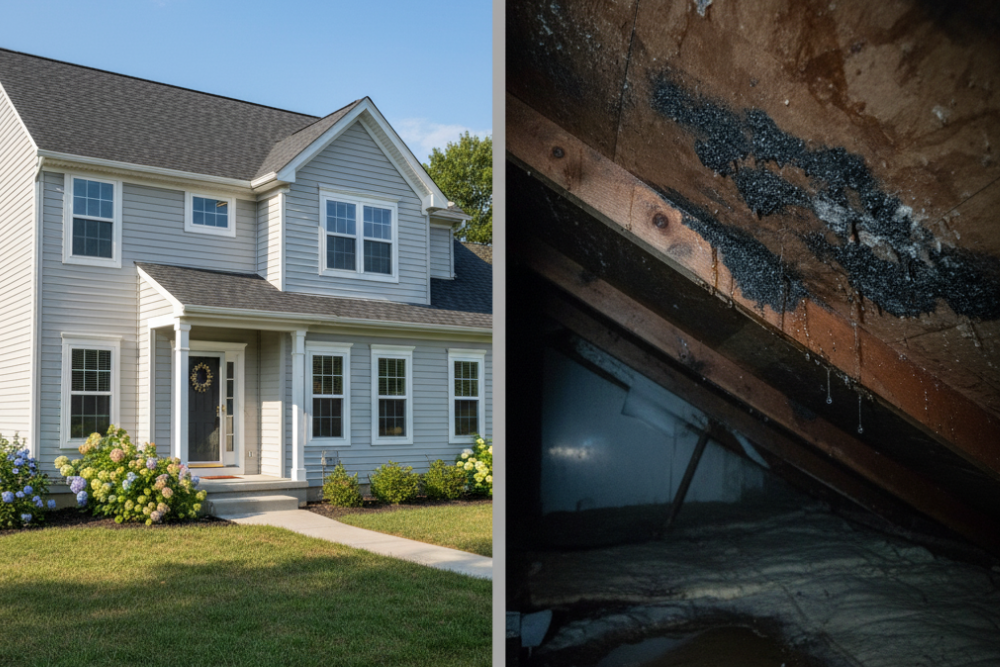
As a homeowner in South Jersey, you probably look at your roof after every major storm, but the signs of hidden roof damage are almost impossible to spot from your driveway. The most destructive issues—like water trapped beneath the shingles or structural problems in the attic—happen out of sight.
We want to show you exactly where T.A. Hughes Roofing looks to find these unseen problems that lead to expensive leaks down the line. Don’t wait for a water spot on your ceiling; read these expert warnings first.
The Attic: Your Early Warning System for Unseen Leaks
The attic space is the first place you’ll find definitive evidence of a compromised roof structure. Unfortunately, most homeowners don’t look up there, missing critical early signals of failure.
The Unseen Signs You Must Look For:
- Dark Water Stains/Streaks: Stains or discoloration on the underside of the roof decking (sheathing) are proof of a leak. These streaks are the pathway water takes. Expert Tip: Leaks often travel horizontally along the rafters before dripping, so the water spot you see on your ceiling is usually far from the original entry point.
- Mold or Mildew Growth: Any fuzzy or dark growth indicates chronic moisture issues. This is not just a leak sign; it’s a health hazard and often points to poor attic ventilation or persistent water entry.
- Sagging or Soft Decking: If the plywood or OSB ceiling of the attic is dipping or feels soft when lightly probed, it indicates the wood has absorbed excessive moisture. This is a severe sign of decay and potential structural failure. If you notice this, read our guide: Why is My Roof Sagging?.
Gutters & Eaves: The Granular Gravel Graveyard
What you can see happening at your gutters and eaves tells a story about the unseen health of your shingles.
- The Granular Loss Issue: Asphalt shingles are coated in a layer of protective mineral granules (like coarse sand) that shield the asphalt from the sun’s UV rays. When these granules shed excessively, the protective asphalt layer is exposed, leading to rapid deterioration, cracking, and eventual leaks.
- Red Flag: Seeing an unusual amount of grit or “sand” in your gutters or washed out of your downspouts is a signal that your roof’s protective lifespan is being drastically shortened.
- Fascia and Soffit Rot: Water backing up from clogged gutters or leaks at the edge of the roof can saturate the wooden fascia (the board the gutters attach to) and soffit (the board under the eave). This rot is often hidden from view until the wood is soft, requiring replacement not just of the roof, but of the supporting trim.
- For instance, learn how clogged gutters can lead to foundation issues in Burlington homes.
Flashing and Penetrations: The Unseen Entry Points for Leaks
The reality is that the vast majority of roof leaks happen not on the main field of shingles, but around penetrations—where something breaks the continuous plane of the roof. These areas are notoriously difficult to inspect from the ground.
Critical Hidden Spots We Check:
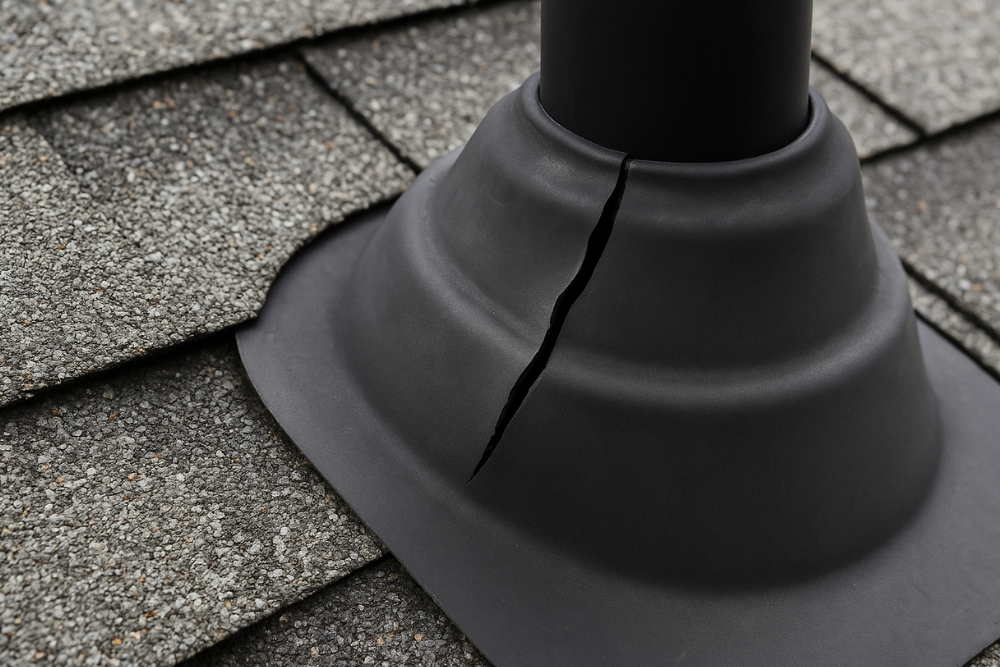
- Pipe Boot Failure: The rubber or neoprene collars surrounding vent pipes on your roof are made of softer materials that degrade quickly under South Jersey’s sun and temperature swings. A small crack in the pipe boot is a direct leak path and is very hard to see without professional inspection.
- “Nail Pops”: These are tiny, almost invisible bumps where the nail head pushes up the shingle, breaking the protective bond and exposing the nail shank to moisture. They are often caused by roof deck movement or improper nailing during installation, and they create slow, persistent leaks.
- Wall/Chimney Flashing: Failed sealant or improper “step-flashing” installation where the roof meets a vertical wall (like a chimney or dormer) creates a direct, unseen path for water to enter the house structure. We use professional techniques like targeted water tests and moisture meters to pinpoint failures around these critical transition points.
The T.A. Hughes DIY Roof Inspection Checklist
Before you call for a professional team, here is a practical, safe guide for homeowners to visually inspect the house perimeter for external signs, reinforcing that an internal attic inspection is mandatory.
HowTo: Homeowner Safety Check
| Step | Action (How To) | What to Look For (Red Flag) |
|---|---|---|
| 1. | Inspect Your Gutters & Downspouts | Excessive shingle granules (like coarse sand) or asphalt grit. |
| 2. | Check the Siding and Exterior Walls | Dark streaks or water stains running down the siding below the roof line (suggests fascia or eave leak). |
| 3. | Survey the Ground Below Eaves | Fallen debris, chunks of asphalt, or small pieces of flashing. |
| 4. | Check the Attic (Flashlight Needed) | Any dark, shiny spots, streaks on the wood decking, or dampness on insulation. |
| 5. | Look at Ceilings and Interior Walls | New or expanding water spots, especially near the center of the room. |
Conclusion: Turn Unseen Damage into Peace of Mind
The most costly roof damage is always the damage you don’t see until it’s too late. As a GAF-Certified Contractor serving South Jersey, T.A. Hughes Roofing is trained to perform comprehensive inspections that look past the surface layer and deep into the structural integrity of your roof system.
Don’t let hidden roof damage compromise your home’s safety.
Call T.A. Hughes III Roofing today for a Professional Roof Inspection at tahughes.com/.
Frequently Asked Questions (FAQs)
-
Q: Can I file an insurance claim for hidden roof damage?
- A: Yes, you can. If the damage is sudden and accidental (like from recent hail or wind), it is often covered. However, damage resulting from long-term neglect (like slow wood rot or gradual wear) is typically not covered by standard homeowner policies. A professional roof inspection helps document the cause clearly.
-
Q: Does minor granular loss mean I need a full roof replacement?
- A: Not immediately, but it is a critical warning sign. Excessive granular loss means the protective mineral layer is gone, leaving the asphalt base exposed to the sun’s harsh UV rays, which will cause it to deteriorate rapidly. This drastically shortens your roof’s lifespan, moving the replacement date much closer.
-
Q: How often should a South Jersey homeowner have a professional roof inspection?
- A: We recommend a professional inspection every two to three years. Also, always have an inspection immediately following any severe weather event, such as a major hailstorm or a high-wind event common in the area.
-
Q: What is the risk of delaying repair after spotting water spots in the attic?
- A: The risk is significant. A small water spot in the ceiling or attic means the water has already penetrated the shingles, underlayment, and roof deck. This causes wood rot, promotes mold growth (a health hazard), and requires much more expensive structural repairs than a simple roof repair would have initially required.
-
Q: What is a ‘pipe boot’ and why do they fail so often in South Jersey?
- A: A pipe boot is a rubber or neoprene collar used to seal the area around vent pipes where they penetrate the roof. They fail often because the rubber breaks down under the intense UV radiation and extreme temperature fluctuations of the South Jersey climate faster than the surrounding asphalt shingles, creating a direct path for water.
-
Q: Will a home inspector catch hidden roof damage when I buy a house?
- A: Home inspectors provide a general assessment, but they are often limited to visual checks from the ground or eaves and may not enter the attic. They are unlikely to spot subtle “nail pops” or early flashing failures. Always hire a GAF-Certified roofing contractor for a detailed, comprehensive roof inspection before closing on a home.
Facts & Statistics Section
- UV Damage: The mineral granules on asphalt shingles protect the asphalt from 95% of the sun’s harmful UV rays. Once these granules shed, the asphalt deteriorates rapidly, often losing years off the roof’s lifespan.
- Leak Location: Studies show that over 90% of roof leaks are not caused by damage to the main field of shingles, but by failure at flashing points and roof penetrations (chimneys, pipes, skylights).
- The Travel Factor: Water leaking into an attic rarely drips straight down; it typically travels horizontally along rafters and trusses for several feet before dripping. This means the leak source is almost always upstream of the interior water spot.
- Wood Expansion: When the wood decking in your attic becomes saturated, it can swell and deform, leading to warping. If the decking sags, it indicates severe moisture absorption and necessitates immediate attention.
- Structural Risk: A persistently soft or damp roof deck can compromise the entire roof structure. If the wood is compromised, a roof replacement may require full deck replacement, adding significant cost and time to the project.