
Cold weather doesn’t just make your morning coffee steam; it forces your roof to endure a cycle of stress, contraction, and hidden deterioration that many homeowners never see coming. When the snow settles and temperatures plunge, the materials holding your home together are silently fighting a battle against nature itself. The primary keyword here — “winter roof lifespan” — isn’t just a phrase, it’s a measurable reality.
Winter does shorten the life of many roof systems — especially when moisture, temperature swings, and insulation issues combine to accelerate wear beyond what normal aging would produce. But the degree to which winter affects your roof depends on materials, installation quality, and preventive care.
Direct answer: Yes, winter can shorten your roof’s lifespan when repeated freeze‑thaw cycles, ice dams, and moisture intrusion combine — but proper ventilation, insulation, and proactive maintenance significantly mitigate that risk.
Does Cold Weather Damage Roofs At All?
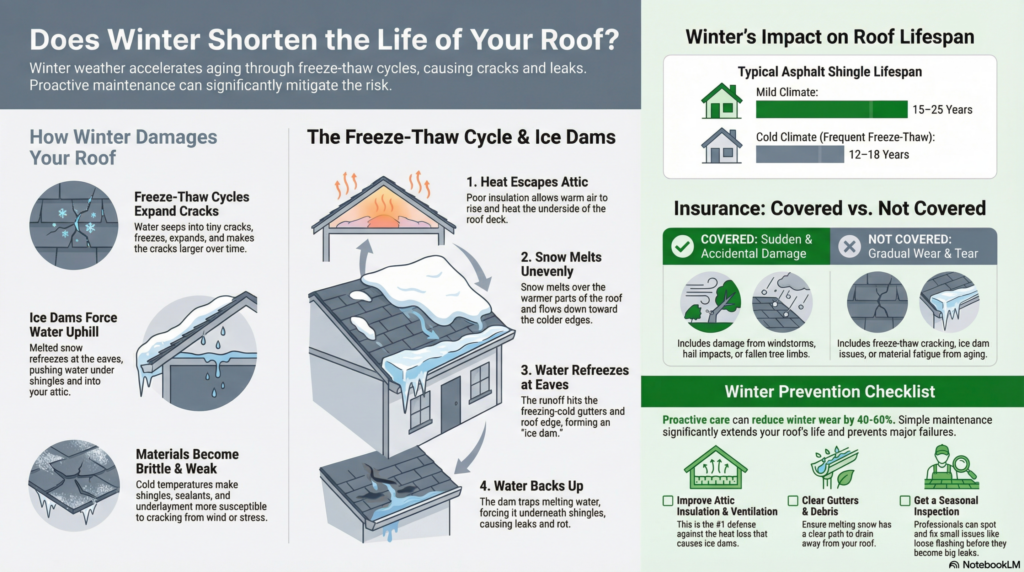
Yes — winter weather alone doesn’t destroy most roofs, but the conditions it creates can accelerate underlying wear and material fatigue.
Winter doesn’t act like a hammer cracking a roof open; it works more like thousands of tiny pressure changes that add up over time.
-
Freeze‑thaw cycling expands microscopic cracks in materials.
-
Snow and ice add weight that stresses the decking beneath.
-
Ice dams push water under shingles at the edges.
-
Wind gusts during storms lift shingles more easily when they’re brittle.
Think of it like flexing a paperclip repeatedly — it won’t break the first time, but after enough flexing the metal fails.
How Much Winter Actually Reduces Roof Lifespan?
Data shows roofs in cold climates tend to have shorter serviceable lifetimes compared to similar roofs in temperate regions, and winter conditions are the key differentiator.
Several studies and industry insights back this up:
-
Asphalt shingles may last 15–25 years in mild climates but closer to 12–18 years where frequent freeze‑thaw occurs.
-
Cold temperatures make materials like sealants and underlayment brittle, increasing the chance of cracking.
-
Moisture trapped under snow accelerates rot in decking and underlying wood.
One HAAG Engineering study showed a measurable trend in deterioration rates when annual freeze‑thaw events exceed certain thresholds. Homes in northern states documented earlier material failure than predicted by manufacturer lifespans. This pattern repeats in New Jersey winters as well.

How To Spot Winter‑Related Wear Before It Becomes Failure
Winter wear doesn’t always announce itself; you’ll see small signs long before a major issue appears.
Common indicators include:
-
Curling or cracked shingles
-
Sagging gutters full of ice
-
Water staining on ceilings
-
Mold or mildew in attic spaces
-
Loose or degraded flashing
If you see even one of these early, it’s not panic time — but it is inspection time.
Example Case:
A home in Burlington County showed only curling shingles in December. By March, after snow and melt cycles, the attic decking showed rot. Early detection could have reduced repair costs significantly.
What the “Thermal Loop Effect” Is (And Why It Matters)
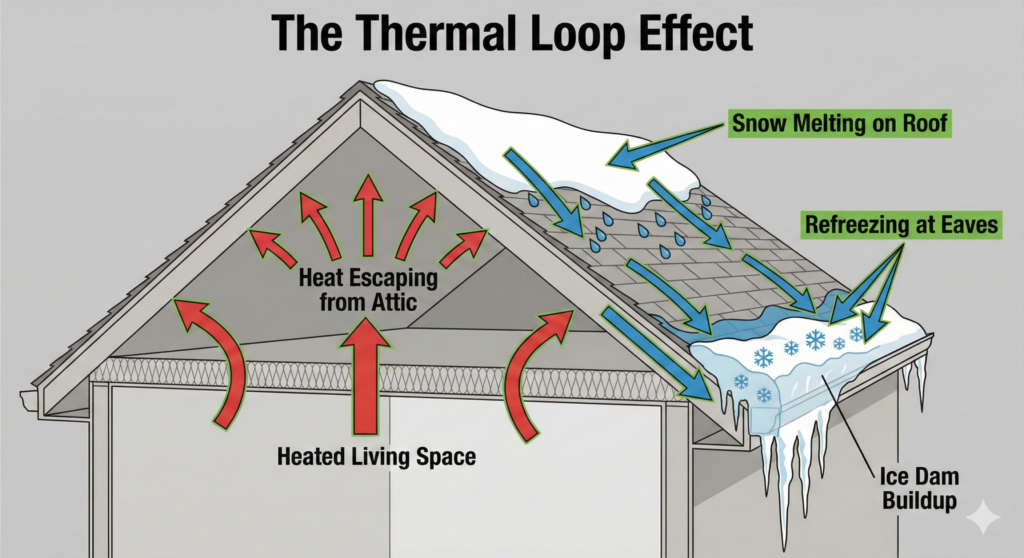
The Thermal Loop Effect describes a cyclical pattern where trapped attic heat melts snow unevenly, leading to refreeze at the eaves — creating ice dams.
This isn’t just a catchy term — it’s a real mechanical process with measurable consequences:
-
Heat escapes through inadequate insulation.
-
Snow melts faster over warm roof sections.
-
Melted snow refreezes at cold eaves.
-
Water backs up under shingles.
-
Moisture enters deck and attic spaces.
Repeated annually, this loop accelerates wear on shingles, underlayment, and decking.
Does Insurance Cover Winter‑Related Roof Wear?
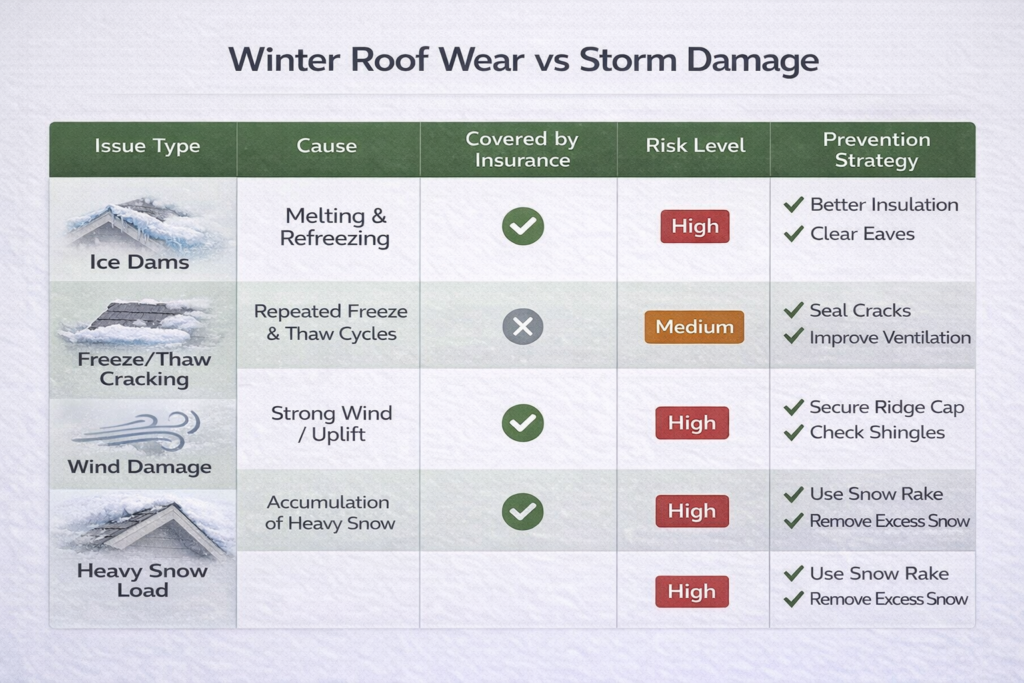
Insurance often covers sudden storm damage, but rarely covers gradual winter wear — even if the damage manifests after a storm.
Insurers typically define covered loss as “sudden and accidental.” That includes:
-
Windstorm damage
-
Hail impact
-
Fallen limbs causing visible breaches
But gradual deterioration — like freeze‑thaw cracking, ice dam wear, or material fatigue — is often considered maintenance or age‑related and may be denied.
According to industry sources (NAIC, ISO), claims for freeze‑thaw damage are among the most frequently denied because:
-
They lack a specific event date
-
They show progressive wear rather than acute loss
-
They often originate in poor ventilation or insulation zones
Being proactive and documenting roof condition before winter is key to claim success.
What Preventive Measures Actually Extend Roof Life
Preventive maintenance can reduce winter wear by up to 40–60%, according to roofing industry benchmarks.
Smart actions include:
-
Seasonal inspections to catch small issues early
-
Improved attic insulation and ventilation
-
Ice dam mitigation practices
-
Prompt repair of loose flashing or curled shingles
-
Debris and gutter clearing before snow arrives
These practices don’t just delay wear — they reduce the pace of material fatigue.
Case Insight:
Homes that received pre‑winter inspections from T.A. Hughes contractors in NJ showed a marked reduction in emergency winter roofing calls compared to similar homes without inspections.
When You Should Call a Professional
If any of these signs show up, a qualified roof inspection isn’t optional — it’s urgent:
-
Water stains appearing after snow
-
Large ice dams forming repeatedly
-
Noticeable sagging or drips
-
Shingles missing or cracked
A professional can pinpoint whether damage is just wear or starting structural failure.
Conclusion — Winter Doesn’t Kill Roofs, Neglect Often Does
Winter does accelerate aging where there’s moisture, temperature swings, and insulation imbalance. But the narrative that winter instantly shatters roofs is false — the real threat lies in silent, cumulative wear that often goes unnoticed until it’s expensive.
Key Takeaways:
-
Winter conditions accelerate the mechanical wear of roofing materials.
-
Ice dams and freeze‑thaw cycles are major contributors to premature aging.
-
Proper insulation, ventilation, and seasonal inspections greatly reduce risk.
-
Insurance typically covers sudden damage, not gradual winter wear.
Benefit‑Driven CTA:
If you want clarity about how winter is affecting your roof and prevent costly surprises, get a personalized winter roof evaluation from local certified experts.
FAQ
Q: Does winter weather really shorten roof life?
A: Yes, especially where freeze‑thaw cycles, moisture, and poor attic conditions are present.
Q: How much sooner might a roof fail in winter climates?
A: Roofs in cold climates often show significant aging several years earlier than in temperate zones.
Q: Can regular maintenance improve roof lifespan?
A: Absolutely — preventive checks and insulation improvements can slow aging by 40–60%.
Q: Will insurance pay for winter wear?
A: Typically not; insurers focus on sudden, storm‑related damage.