
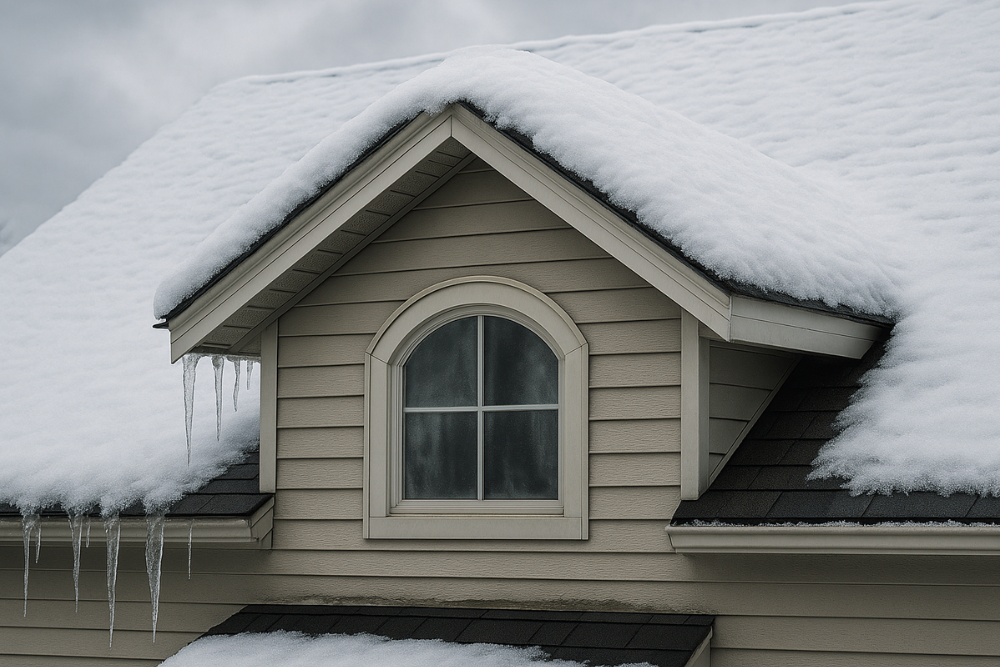
When you spot water dripping from your attic or notice wet insulation during the cold months, it’s not just annoying — it’s a red flag. In Gloucester County homes, where winter temperatures regularly dip into the 20s‑40s °F and freeze‑thaw cycles are common, attic leaks are all too frequent.
In this article we’ll dive into the five most common causes of winter attic leaks — and more importantly, fast fixes that you can begin today (or call us to handle) to protect your home.
1. Ice Dams Along Roof Edges
What’s going on
An ice dam forms when snow on your roof melts (often because attic heat escapes), flows down to cooler eaves or gutters, refreezes, and builds up a barrier. That barrier traps melting water behind it — and that water can seep under shingles, into attic spaces and eventually into your home.
Why Gloucester County is at risk
Because even though South Jersey isn’t always deep winter, we still get repeated freeze‑thaw cycles, and combined with insufficient attic ventilation or insulation, the conditions are right.
Fast fix
-
Clear snow/ice from roof edges where safe (or hire a pro).
-
Ensure your attic is properly ventilated and insulated to keep the roof surface cold.
-
Install or check the condition of ice & water shield along eaves and gutters.
-
Regularly clean gutters so melting melt‑water can drain properly.
2. Poor Attic Ventilation & Insulation
What’s going on
Warm air from your living space escaping into the attic or inadequate insulation mean the attic heats up. That heated attic warms the roof deck, causing snow to melt prematurely, then refreeze at the eaves or under shingles — creating moisture and leaks.
Why it matters
Even in a milder South Jersey winter, this effect can happen, especially if your attic has recessed lighting, HVAC ducts, or vent penetrations that aren’t sealed.
Fast fix
-
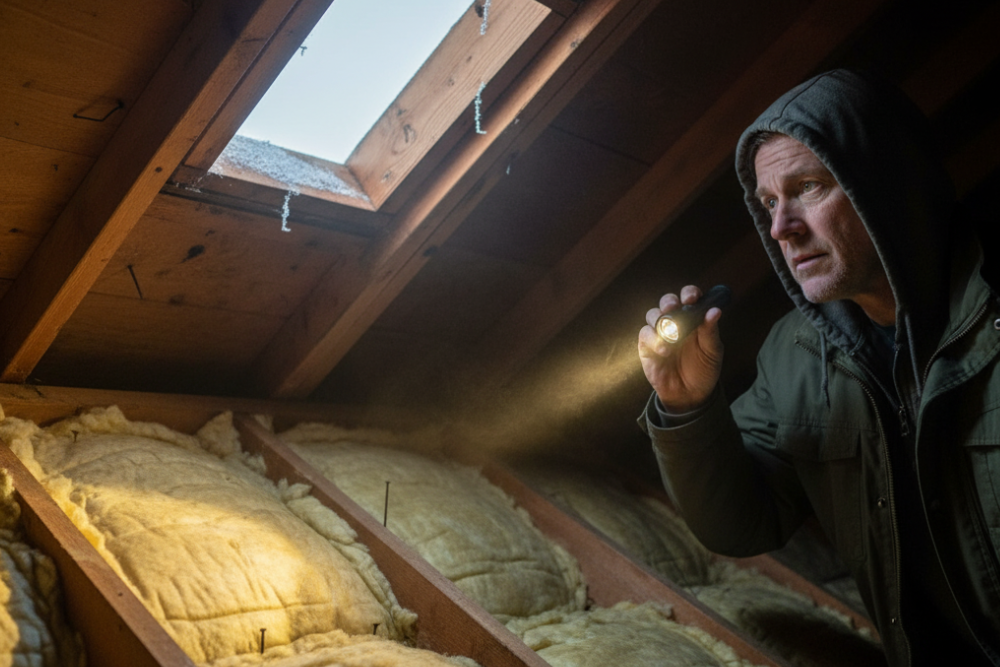
Inspect attic for warm spots, frost, or visible moisture.
-
Seal attic air‑leaks around lights, penetrations, vent ducts.
-
Add/upgrade insulation (e.g., meeting local R‑value for NJ).
-
Install/verify ridge vents, soffit vents, and ensure ventilation paths are clear.
3. Roof Penetrations & Flashing Leaks
What’s going on
Pipes, chimneys, skylights, vent stacks — each penetration is a potential leak point. In winter, when snow melts or ice builds, poorly sealed flashing or compromised seals allow melt‑water to enter the attic or wall cavities.
Why it’s common in winter
With snow loads, ice buildup, and freeze/thaw cycles, the flashing seals take extra stress. The result? Leaks start where you least expect them.
Fast fix
-
Inspect around chimneys, vent stacks, skylights for cracked or missing flashing.
-
Replace or reseal flashing with winter‑rated materials.
-
Have a professional check flat roof transitions or less visible flashing — they’re often overlooked.
4. Clogged Gutters & Improper Drainage
What’s going on
When gutters are full of leaves/debris or ice blocks form inside them, melting snow has nowhere to go. Back‑up water can seep under shingles at the eave, flow into the attic, or create hidden leaks.
Local relevance
In our area, the fall leaf drop → gutters get clogged → winter comes and gutters don’t drain. That’s a setup for attic moisture issues.
Fast fix
-
Clean gutter systems each fall to remove leaves and debris.
-
Install or inspect gutter guards or leaf filter systems (they make winter drainage easier).
-
Ensure downspouts direct water away from foundation — water intrusion into attic walls is a risk when drainage fails.
5. Hidden Structural Issues or Storm Damage
What’s going on
Winter leaks aren’t always caused by snow/ice. Storm damage earlier in the year (wind lift, hail damage, missing shingles) or structural weaknesses (rot, sag, failed decking) can lie dormant until winter’s melt‑water reveals them.
Why you should care
If your attic leak is from old missed damage, the leak may be significant by the time you notice it — increasing repair costs and structural risk.
Fast fix
-
Schedule a professional winter roof inspection before the leak worsens.
-
Look for sagging roof deck, bowed rafters, visible water damage in attic.
-
Address damage promptly (decking, framing, underlayment) rather than patching superficially.
Local Pro Tip — What Gloucester County Homeowners Should Check First
-
Walk your attic after a snow event: are there wet spots, frost, or tell‑tale drips?
-
Examine your roof slope from the ground after snow/ice melts: do you see icicle buildups?
-
Call in a certified roofer if you notice interior ceiling stains, recurring leaks, or attic wood rot.
At T.A. Hughes III Roofing we specialize in winter roof repair and attic moisture diagnostics across Gloucester County — including Mantua, West Deptford, Swedesboro and surrounding towns.
Why Acting Now Beats Waiting
Waiting for spring might seem tempting — but in winter conditions, delays can magnify damage and cost. A small leak today may become a major structural issue by spring construction time. Plus, scheduling in winter may be easier than in the busy spring/summer season.
Contact TA Hughes
Don’t let a winter attic leak turn into a full‑scale repair. Contact T.A. Hughes III Roofing today for a free, no‑pressure attic roof inspection focused on winter vulnerabilities. We’ll assess your attic, diagnose potential leak causes, provide an estimate, and help you choose a repair plan that suits your home and budget.
👉 Contact us now →
👉 or call us directly — we’re your trusted local South Jersey roofing partner.