What Is a Roof Inspection?
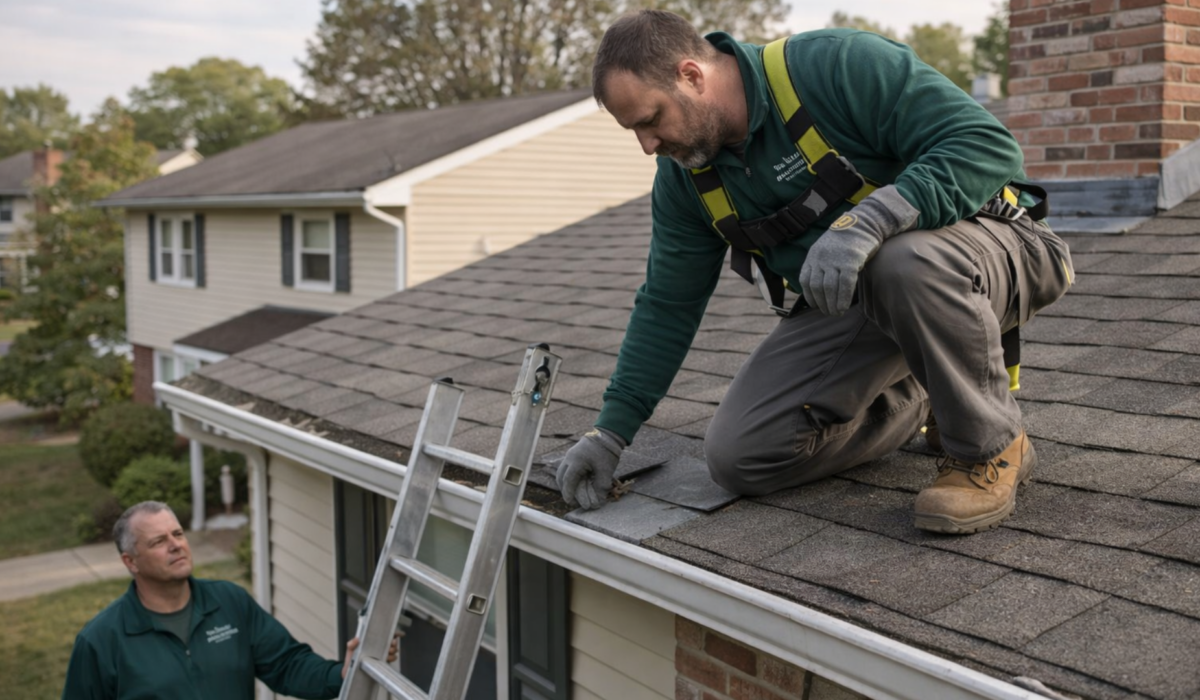
A roof inspection is a professional evaluation of your entire roofing system — including shingles, flashing, ventilation, attic conditions, and drainage — to identify existing damage or early signs of wear before they become serious problems.
Key Takeaways
- A roof inspection evaluates shingles, flashing, ventilation, decking, and attic conditions
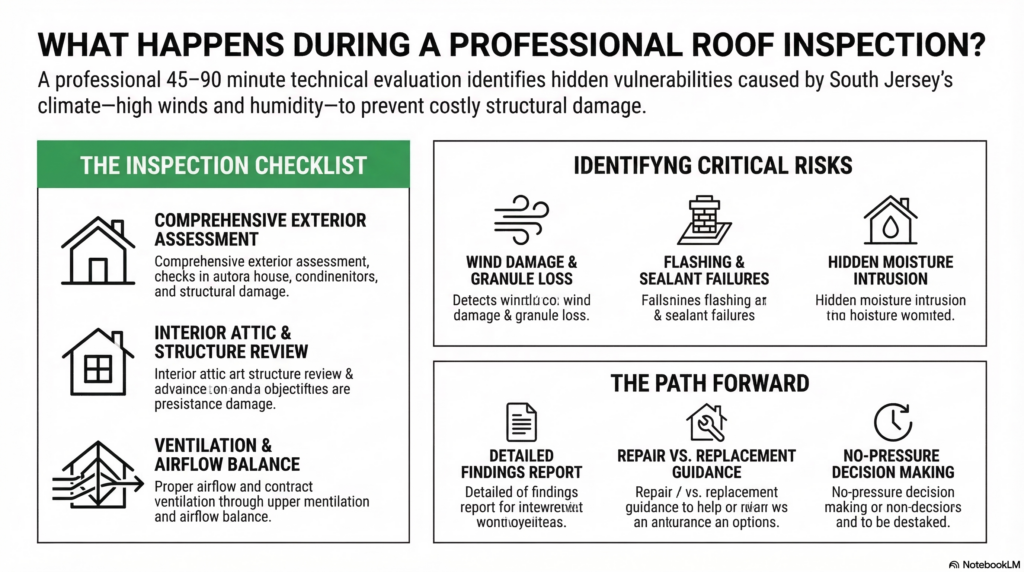
- Most inspections take 45–90 minutes depending on the size and complexity of the home
- Many roofing problems are not visible from the ground
- Inspections help identify small issues before they become costly repairs
- Not every finding leads to a replacement recommendation — many issues are repairable
If you’ve never had a professional roof inspection, it’s natural to wonder what you’re actually signing up for. What does the contractor look at? How long does it take? Will they find something expensive?
This guide walks through exactly what happens during a professional roof inspection in New Jersey — from the first step on your driveway to the final written summary.
Why Roof Inspections Matter in South Jersey
South Jersey’s climate puts real stress on roofing systems. Homes in Burlington, Camden, and Gloucester Counties deal with:
- Heavy rain and thunderstorms through spring and summer
- High winds from Nor’easters and coastal storms
- Snow and ice buildup in winter months
- Hot, humid summers that accelerate shingle wear
Most homes in this area were built between the 1970s and 1990s. That means many roofing systems are either approaching or past their expected lifespan — even if they look fine from the street.
A professional inspection gives you an honest picture of where things actually stand.
Who Should Schedule a Roof Inspection?
You don’t need visible damage to benefit from an inspection. In South Jersey, an inspection makes sense when:
- Your roof is 15 years or older
- You’ve experienced recent storm activity — especially high winds or hail
- You’ve noticed ceiling stains, water marks, or dampness in your attic or upper rooms
- You’re buying or selling a home
- You haven’t had the roof professionally evaluated in several years
- You want a baseline condition report before storm season
Some problems show no surface signs until water has already worked its way inside. An inspection catches early-stage issues before they become expensive ones.
What Does a Roof Inspection Include?
A professional inspection covers your entire roofing system — not just the shingles. Here is what a trained contractor examines, step by step.
Step 1: Exterior Shingle Inspection
The inspection begins with a full evaluation of your shingles. The contractor looks for:
- Missing or displaced shingles — often caused by wind
- Curling or cupping edges — a sign of age or ventilation problems
- Granule loss — when shingles begin shedding the protective coating that shields them from UV exposure
- Cracking or brittleness — common in older asphalt shingles
- Blistering — small bubbles that indicate trapped moisture
Granule loss is one of the most reliable signs of shingle age. You may notice granule buildup in your gutters before you see anything on the roof surface itself.
Step 2: Flashing Inspection
Flashing is the metal material that seals the joints where your roof meets a vertical surface — chimneys, vents, skylights, dormers, and valleys.
Flashing failures are one of the leading causes of roof leaks in South Jersey homes. They don’t always fail dramatically. More often, sealant dries out, metal shifts with temperature changes, and water finds a slow path inside over time.
The contractor checks flashing for:
- Lifting or separation from the surface
- Rust or corrosion
- Cracked or dried sealant
- Gaps at critical transition points
Step 3: Ridge, Valleys, and Roof Edges
The ridge — the peak of your roof — and the valleys — where two roof planes meet — are high-traffic areas for water movement. Both are inspected for:
- Proper alignment and coverage at the ridge
- Intact valley flashing or woven shingles
- Drip edge condition along the eaves and rakes
Step 4: Roof Decking Assessment
The decking is the plywood or OSB board that your shingles are fastened to. A professional inspection includes a visual check for signs of:
- Soft spots or sagging areas
- Water staining visible at the edges
- Damage from previous leak activity
Direct assessment of the decking happens during the attic inspection — covered in the next step.
Step 5: Attic Inspection
A full roof inspection doesn’t stop at the exterior. If your home allows attic access, the contractor checks from the inside.
This reveals:
- Active moisture or water staining on rafters and sheathing
- Daylight showing through where it shouldn’t
- Insulation coverage that supports roof performance
- Signs of mold or mildew linked to moisture intrusion
- Ventilation conditions — whether air is moving through the attic as intended
In many South Jersey homes, the attic tells a story the exterior doesn’t.
Step 6: Ventilation Assessment
Attic ventilation is one of the most overlooked parts of a roofing system. Poor ventilation causes heat and moisture to build up inside the attic, which:
- Shortens shingle lifespan
- Increases the risk of ice dams in winter
- Raises cooling costs in summer
- Creates conditions for mold growth
A properly ventilated roof balances intake vents at the soffits with exhaust vents at the ridge. The contractor evaluates whether your system is achieving that balance.
Step 7: Gutters and Drainage Review
Gutters aren’t technically part of the roof — but they directly affect how your roof performs. During an inspection, a contractor will note:
- Granule buildup in gutters (a sign of shingle wear)
- Clogged downspouts that cause water to back up under shingles
- Gutters pulling away from the fascia board
- Improper pitch that causes water to stand rather than drain
How Long Does a Roof Inspection Take?
For a typical single-family home in South Jersey, a professional roof inspection takes 45 to 90 minutes, depending on:
- Roof size and pitch
- Number of penetrations (chimneys, vents, skylights)
- Whether attic access is available
- The extent of any findings
More complex roofs — those with multiple slopes, dormers, or additions — may take longer.
What You Receive After the Inspection
After the inspection, a professional contractor provides a written summary of findings. This typically includes:
- Condition of each component evaluated
- Specific areas of concern, noted with detail
- Photos of findings, when applicable
- Honest repair vs. replacement guidance based on what was observed
A no-obligation inspection means you receive the findings without a commitment. Your next steps are your decision.
Will an Inspection Tell You if You Need a New Roof?
Yes — but it won’t assume you do before looking. Not every finding leads to a replacement recommendation. In South Jersey, many roofing issues are repairable when they’re caught early.
Repair is typically the right call when:
- Damage is limited to a specific area
- The roof is structurally sound and relatively newer
- The issue involves isolated flashing failure or minor wear
Replacement becomes the more practical option when:
- The roof is at or beyond its expected lifespan (typically 20–25 years for architectural shingles)
- Shingle failure is widespread across multiple sections
- Repeated repairs have been made to the same areas
- There is evidence of long-term moisture intrusion into the decking or structure
An honest inspection tells you which category you’re in — and why.
The_Roof_Inspection_GuideDownload the The Roof Inspection Guide
Storm Damage and Roof Inspections in New Jersey
After significant storms, roof damage isn’t always visible from the ground. Shingles may be lifted, creased, or have lost protective granules without appearing obviously missing or broken.
If your South Jersey home recently experienced:
- Sustained high winds
- Hail activity
- Fallen or dragged tree limbs
- Significant debris impact
…scheduling an inspection is a practical step regardless of what you can see from the yard.
During a post-storm inspection, the contractor documents conditions that may be relevant if you choose to contact your insurance carrier. The contractor’s role is documentation and honest reporting — not predicting or guaranteeing insurance outcomes.
Frequently Asked Questions
-
How much does a roof inspection cost in New Jersey?
- Many reputable roofing contractors in South Jersey offer free, no-obligation inspections. At T.A. Hughes III Roofing, inspections are provided at no charge.
-
How often should a roof be inspected in New Jersey?
- Most South Jersey homes benefit from a professional inspection every 3–5 years, or after any significant storm activity.
-
Can I inspect my own roof?
- Homeowners can look from the yard for obvious missing shingles. However, the checks that matter most — flashing integrity, attic moisture, ventilation — require trained eyes and safe roof access.
-
Does a roof inspection include gutters?
- A responsible contractor will note visible gutter conditions during the exterior inspection, particularly if gutter performance appears to be affecting the roofing system.
-
What if the inspector finds serious problems?
- You’ll receive a clear explanation of what was found and why it matters. There is no pressure to commit to work on the day of the inspection.
-
How long does a roof inspection take in NJ?
- Most single-family home inspections take between 45 and 90 minutes, depending on roof size and complexity.
Why Local Experience Matters for New Jersey Roof Inspections
South Jersey’s housing stock and weather patterns are specific. A contractor with decades of experience in Burlington, Camden, and Gloucester Counties understands:
- How homes built in the 1970s–1990s were constructed and what to expect at certain ages
- How local storm patterns create damage that may not match general guides
- Which materials and installation methods are common in the region
- Local permitting requirements if work proceeds after the inspection
That local context shapes what gets flagged — and what actually needs attention.
Schedule a Free Roof Inspection
If you haven’t had your South Jersey home’s roof inspected in several years — or if you’ve recently been through storm activity — scheduling a professional inspection is a straightforward, low-commitment step.
You’ll walk away with an honest picture of your roof’s condition, written documentation of any findings, and the information you need to make a smart decision on your own timeline.
T.A. Hughes III Roofing offers free, no-obligation roof inspections for homeowners throughout Burlington, Camden, and Gloucester Counties.
Schedule a free inspection to get a clear, no-obligation assessment of your roof.
T.A. Hughes III Roofing is a family-owned exterior remodeling contractor serving South Jersey for over 45 years. The company is fully licensed and insured in the State of New Jersey and holds GAF Certified Roofing Contractor status.