
23January 2026
Winter storms, scorching sun, wind gusts, ice dams — none of these cause roof failures by themselves. What causes most roofs to fail isn’t unpredictable weather; it’s a predictable sequence of stressors, overlooked warning signs, and avoidable mistakes that only decades of real‑world experience can reveal. After 35+ years in the roofing trenches, we’ve seen patterns repeat, time and again — and that’s taught us what actually causes roof failure, how to spot it early, and how much of it is preventable.
In short: Roof failures rarely happen by accident. Most are the result of identifiable causes — from installation errors to moisture intrusion — that good roofing professionals recognize early, and that smart homeowners can prevent with timely action.
What Is the Most Common Cause of Roof Failures?
Direct answer:
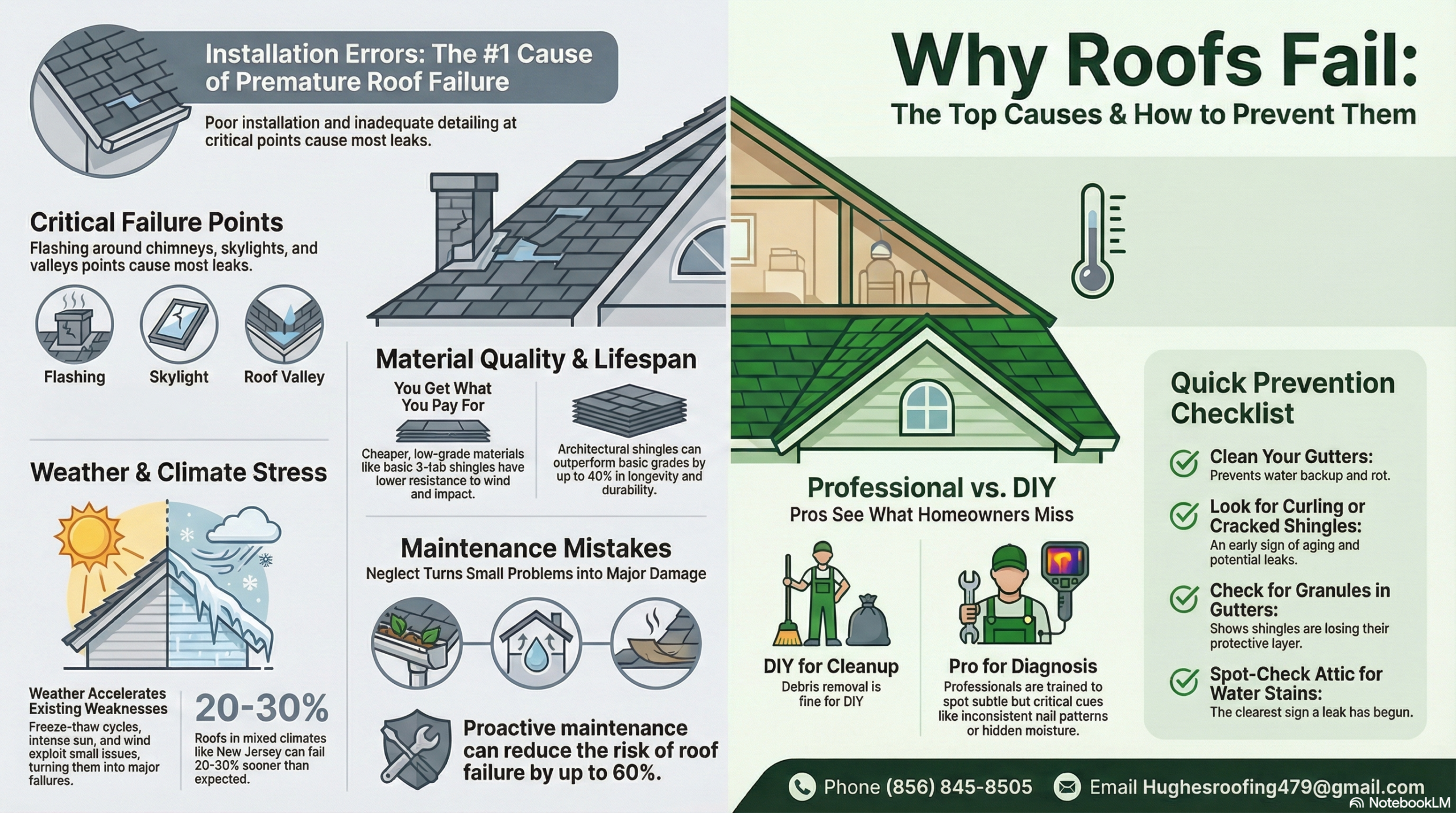
The single most common root cause of roof failures is poor installation and inadequate detailing at critical points (flashing, valleys, and penetrations).
Even the best roofing materials can fail early if installed incorrectly.
-
Installation errors often create gaps where water can enter.
-
Flashing failures around chimneys or valleys are frequent leak origins.
-
Incorrect nailing or improper overlap lets wind and water pry shingles loose.
A homeowner in Burlington County learned this the hard way: a roof just five years old began leaking because the flashing around a skylight was improperly integrated at install — a mistake only visible to an experienced roofer inspecting above the shingles.
How Does Weather & Climate Accelerate Roof Wear?
Direct answer:
Weather doesn’t randomly “break” a roof — it accelerates material stress that was already building.
Winter freeze‑thaw cycles, summer heat, wind storms, and moisture each create repeated stress that weakens roofing systems over time.
-
Freeze‑thaw cycles expand tiny cracks into real gaps.
-
Wind uplift can pry shingles or underlayment loose.
-
Moisture and humidity foster rot in decking and framing.
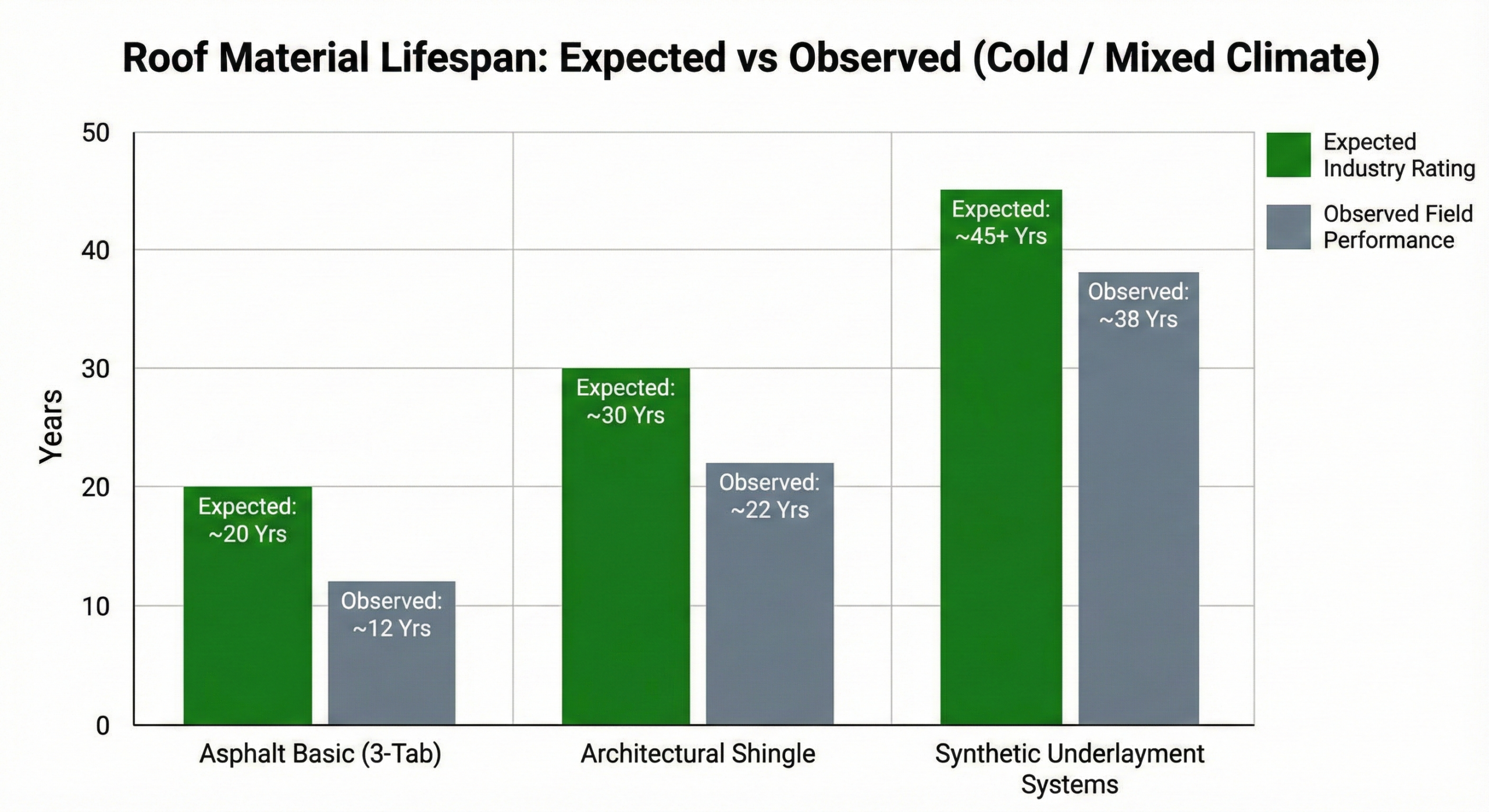
In New Jersey, where coastal winds and snow are common, roofs often show signs of wear earlier than expected. Data from the Roofing Industry Alliance indicates that roofs in mixed‑climate regions tend to fail closer to the lower end of their lifespan range due to these cumulative stresses.
How Material Quality Impacts Roof Lifespan
Direct answer:
Not all roofing materials age the same — and choosing low‑grade materials often leads to early failure.
Material decisions have long‑term consequences:
-
Basic 3‑tab shingles may be cheaper upfront but are less resistant to wind and impact.
-
Architectural shingles offer better durability and helix resistance.
-
Synthetic underlayment resists moisture longer than traditional felt.
A study from a major shingle manufacturer shows architectural shingles can outperform basic grades by 25–40% in wind resistance and longevity.
One homeowner replaced an aging 3‑tab roof with architectural shingles and saw dramatically fewer maintenance calls over five years.
Why Maintenance Mistakes Turn Small Problems Into Major Failures
Direct answer:
Most roof failures are preventable with consistent, proactive maintenance.
Here’s how everyday neglect accelerates failure:
-
Clogged gutters cause water to back up and rot fascia boards.
-
Poor attic ventilation traps moisture, weakening decking.
-
Ignoring early curling or cracking lets issues snowball into leaks.
A classic example: A homeowner noticed curling shingles after winter, but delayed inspection. By spring, interior drywall was stained, insulation was wet, and the repair cost tripled.
Professional vs DIY: When Experience Matters Most
Direct answer:
DIY fixes are fine for debris removal — but not for diagnosing systemic failure risks.
Pros are trained to see subtle but critical cues:
-
Nail pattern inconsistency
-
Flashing not integrated to code
-
Valley wear that looks superficial but isn’t
A senior foreman at T.A. Hughes once found a home with seemingly minor shingle splits — but moisture mapping showed weeks of water travel beneath decking, a scenario that untrained eyes often miss.
What the Data Says About Roof Lifespan & Failures
Direct answer:
Empirical data confirms that roofs subjected to repeated stress events — freeze‑thaw, wind storms, moisture intrusion — fail earlier than predicted by manufacturer lifespan ratings.
Several industry benchmarks show:
-
Roofs in cold/mixed climates often fail ~20–30% sooner than in mild climates.
-
Maintenance reduces failure risk by ~40–60% over the roof’s lifespan.
-
Ice‑dam damage accelerates shingle aging more than wind uplift in most cold winters.
For regional context, data from the National Roofing Contractors Association (NRCA) supports that proper ventilation and insulation significantly extend roof life.
When to Call a Professional Before It’s Too Late
Direct answer:
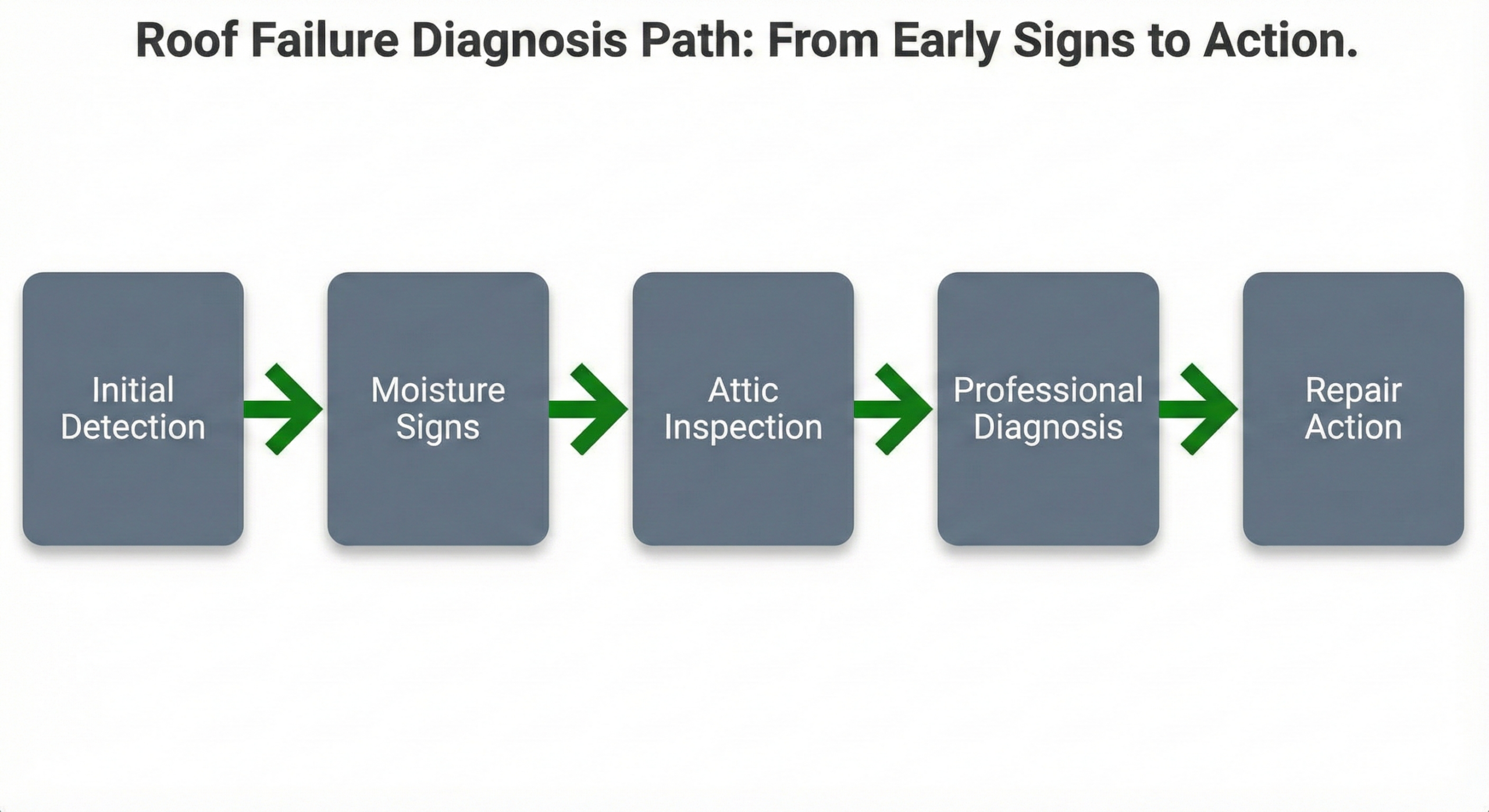
If you notice water stains, sagging eaves, or curling shingles, don’t wait — call a licensed roofing contractor immediately.
Early signs often look subtle:
-
Dark spots in attic insulation
-
Rusted flashing nails
-
Shingle granule loss in gutters
These are precursors to larger structural damage.
Conclusion: Experience Predicts Failure Before It Happens
After 35+ years repairing and replacing roofs across South Jersey — from Burlington to Camden and Gloucester — one truth holds: most roof failures are predictable, diagnosable, and preventable.
Summary Takeaways:
-
Most failures stem from installation, maintenance neglect, or cumulative weather stress.
-
Material choice and installation quality matter as much as climate exposure.
-
Preventive maintenance significantly extends lifespan and reduces emergency repairs.
Benefit‑Driven CTA:
If you want clarity on your roof’s condition and how to prevent costly failures, schedule a professional roof inspection now — catch issues early before they become emergencies.
FAQ
Q: What causes most roofs to fail?
A: Installation errors and poor detailing around flashings and penetrations are the top causes.
Q: Does weather really reduce roof life?
A: Yes — cumulative moisture, freeze‑thaw cycles, and wind stress accelerate aging.
Q: Can better materials extend roof life?
A: Absolutely — architectural shingles and synthetic underlayments outperform basic options.
Q: Is maintenance really worth it?
A: Preventive maintenance can reduce roof failure risk by up to 60% according to industry data.