Overview
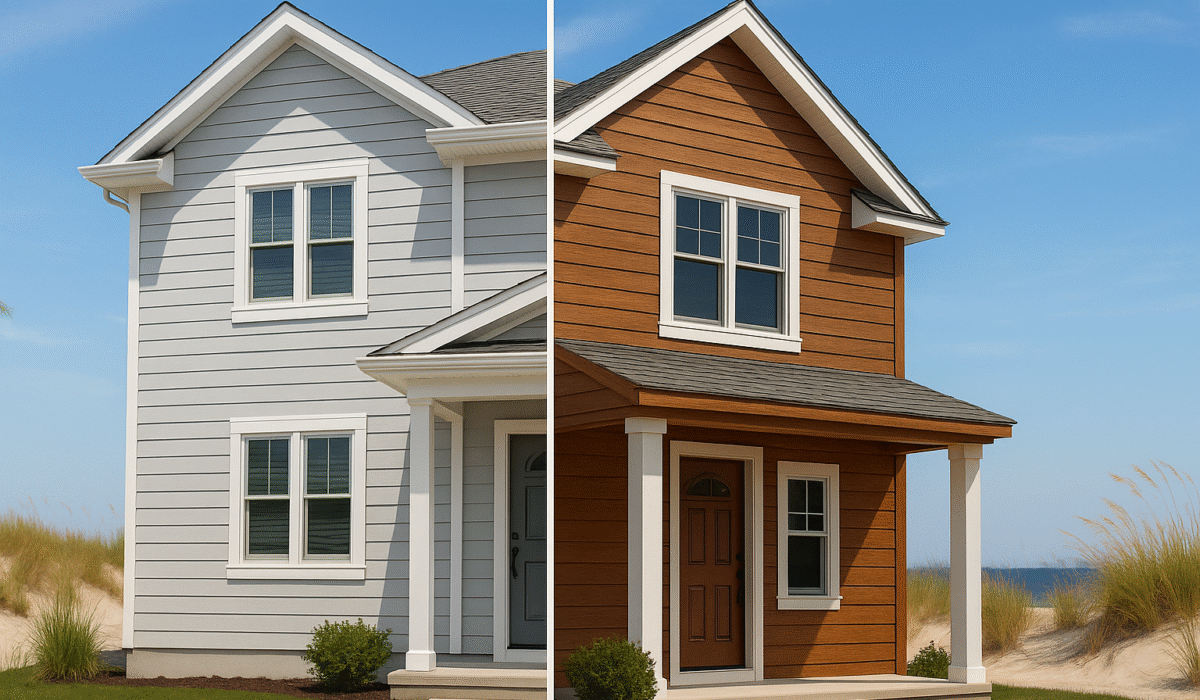
If you’re a New Jersey homeowner living near the coast, your siding does more than look good—it defends your home from salt air, storms, humidity, and high winds. But when it comes to long-term protection, which siding performs better: vinyl or fiber cement?
In this guide, we break down how each material holds up in NJ’s coastal climate, using our 35+ years of local experience to help you make the most durable, cost-effective choice.
Why NJ Coastal Homes Need Stronger Siding
New Jersey’s coastal and near-coastal homes—especially in Burlington, Camden, and Gloucester Counties—face weather conditions that can cause siding to fail early:
-
Salt air corrodes and fades exterior finishes
-
Wind-driven rain can penetrate or dislodge poorly installed siding
-
Freeze-thaw cycles crack siding seams and fasteners
-
UV exposure can degrade colors and materials over time
Choosing the right siding isn’t just about curb appeal—it’s about structural longevity and energy efficiency in harsh conditions.
Vinyl Siding: Affordable and Versatile, but Coastal Limitations Exist
Pros of Vinyl Siding
-
Budget-friendly: Lowest installation cost
-
Low maintenance: No painting required
-
Wide variety of styles: Textures and colors for any home
Cons of Vinyl Siding
-
Vulnerable to cracking during cold NJ winters
-
May warp or buckle in intense summer heat
-
Less durable in hurricane-force winds
Performance in NJ Coastal Conditions
Vinyl siding performs adequately inland, but near the coast, salt and wind can shorten its lifespan. While newer panels with impact-resistant tech are available, vinyl is still less resilient under extreme conditions compared to fiber cement.
Fiber Cement Siding: Built for Durability in Tough Climates
Pros of Fiber Cement Siding
-
Exceptional resistance to salt, fire, mold, and pests
-
Longer lifespan: 30–50+ years with minimal upkeep
-
Highly wind-resistant and non-combustible
-
Superior aesthetics: Mimics real wood without the downsides
Cons of Fiber Cement Siding
-
Higher upfront cost than vinyl
-
Heavier material requires professional installation
-
May need repainting after 15–20 years
Performance in NJ Coastal Conditions
Fiber cement is engineered for coastal zones, making it an ideal fit for homes in Ocean City, Wildwood, Longport, and southern Gloucester County. It stands up to salt, wind, and water intrusion with minimal warping or degradation.
Side-by-Side Comparison: Vinyl vs. Fiber Cement for NJ Homes
| Feature | Vinyl Siding | Fiber Cement Siding |
|---|---|---|
| Salt Resistance | Moderate | ✅ High |
| Wind Resistance | Moderate | ✅ High |
| Maintenance | ✅ Low | Low to Moderate |
| Upfront Cost | ✅ Lower | Higher, but better ROI |
| Longevity in NJ | 20–30 years | ✅ 30–50+ years |
| Fire & Pest Resistance | Low | ✅ High |
| Environmental Impact | Moderate | ✅ Eco-friendlier options |
Our Expert Verdict
Fiber cement siding offers superior protection and long-term value for coastal NJ homes—especially those in high-salt, high-wind zones. If you’re located inland or need a budget-conscious solution, modern vinyl siding can still be a smart choice when professionally installed.
For long-term performance and resale value in NJ’s coastal climate, fiber cement is the clear winner.
Why Choose T.A. Hughes for Your Siding Project?
At T.A. Hughes III Roofing, we don’t just install siding—we help protect your entire home from the ground up.
-
Over 35 years of siding experience in NJ
-
Certified installers for both vinyl and fiber cement
-
Local building code experts
-
Full-service exterior solutions: roofing, gutters, windows & more
-
5-star customer testimonials and GAF-certified excellence
FAQs: Answered by Local Experts
Q: Does fiber cement siding resist salt air better than vinyl?
Yes, fiber cement is more resistant to salt exposure and less prone to fading or degradation.
Q: Is fiber cement siding worth the higher price?
For NJ’s coastal climate, yes. It lasts longer, withstands more, and boosts home value.
Q: How often does vinyl siding need to be replaced near the coast?
Typically every 20–30 years, but severe weather can reduce that.
Q: Do I need special permits to install siding in NJ?
Yes—local townships require permits and code compliance, which we handle for you.
Ready to Upgrade Your Siding?
Whether you’re near the shore or further inland, siding plays a critical role in protecting your New Jersey home. At T.A. Hughes III Roofing, we bring decades of hands-on expertise, certified crews, and siding solutions that last.
👉 Call us today at (856) 845-8505
📧 Email: Hughesroofing479@gmail.com
📍 Visit us: 479 Crown Point Rd, West Deptford, NJ 08086
🗓️ Request Your Free Siding Assessment Now — Serving Burlington, Camden & Gloucester Counties