Why Energy Ratings Matter More Than You Think
Last winter, the Jones family in Cherry Hill did everything they could to cut heating costs. They’d sealed the windows, replaced their roof five years ago, and even had their HVAC serviced. Still, the utility bill kept creeping up.
The culprit? Their siding.
It’s easy to think of siding as just a “skin” for your home—something that makes it look polished from the street. But in reality, siding plays a major role in energy efficiency, comfort, and even resale value.
That’s why understanding siding energy ratings isn’t just for engineers—it’s for every South Jersey homeowner.
Breaking Down Siding Energy Labels (Without the Jargon)
If you’ve ever stared at a label on a siding sample and thought, “This looks like math homework,” you’re not alone. Let’s break it down in plain English:
-
R-Value: Think of this as the thickness of a winter sweater. The higher the number, the better your siding is at holding heat inside during the winter and blocking it in summer.
-
U-Factor: This is the opposite—it measures how much heat slips through. Lower numbers mean less draftiness, which is what you want.
-
Energy Star Certification: The government’s seal of approval. Energy Star siding meets tested energy performance benchmarks—good news for your bills and for the environment.
-
NFRC Labels: You’ll find these on many products. They break down exactly how the siding performs under test conditions.
💡 Tip from the field: When we meet homeowners in Gloucester County, we sometimes bring label samples and compare them side by side—explaining what the numbers mean for their climate zone. Nine times out of ten, the “aha moment” happens right there at the kitchen table.
What These Ratings Mean for South Jersey Homes
South Jersey weather is a rollercoaster: freezing Nor’easters in February, sticky humidity in July, and salt-laced breezes along the shore. That’s why siding ratings matter here more than most places.
-
In winter, a higher R-value keeps the cold air from seeping through the walls.
-
In summer, a lower U-factor keeps cool, conditioned air from escaping.
-
Along the coast, resistance to moisture and salt is just as important as insulation.
According to Energy.gov, improving insulation and reducing leaks can trim 15–20% off heating and cooling costs. For many NJ families, that’s hundreds of dollars a year—plus the priceless comfort of a draft-free living room.
Common Mistakes Homeowners Make With Energy Labels
We see these all the time:
-
Skimming for the brand name instead of performance ratings. The logo isn’t the full story.
-
Confusing window labels with siding labels. Different products, different standards.
-
Ignoring moisture resistance. With NJ’s humidity, mold prevention matters as much as heat retention.
-
Chasing the cheapest upfront cost. Low-rated siding can cost more in bills and repairs down the road.
A quick story: A homeowner in Deptford once bought siding on clearance from a supplier that didn’t realize it was meant for the Southeast. Within two years, not only did their heating bills spike, but moisture issues showed up under the panels. Fixing it cost more than choosing a proper NJ-rated product from the start.
How T.A. Hughes Helps You Choose Wisely
You don’t have to figure out R-values and U-factors alone—we walk you through it.
Here’s what sets us apart:
-
We sit down with you and explain labels in plain language, not jargon.
-
We compare multiple materials side by side—vinyl, insulated vinyl, and fiber cement—so you see the trade-offs.
-
We make sure the siding you choose meets NJ Uniform Construction Code standards.
-
We think about your goals—lower bills, storm resistance, or long-term resale—and help match the right product.
“We didn’t know what half the numbers meant. T.A. Hughes broke it down like neighbors, not salespeople. We ended up with siding that looks great and lowered our bills.”
— Jim R., West Deptford
Energy Ratings + Style: You Can Have Both
Some homeowners think energy-efficient siding means boring or limited choices. Not true.
-
Fiber cement siding can carry an R-value boost and still come in bold modern colors like charcoal or deep green.
-
Insulated vinyl siding is lightweight, energy-smart, and available in classic colonial whites, tans, and blues.
-
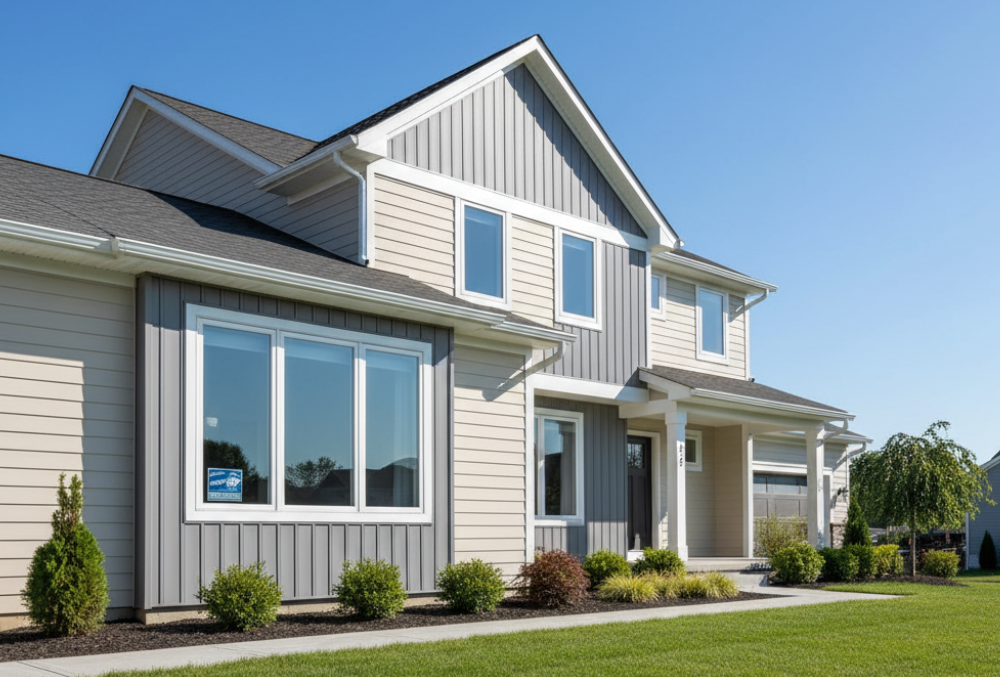
Mixed styles (like board-and-batten plus shingles) can combine efficiency with architectural character.
And here’s the bonus: energy-smart siding boosts resale value. Buyers love knowing they won’t inherit drafty walls or high bills.
Final Takeaway
Reading siding energy ratings isn’t about memorizing acronyms—it’s about making smarter decisions for your comfort, your budget, and your home’s future.
At T.A. Hughes Roofing & Siding, we bring the numbers down to earth, explain what they mean for your South Jersey home, and guide you toward the siding that balances style, performance, and value.
👉 Schedule your free siding consultation today—and let’s go over the labels together before you commit.
FAQs
Q: What R-value should siding have in NJ?
Most siding falls between R-2 and R-4. For best performance, pair siding with a properly insulated wall system.
Q: Does insulated siding really lower bills?
Yes. By reducing heat transfer and air leaks, insulated siding can cut energy costs—especially in climates like NJ with both hot summers and cold winters.
Q: Is Energy Star siding worth it?
For long-term savings and resale value, Energy Star siding is usually a smart investment. It proves the product was tested for real performance.