
6February 2026
Introduction: Why Smart Homeowners Don’t Wait for Spring
Every spring, New Jersey roofing contractors hear the same thing:
“I wish we called sooner — now we’re on a waiting list.”
Late winter is when experienced homeowners quietly get ahead — before spring storms, permit backlogs, and contractor schedules fill up.
If your roof is aging, leaking, or simply nearing the end of its lifespan, late winter (February through early March) is one of the smartest times to plan a roof replacement, even if the actual installation happens later.
This guide explains why timing matters, what late winter planning actually involves, and how to avoid the most common (and costly) mistakes homeowners make.
Why Roof Replacement Is a Planning Decision — Not a Last‑Minute One
Roof replacement is rarely an emergency until it suddenly is.
Waiting until spring often means:
-
Rushed inspections
-
Limited contractor availability
-
Weather delays
-
Higher stress during storm season
Late winter planning gives you control, not pressure.
You’re not committing to immediate construction — you’re securing:
-
Accurate inspections
-
Clear pricing
-
Better scheduling options
-
Time to make informed decisions
The 3 Biggest Myths That Cause Homeowners to Wait Too Long
❌ Myth #1: “You can’t deal with roofing until spring”
You can — and should — plan in late winter. Inspections, estimates, permitting, and scheduling all happen before installation.
❌ Myth #2: “Contractors aren’t available in winter”
Late winter often means more availability, not less — especially for inspections and planning.
❌ Myth #3: “Cold weather makes planning pointless”
Modern roofing systems and professional crews account for temperature. Planning now prevents rushed decisions later.
Recommended Reading – “Emergency Roof Repair in NJ: What Homeowners Should Know”
Why Late Winter Is a Strategic Advantage (Not a Compromise)
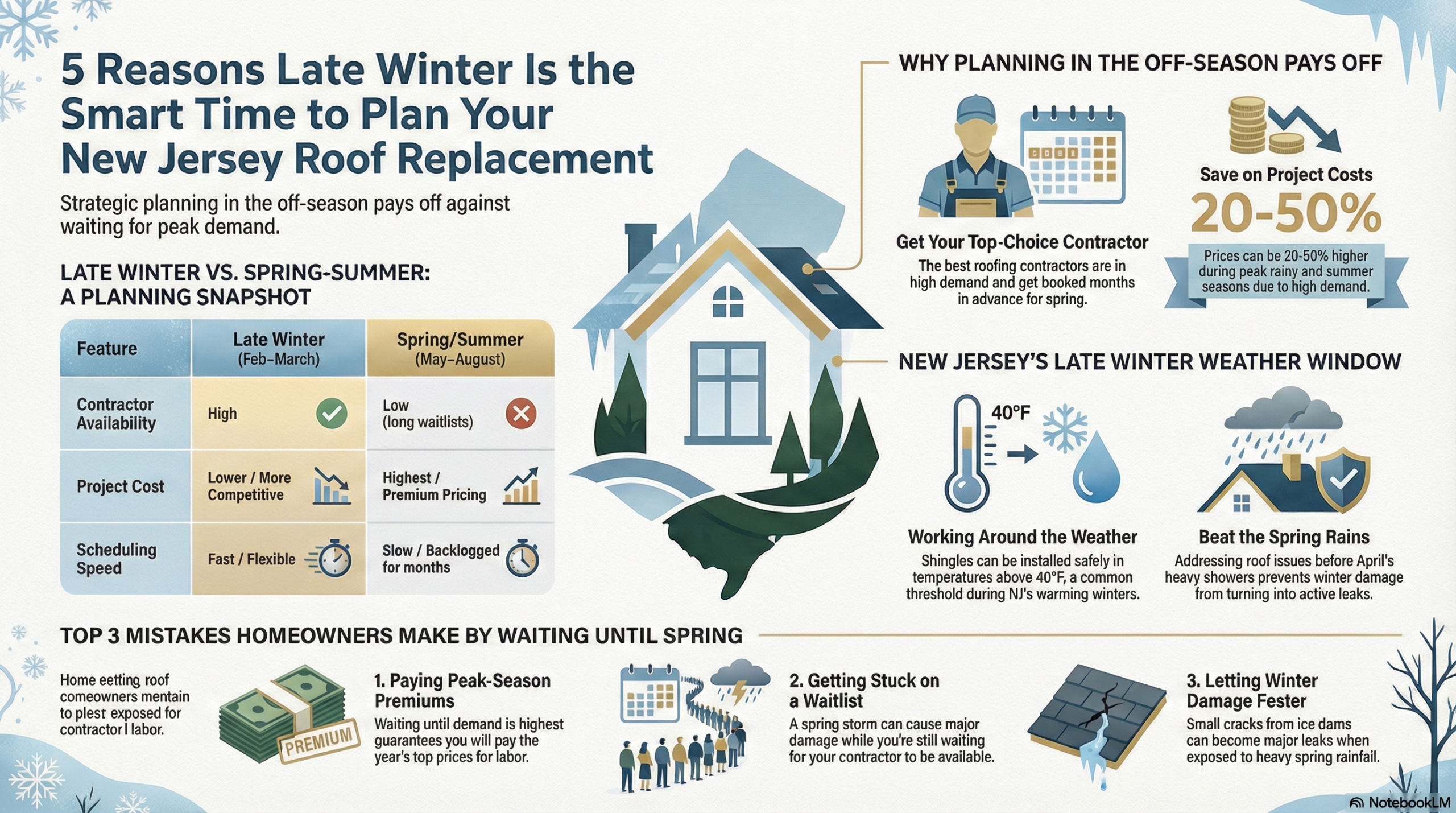
1. Contractor Availability Is Better
By April, many NJ contractors are booked weeks out. Late winter allows:
-
Faster inspections
-
More detailed evaluations
-
Greater scheduling flexibility
2. You Avoid the Spring Backlog
Historically, permit requests and storm-related calls spike in March and April, slowing everything down. Planning early keeps you ahead.
3. Pricing Is More Predictable
Late winter planning allows time to:
-
Compare estimates
-
Lock in pricing
-
Avoid reactive decisions after storm damage
Winter Roofing Strategy
Winter_Roofing_StrategyNew Jersey Weather Makes Early Planning Even More Important
South Jersey’s freeze–thaw cycles quietly weaken older roofs. Even when leaks aren’t visible yet, damage may already be developing.
Late winter planning helps you:
-
Identify hidden issues early
-
Prepare before spring rain and wind events
-
Avoid emergency situations during peak season
Recommended reading – “Best Roofing Materials for New Jersey Weather”
What Late Winter Roof Planning Actually Looks Like (Step‑by‑Step)
-
Professional roof inspection
-
Condition assessment (repair vs replacement)
-
Material and system recommendations
-
Permit planning and timeline review
-
Pre‑scheduling for spring or early summer
This approach removes urgency and replaces it with clarity.
Roof Replacement Planning by Season: What NJ Homeowners Should Know
Understanding how roofing timelines shift by season can help NJ homeowners plan smarter, save money, and avoid peak delays. This comparison breaks down the best time for inspections, repairs, and full replacements based on local contractor trends and weather.
What If Your Roof Can’t Wait?
If you’re experiencing:
-
Active leaks
-
Missing shingles
-
Interior water stains
-
Sagging rooflines
You may need immediate repair or replacement, regardless of season.
A professional inspection determines whether:
-
Temporary repair is safe
-
Full replacement should be prioritized
-
Planning can still reduce long‑term costs
The Bottom Line: Late Winter Is About Control, Not Cold
Homeowners who plan in late winter:
-
Avoid spring chaos
-
Make better decisions
-
Protect their homes before storm season
-
Reduce stress and uncertainty
You don’t need to replace your roof tomorrow —
but waiting until everyone else calls is rarely the best move.
Ready to Plan — Not Rush?
If your roof is aging or showing signs of wear, a late‑winter inspection gives you answers without pressure.
Schedule a professional roof assessment today and enter spring prepared — not reactive.
📍 Serving Burlington, Camden & Gloucester Counties
📞 Call or request an inspection online
Planning a Roof Replacement in Late Winter: What NJ Homeowners Need to Know
Here are the most common questions homeowners in Burlington, Camden, and Gloucester Counties ask when considering a roof replacement in late winter.