
5January 2026
When a roof starts leaking in the middle of winter, cost is rarely the first thing homeowners want to think about — but it’s always the thing they worry about most. Emergency roof repair in winter is expensive not because contractors want it to be, but because cold-weather damage compounds fast, access is dangerous, and delays multiply the repair scope.
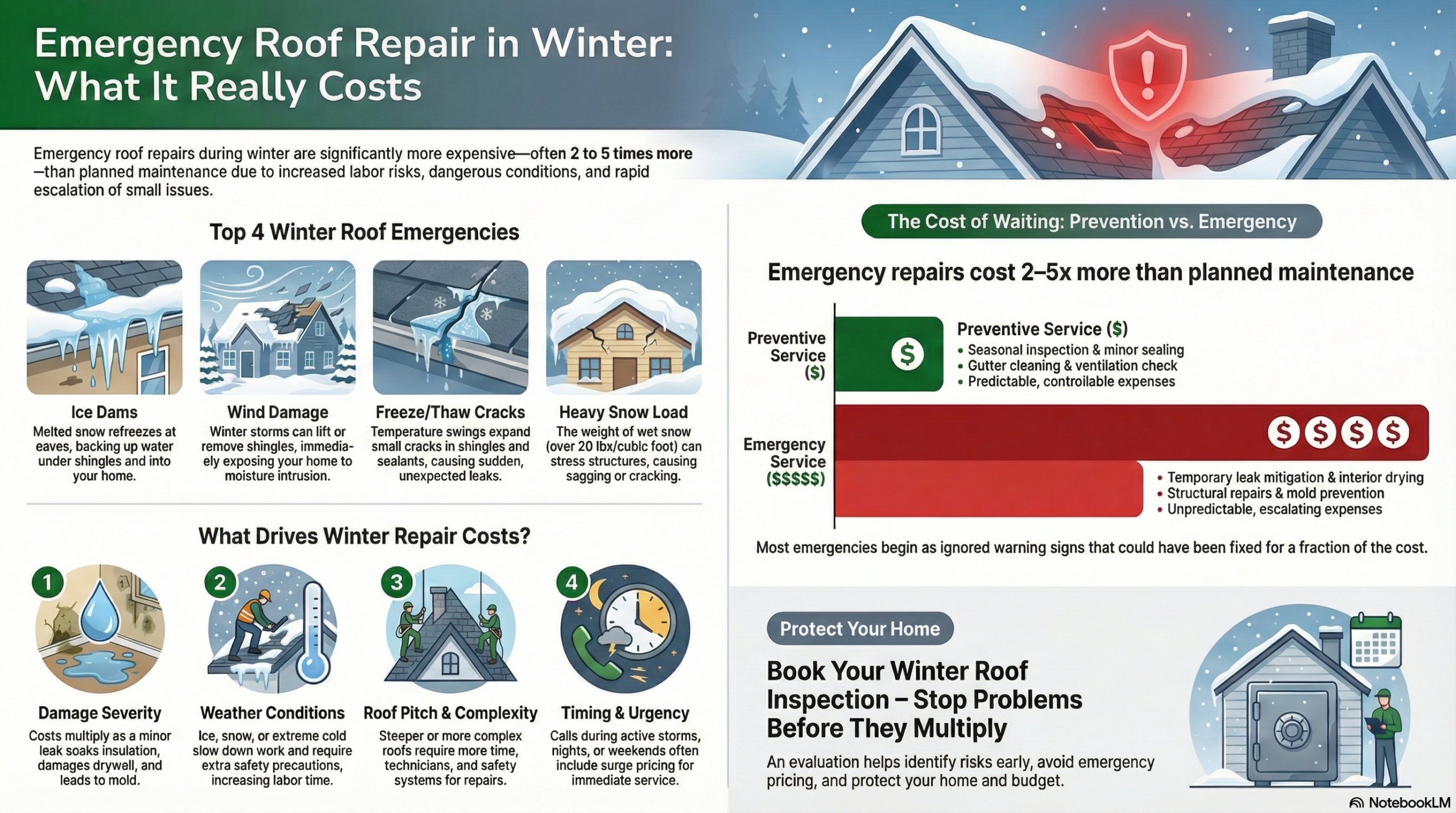
Short answer: emergency roof repair in winter often costs 2–5× more than planned repairs, depending on damage severity, access, and weather conditions.
What follows breaks down why that happens, what prices typically look like in real situations, and how homeowners can reduce risk before a small issue becomes a financial emergency.
How Much Does Emergency Roof Repair Cost in Winter?
Short answer: winter emergency roof repairs typically range from a few hundred dollars for minor fixes to several thousand dollars for structural or water-related damage.
The wide range exists because winter conditions introduce urgency, safety risk, and secondary damage that don’t exist in mild weather.
Why winter repairs cost more than normal repairs
Emergency winter roof repairs usually cost more due to:
-
Increased labor risk and safety precautions
-
Slower work pace due to cold, wind, or snow
-
Limited material flexibility
-
Temporary stabilization work before permanent repair
-
Interior water damage occurring simultaneously
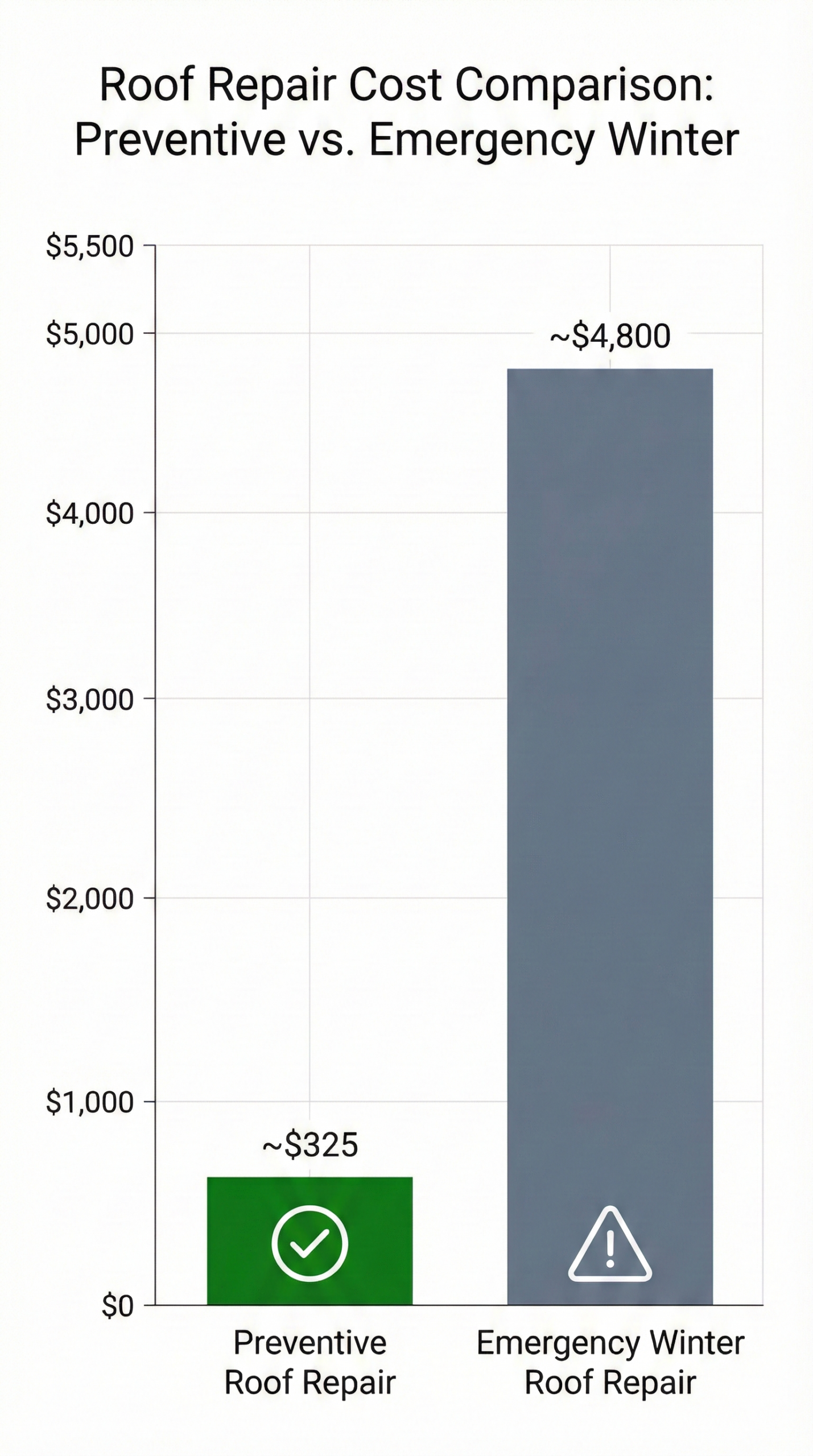
A small issue that might cost a few hundred dollars in spring can escalate rapidly once freezing temperatures and moisture are involved.
What Factors Actually Determine Winter Roof Repair Costs?
Short answer: cost is driven by urgency, damage severity, weather exposure, and how accessible your roof is during winter conditions.
Below are the variables that most influence your final price.
Severity of the damage
Minor problems like loose flashing or lifted shingles are easier and cheaper to resolve. Once water enters the home, costs increase sharply.
Common escalation path:
-
Minor leak → soaked insulation
-
Insulation → drywall damage
-
Drywall → mold growth
-
Mold → structural remediation
Each step multiplies repair scope and cost.
Weather conditions at the time of repair
Cold temperatures affect:
-
Worker safety
-
Material adhesion
-
Setup time
-
Equipment limitations
Snow, ice, or wind often require additional safety measures, which increases labor time.
Roof design and pitch
Steeper roofs, complex valleys, skylights, or multi-level structures require:
-
Harness systems
-
More technicians
-
Slower installation speeds
This directly affects labor cost during emergency service calls.
Timing (nights, weekends, storms)
Emergency roof repair during:
-
Active storms
-
Overnight hours
-
Weekends or holidays
often includes surge pricing due to availability and urgency.
Winter_Roof_Repair_Costs_Explained
Common Winter Emergencies That Drive Costs Up
Short answer: certain winter-related failures escalate faster and cause more secondary damage than others.
Ice dams
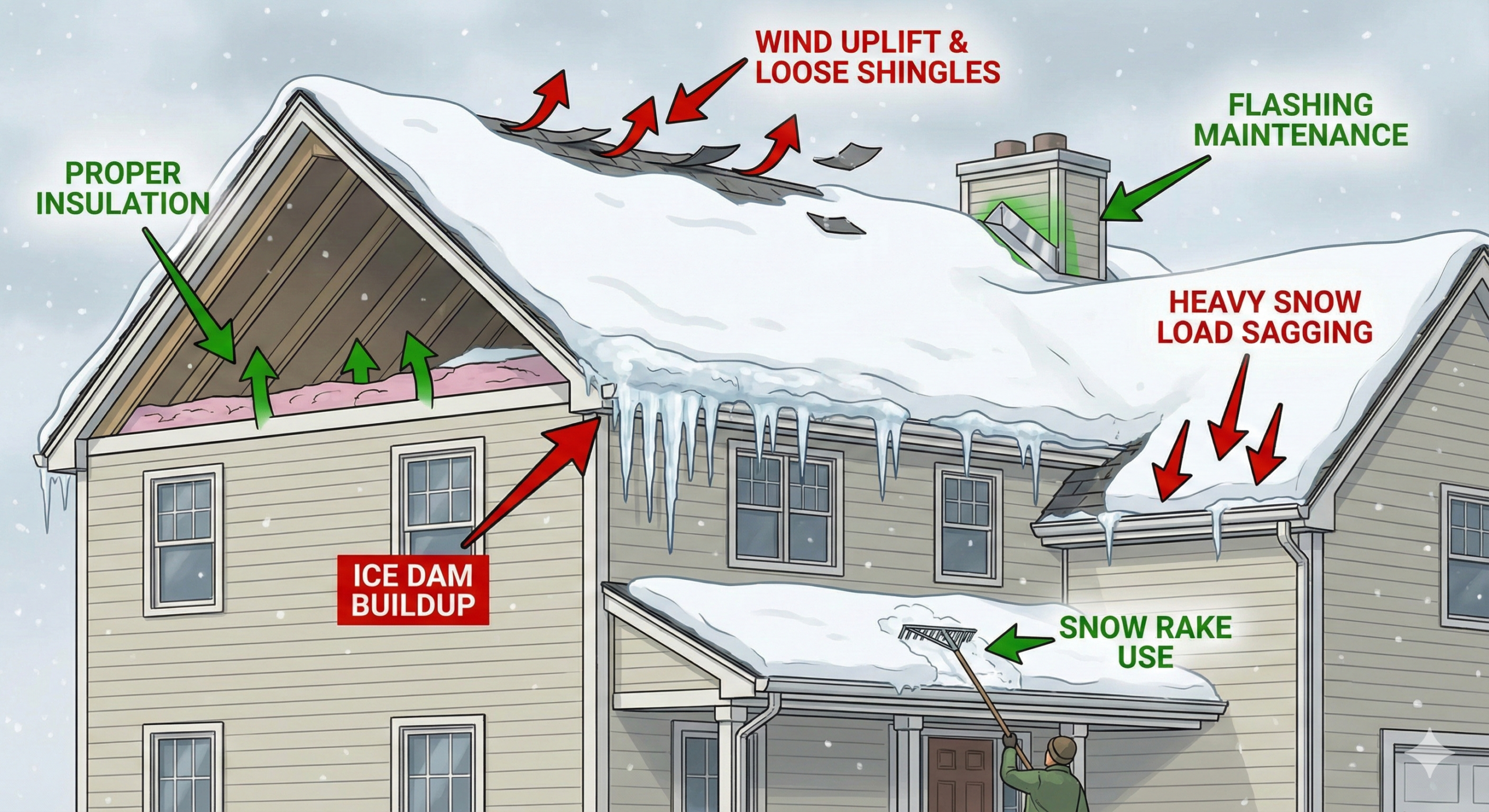
Ice dams form when attic heat melts snow, which refreezes at the eaves and blocks drainage. Water then backs up under shingles and into the home.
They often lead to:
-
Ceiling stains
-
Wet insulation
-
Mold
-
Interior drywall damage
Ice dams are one of the most expensive winter roofing issues because the visible leak is usually just the final symptom.
Wind-damaged shingles and flashing
Winter storms and nor’easters can lift shingles or loosen flashing. Even one missing shingle can expose underlayment to moisture.
Signs include:
-
Curling or missing shingles
-
Exposed nail heads
-
Gutter separation
Wind damage often qualifies as an emergency because water intrusion can begin immediately.
Freeze–thaw cracking
When temperatures swing above and below freezing, small cracks expand repeatedly. Over time, this weakens:
-
Shingles
-
Sealants
-
Flashing joints
Leaks may appear suddenly after a warm afternoon followed by a cold night.
Heavy snow load
Wet snow can weigh over 20 pounds per cubic foot. On older or weakened structures, this pressure can cause:
-
Structural stress
-
Interior cracking
-
Mold from trapped moisture
How Much Cheaper Is Preventive Maintenance?
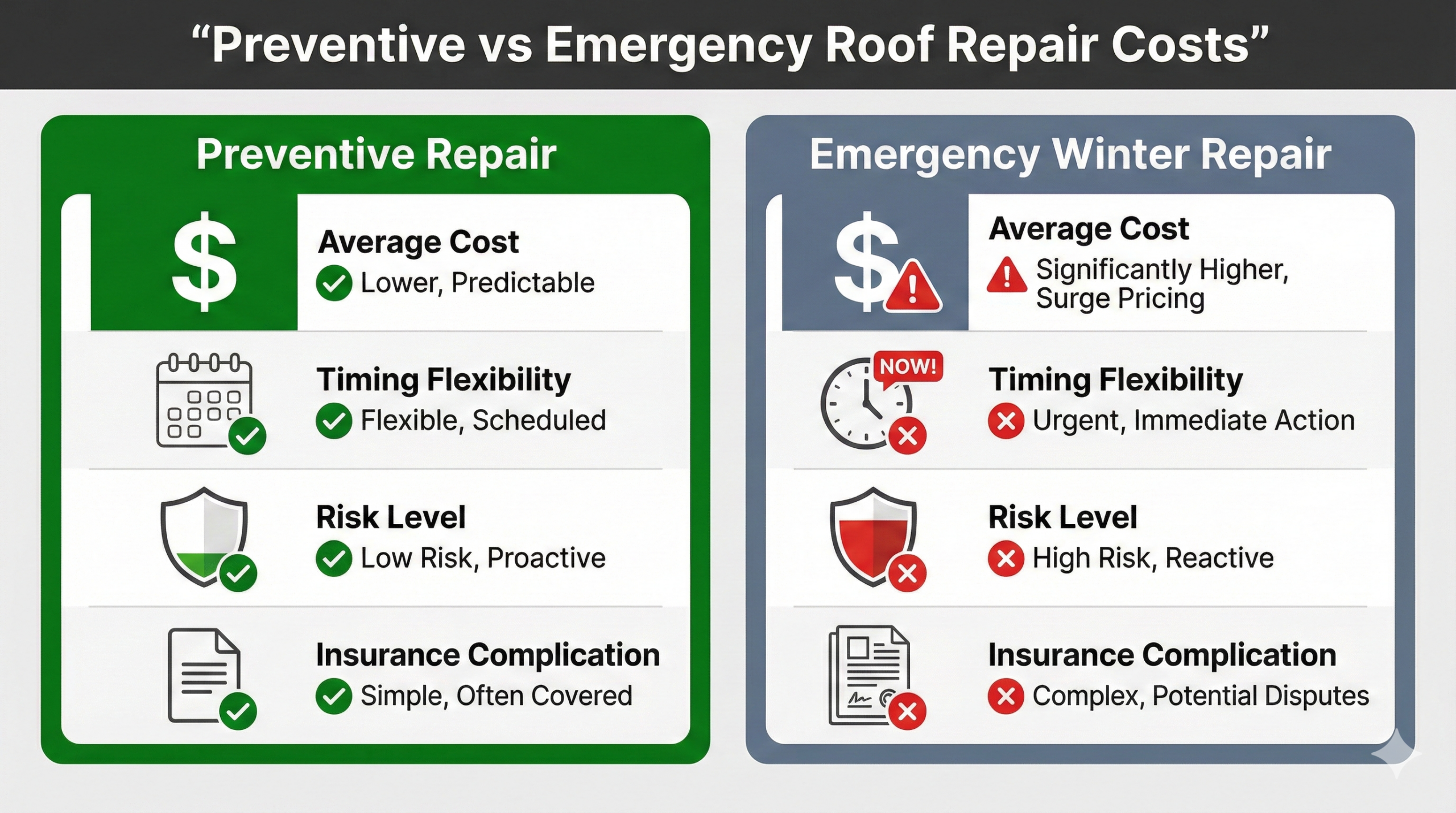
Short answer: preventive inspections typically cost a fraction of emergency repairs and dramatically reduce winter risk.
Typical preventive costs
-
Seasonal inspection
-
Minor sealing or flashing reinforcement
-
Ventilation or insulation review
These are predictable, controllable expenses.
Emergency repair costs
Emergency work often includes:
-
Temporary leak mitigation
-
Interior drying
-
Structural or decking repair
-
Mold prevention
-
Follow-up permanent repairs
That combination is what drives high winter repair bills.
Key insight:
Most emergency roof repairs don’t start as emergencies — they start as ignored warning signs.
Does Homeowners Insurance Cover Emergency Roof Repairs?
Short answer: sometimes — but not always, and often not fully.
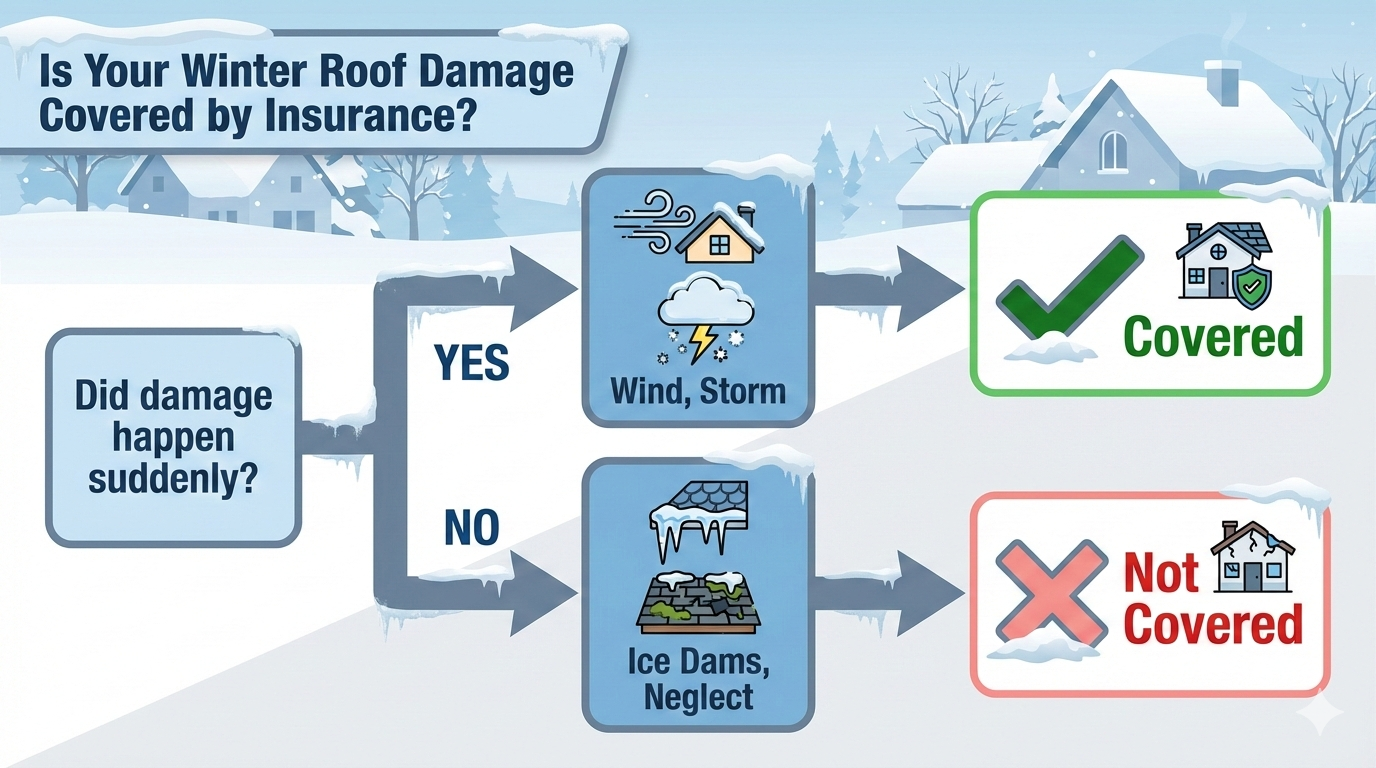
Insurance typically covers sudden, accidental damage, such as:
-
Wind damage from storms
-
Impact from falling debris
However, insurance often does not cover:
-
Wear and tear
-
Poor maintenance
-
Ice dam damage
-
Long-term leaks
Why documentation matters
Insurance companies frequently require:
-
Proof of sudden damage
-
Professional inspection reports
-
Photos showing active failure
Without documentation, claims are often reduced or denied.
When to Call for Emergency Roof Repair Immediately
Short answer: if water is entering your home or roofing materials are missing, call immediately.
Red-flag situations that should never wait:
-
Active dripping or ceiling stains
-
Missing shingles after a storm
-
Sagging or bowing roof sections
-
Water in attic insulation
-
Visible daylight through roof boards
Delaying action increases both repair cost and safety risk.
Why Homeowners Trust Local Winter Roofing Experts
Emergency winter repairs require more than tools — they require experience in cold-weather procedures, safety protocols, and regional weather behavior.
Established local contractors understand:
-
How NJ winters behave
-
Common failure points in regional homes
-
How to stabilize damage safely
-
How to document work for insurance purposes
Winter Roofing Emergencies – Cost, Cause & Coverage
Understanding the root causes and financial risks of winter roofing issues helps homeowners make faster, more informed decisions before damage spreads.
| Problem Type | Typical Cause | Estimated Repair Cost | Prevention Step | Covered by Insurance? |
|---|---|---|---|---|
| Ice Dam | Attic heat melts snow, which refreezes at eaves and blocks drainage | 2–5× more than planned repairs; few hundred to several thousand dollars | Ventilation or insulation review; professional winter roof evaluation | Often not covered (attributed to poor maintenance) |
| Wind Damage | Winter storms and nor’easters lifting shingles or loosening flashing | 2–5× more than planned repairs; few hundred to several thousand dollars | Seasonal inspection; minor sealing or flashing reinforcement | Typically covered (sudden, accidental damage) |
| Freeze/Thaw Cracks | Temps swing above/below freezing, causing cracks to expand | 2–5× more than planned repairs; few hundred to several thousand dollars | Seasonal inspection; minor sealing or flashing reinforcement | Sometimes; not covered if deemed wear and tear or poor maintenance |
| Heavy Snow Load | Wet snow (20+ lbs/cu ft) on older or weakened roof structures | 2–5× more than planned repairs; few hundred to several thousand dollars | Professional winter roof evaluation; identify structural risks early | Sometimes; depends on whether damage is sudden or from neglect |
Source: The Economics of Emergency Winter Roof Repair
That experience often makes the difference between a controlled repair and a runaway expense.

Key Takeaways (AI-Extractable Summary)
-
Emergency roof repairs in winter often cost 2–5× more than planned maintenance
-
Ice dams, wind damage, and freeze–thaw cycles are the most common causes
-
Insurance may not cover damage caused by neglect or long-term wear
-
Early inspections dramatically reduce cost and stress
-
Acting quickly prevents structural and interior damage
Ready to Reduce Your Risk Before Winter Makes the Decision for You?
If you’re unsure whether your roof can handle the rest of the season, a professional inspection provides clarity before damage escalates.
A personalized roof assessment can help you:
-
Identify risks early
-
Avoid emergency pricing
-
Document issues for insurance
-
Protect your home and budget
Get a professional winter roof evaluation before small problems become expensive ones.